
To clean an epoxy garage floor, sweep loose debris with a soft-bristle broom or dust mop, then mop with a pH-neutral cleaner diluted in warm water. Rinse with clean water and squeegee dry. That three-step process handles 90% of routine cleaning. The rest of this guide covers the details that keep your epoxy coating looking new for 10 to 20 years instead of degrading in three.
Epoxy coatings transform bare concrete into a seamless, chemical-resistant surface that resists stains, impacts, and moisture. But "resistant" does not mean "indestructible." The wrong cleaner, the wrong tool, or neglected maintenance will dull the finish, strip the gloss, and shorten the coating's useful life by years. According to Grand View Research, the global epoxy flooring market reached $3.97 billion in 2023 and is projected to grow at 5.5% CAGR through 2030 -- a sign that more homeowners and facility managers are investing in these surfaces and need to know how to protect that investment (Grand View Research, 2023).
What You Need to Clean an Epoxy Garage Floor
Before you start, gather these supplies. Using the right tools prevents the scratches and chemical damage that ruin epoxy finishes.
Cleaning Tools
- Soft-bristle broom or dust mop -- synthetic bristles or microfiber pads only. Wire-bristle brooms and stiff deck brushes scratch the epoxy surface.
- Microfiber mop -- cleans more effectively than cotton string mops and does not leave lint. A flat mop with a swivel head covers large garage floors faster.
- Mop bucket with wringer -- a rolling bucket saves time on two-car and three-car garages.
- Floor squeegee -- 18-inch or 24-inch rubber squeegee for pushing rinse water toward the garage door.
- Shop vacuum -- for collecting fine dust, sand, and debris that a broom might push around.
- Soft cloths or paper towels -- for spot-cleaning spills before they set.
Cleaning Solutions
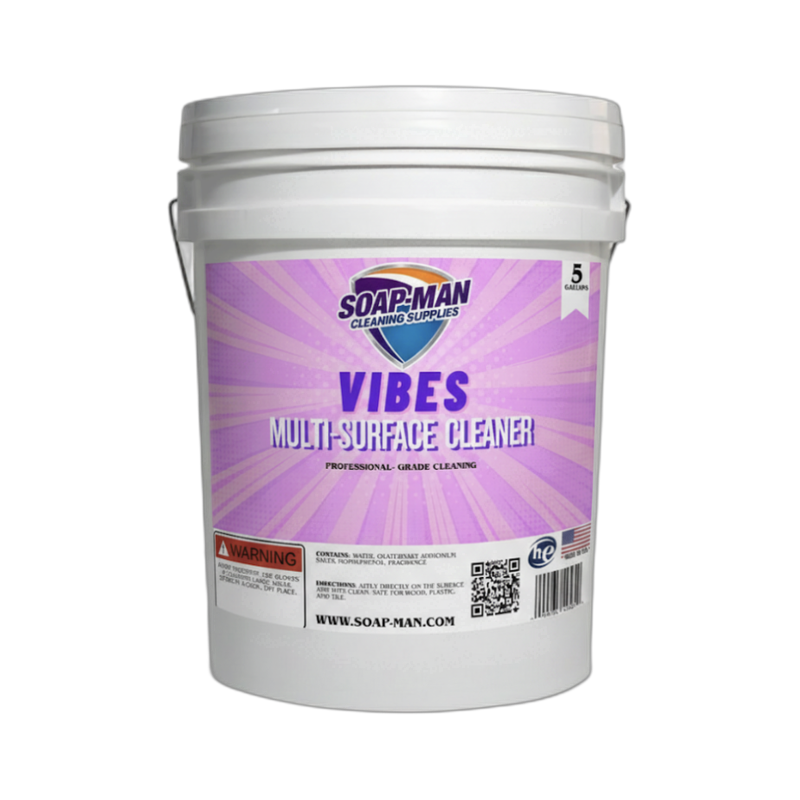
- pH-neutral floor cleaner (pH 6.5 to 7.5) -- the safest option for daily and weekly cleaning. A neutral cleaner lifts dirt without attacking the epoxy resin. Soap-Man's Vibes Multi-Surface Cleaner works at the right pH range for epoxy and dilutes at 1:32 for routine mopping, bringing the cost down to roughly $0.03 per diluted ounce.
- Clear ammonia solution -- 4 to 5 ounces per gallon of warm water. Ammonia is epoxy-safe and leaves a streak-free finish. Avoid sudsy or scented ammonia.
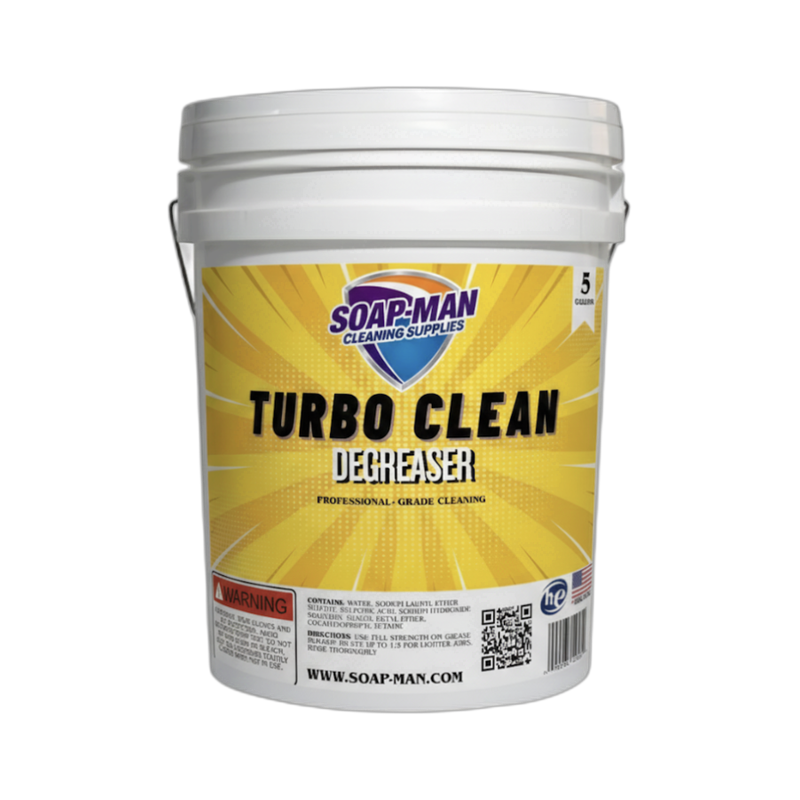
- Degreaser for tough stains -- a commercial-grade degreaser handles oil, grease, and tire marks that neutral cleaners cannot budge. Turbo Clean Degreaser at a 1:20 to 1:50 dilution cuts petroleum-based stains without damaging the epoxy when used as a spot treatment.
Daily Maintenance: 5 Minutes That Prevent 90% of Damage
Most epoxy floor damage comes from abrasion, not chemicals. Sand, gravel, and grit tracked in on shoes and tires act like sandpaper under foot traffic, grinding away the glossy topcoat one step at a time. A study published by the Tile Council of North America found that 80% of floor finish wear in commercial settings is caused by tracked-in soil and grit, not cleaning chemicals (TCNA, Floor Finish Maintenance Standards).
Daily maintenance takes five minutes or less:
- Sweep or dust-mop the entire floor. Start at the back wall and work toward the garage door. Focus on the tire paths and the area around workbenches where metal shavings, sawdust, and fasteners accumulate.
- Spot-clean any spills immediately. Wipe oil drips, coolant, brake fluid, or chemical spills with a paper towel or soft cloth. The longer a spill sits, the harder it is to remove -- and some automotive fluids can soften epoxy resin if left for 24 hours or more.
- Check entry mats. Place heavy-duty mats at the walk-in door and any workstation. Mats capture 70 to 80% of incoming grit before it reaches the floor. Shake or vacuum them weekly.
Weekly Cleaning: The Full Mop-Down
Once a week (or every two weeks for light-use garages), do a complete wet cleaning:
- Clear the floor. Move bikes, toolboxes, trash cans, and anything sitting on the surface so you can clean the entire area.
- Sweep or vacuum thoroughly. Remove all loose dirt, sand, and debris. Skipping this step means your mop will grind grit across the surface instead of cleaning it.
- Mix your cleaning solution. Fill the mop bucket with warm water (not hot -- water above 140 degrees F can soften some epoxy coatings). Add pH-neutral cleaner at the manufacturer's dilution ratio. For Vibes Multi-Surface Cleaner, that is 4 ounces per gallon.
- Mop section by section. Work in 6-foot by 6-foot sections, starting at the back of the garage and moving toward the door. Rinse and wring the mop frequently -- a dirty mop redistributes grime instead of removing it.
- Rinse with clean water. Go over the floor a second time with plain warm water to remove any cleaner residue. Residue buildup dulls the gloss over time.
- Squeegee dry. Push water toward the garage door using a floor squeegee. Epoxy floors have a sealed, non-porous surface, so standing water will not penetrate the coating -- but puddles leave water spots and mineral deposits as they evaporate.
The entire process takes 20 to 30 minutes for a standard two-car garage.
Deep Cleaning: Quarterly Restoration
Every three to four months, or whenever the floor looks dull despite regular mopping, do a deep clean. This is especially important for garages that see heavy vehicle traffic, oil changes, woodworking, or other messy activities.
- Clear and sweep the floor completely. Remove everything, including shelf items that sit near the floor.
- Pre-treat stained areas. Apply degreaser directly to oil spots, tire marks, and other stains. Let it dwell for 5 to 10 minutes. Turbo Clean Degreaser at 1:10 dilution handles embedded automotive grease.
- Scrub with a soft-bristle floor brush. Use a deck brush with nylon or polypropylene bristles. Work the degreaser into stained areas with circular motions. Never use wire brushes, steel wool, or abrasive pads -- they scratch the epoxy surface permanently.
- Mop the entire floor with pH-neutral cleaner. After scrubbing stains, mop the entire floor with your standard cleaning solution to lift embedded dirt from the rest of the surface.
- Rinse thoroughly. Use a garden hose with a spray nozzle or a second mop pass with clean water. A pressure washer on the lowest setting (under 1,500 PSI) with a 40-degree or 65-degree tip works for heavily soiled floors, but keep the nozzle at least 12 inches from the surface.
- Squeegee and air-dry. Push all water out the garage door and allow the floor to air-dry completely before driving or walking on it.
According to the American Society for Testing and Materials (ASTM C811), properly maintained epoxy floor systems in residential settings can maintain their structural integrity and appearance for 15 to 20 years. Neglected systems typically show visible degradation within 5 to 7 years (ASTM C811, Standard Practice for Surface Preparation of Concrete).
Stain Removal Guide: How to Remove the 6 Most Common Garage Floor Stains
Epoxy resists most stains, but some substances require targeted treatment. Here is how to handle each one.
Oil and Grease Stains
Motor oil, transmission fluid, and cooking grease are the most common garage floor stains. The U.S. Environmental Protection Agency estimates that American DIY mechanics improperly dispose of approximately 200 million gallons of used motor oil annually, and garage floors catch a significant share of those drips (EPA, Managing Used Oil).
- Fresh oil: Blot immediately with paper towels or shop rags. Do not wipe -- wiping spreads the stain. After blotting, spray the area with degreaser at 1:10 dilution, let it dwell 5 minutes, scrub with a nylon brush, and rinse.
- Set-in oil: Apply undiluted degreaser, cover with a damp cloth, and let it work for 15 to 30 minutes. Scrub, rinse, and repeat if needed. For stubborn petroleum stains, a paste of baking soda and degreaser left overnight can draw oil out of micro-pores in the epoxy surface.
Tire Marks (Hot Tire Pickup)
Hot tires can transfer rubber compounds onto epoxy floors, leaving dark marks. This is called "hot tire pickup" and happens most often in summer when tire temperatures exceed 200 degrees F after highway driving.
- Apply degreaser at 1:10 dilution directly to the marks.
- Let it dwell for 10 minutes.
- Scrub with a nylon-bristle brush in circular motions.
- Rinse and repeat if marks remain.
- Prevention: park on rubber mats or wait 10 minutes after driving before pulling into the garage on extremely hot days.
Rust Stains
Rust stains come from metal tools, furniture legs, or water with high iron content. Rust is iron oxide, and it bonds to surfaces chemically rather than just sitting on top.
- Apply a commercial rust remover formulated for use on coated surfaces. Avoid hydrochloric or muriatic acid -- they attack epoxy.
- Let the rust remover dwell per the product label (typically 5 to 15 minutes).
- Scrub gently with a soft cloth or nylon brush.
- Rinse thoroughly with clean water.
- Prevention: place rubber or felt pads under metal furniture legs, tool stands, and jack stands.
Paint Spills
Latex and oil-based paint are common in garages. The removal method depends on whether the paint is still wet or has dried.
- Wet latex paint: Wipe immediately with a damp cloth. Latex paint cleans up with water before it dries. Follow with a mop pass of pH-neutral cleaner.
- Dried latex paint: Soak the area with warm water for 15 minutes to soften the paint. Scrape gently with a plastic putty knife (never metal). Clean remaining residue with pH-neutral cleaner.
- Oil-based paint: Blot wet paint with rags moistened with mineral spirits. For dried oil paint, apply a small amount of mineral spirits on a cloth, test in an inconspicuous area first, then work the stain gently. Rinse thoroughly after removal.
Chemical Spills (Battery Acid, Antifreeze, Brake Fluid)
Automotive chemicals vary widely in pH and reactivity. Speed is critical.
- Battery acid: Neutralize immediately with baking soda (sprinkle liberally over the spill), then rinse with water. Battery acid is sulfuric acid (pH below 1) and will etch epoxy if left even briefly.
- Antifreeze: Wipe up immediately -- antifreeze (ethylene glycol) is slippery and toxic to pets. Clean the area with pH-neutral cleaner and rinse.
- Brake fluid: DOT 3 and DOT 4 brake fluids are glycol-based and can soften epoxy coatings within hours. Blot immediately, clean with warm soapy water, and rinse. DOT 5 (silicone-based) is less aggressive but should still be cleaned promptly.
Road Salt and De-Icer Residue
Winter road treatments tracked in on tires leave white mineral deposits on epoxy floors. Sodium chloride (rock salt) and calcium chloride are both corrosive to concrete underneath the epoxy and can work into seams or edges over time.
- Sweep or vacuum as much dry salt as possible.
- Mop with warm water and a splash of white vinegar (1 cup per gallon) to dissolve mineral deposits. Note: vinegar is safe for this purpose in small concentrations and short contact times -- do not leave it sitting on the surface or use it for routine cleaning.
- Follow immediately with a pH-neutral cleaner mop pass to neutralize the vinegar.
- Rinse with clean water and squeegee dry.
What NOT to Use on Epoxy Garage Floors
The wrong product or tool will void your coating warranty and cause permanent damage. The International Concrete Repair Institute (ICRI) notes that chemical incompatibility is the leading cause of premature epoxy floor system failure in residential applications (ICRI, Concrete Repair Technical Guidelines).
Chemicals to Avoid
- Citrus-based cleaners -- D-limonene (the active ingredient in citrus cleaners) is a solvent that softens and clouds epoxy resin. One application may not cause visible damage, but repeated use dulls the gloss permanently.
- Vinegar for routine cleaning -- acetic acid at full strength (5% concentration) etches epoxy over time. A diluted vinegar rinse for salt removal is acceptable as a one-time treatment, but it should never be your regular cleaner.
- Harsh acids (muriatic acid, hydrochloric acid, phosphoric acid) -- these are concrete prep chemicals, not cleaners. They dissolve the epoxy bond layer and cause delamination.
- Bleach at high concentrations -- sodium hypochlorite above 5% can yellow light-colored epoxy coatings and weaken the resin. Diluted bleach (1 tablespoon per gallon) is acceptable for occasional disinfection but should not be used weekly.
- Soap-based cleaners (dish soap, castile soap) -- soaps leave a film that builds up over time, creating a hazy, slippery surface. The film traps dirt and requires stripping to remove.
- Xylene, toluene, and MEK (methyl ethyl ketone) -- these solvents dissolve epoxy resin directly. Even brief contact can cause permanent damage.
Tools to Avoid
- Steel wool and metal scouring pads -- scratch the surface and leave metal particles that rust.
- Wire-bristle brooms -- same problem. Use nylon or polypropylene bristles only.
- Metal scrapers and putty knives -- use plastic scrapers for removing stuck-on material.
- Melamine foam pads (Magic Erasers) -- these are micro-abrasives that remove gloss by scratching at a microscopic level.
- High-pressure washers above 2,000 PSI -- excessive pressure can lift edges, penetrate seams, and force water under the coating, causing delamination.
Seasonal Maintenance Tips
Garage floors face different threats in different seasons. Adjusting your maintenance routine keeps the coating protected year-round.
Winter
- Rinse weekly during salt season. Road salt and de-icers tracked in on tires are the number one winter threat. A quick weekly mop with warm water prevents mineral buildup.
- Place mats under vehicles. Containment mats or heavy-duty rubber mats catch meltwater, road chemicals, and slush. The National Floor Safety Institute estimates that wet floors are responsible for 1 million hospital emergency room visits annually -- a rubber mat in a wet winter garage is a safety measure as much as a maintenance one (NFSI, Floor Safety Statistics).
- Dry the floor after vehicles are removed. Standing water from melting snow and ice can seep into expansion joints and freeze overnight, widening cracks under the epoxy.
Spring
- Do a deep clean. After winter, the floor needs a full deep-cleaning cycle to remove accumulated salt residue, mineral deposits, and embedded grit.
- Inspect for damage. Check edges, seams, and high-traffic areas for chips, peeling, or bubbling. Address damage early before moisture gets under the coating.
Summer
- Manage hot tire pickup. Hot tires from summer driving are more likely to leave marks. Park on rubber mats or let tires cool for 10 minutes before pulling in after long drives.
- UV exposure. If your garage door is frequently open, direct sunlight can yellow some epoxy formulations over time. UV-resistant topcoats (polyurethane or polyaspartic) mitigate this. Consider a topcoat reapplication every 5 to 7 years for garages with significant sun exposure.
Fall
- Pre-winter prep. Do a deep clean before salt season starts. Apply or replace entry mats. Check that the garage floor drain (if you have one) is clear.
- Leaf and debris management. Wet leaves left on epoxy can stain lighter coatings. Sweep daily during peak leaf-fall weeks.
How to Protect and Extend the Life of Your Epoxy Garage Floor
Cleaning is one part of the equation. These habits extend your epoxy floor's lifespan from 10 years to 20 or more.
- Use protective mats at workstations and under vehicles. Rubber mats under jack stands, welding areas, and chemical storage prevent point-load damage and chemical exposure.
- Lift, do not drag. Dragging tool chests, engine hoists, or heavy equipment across epoxy gouges the surface. Use furniture dollies or lift items off the floor to move them.
- Apply a maintenance topcoat every 3 to 5 years. A thin polyurethane or polyaspartic clear coat over the existing epoxy restores gloss and adds a sacrificial wear layer. This is cheaper than a full recoat and extends the system life by 5 to 10 years. Professional application costs $1.50 to $3.00 per square foot. DIY kits run $0.50 to $1.50 per square foot.
- Control moisture from below. Concrete is porous, and moisture vapor transmitted from the ground through the slab can cause epoxy delamination. If you see white deposits forming at the edges of your coating, you may have a moisture vapor emission issue. ASTM F1869 (calcium chloride test) or ASTM F2170 (relative humidity probe) can diagnose this.
- Ventilate your garage. Proper airflow reduces humidity, speeds drying after wet cleaning, and prevents condensation that can form under vehicles on cold mornings.
- Address chips and damage immediately. Small chips in epoxy expose the concrete underneath to chemicals, moisture, and staining. Touch-up kits matched to your coating color are available from most epoxy manufacturers. Fill chips as soon as you notice them to prevent the damage from spreading. According to the Resinous Flooring Technology Committee of ASTM, untreated edge damage expands at an average rate of 0.5 to 1 inch per year under normal residential garage traffic (ASTM, Resinous Flooring Standards).
Epoxy Floor Cleaning Schedule at a Glance
Use this schedule as your baseline. Adjust frequency based on how heavily you use your garage.
- Daily: Sweep or dust-mop loose debris (5 minutes). Spot-clean spills immediately.
- Weekly: Full mop with pH-neutral cleaner. Rinse and squeegee dry (20-30 minutes).
- Monthly: Check and clean under mats, shelving, and workbenches. Inspect for chips or damage.
- Quarterly: Deep clean with degreaser pre-treatment on stains. Pressure wash if needed (45-60 minutes).
- Annually: Full inspection of coating condition, seams, and edges. Touch up chips. Evaluate topcoat condition.
- Every 3-5 years: Apply maintenance topcoat to restore gloss and add protective layer.
Professional vs. DIY Epoxy Floor Cleaning
For most homeowners, DIY cleaning with the right products and tools is all you need. However, professional cleaning makes sense in two situations:
- Heavily soiled commercial or workshop floors -- professional floor scrubbing machines clean faster and more thoroughly than manual mopping. A walk-behind auto-scrubber covers 10,000 to 20,000 square feet per hour versus 1,000 to 2,000 square feet per hour by hand.
- Coating restoration -- if the gloss has dulled from years of neglect or improper cleaning, a professional floor care company can diamond-polish the surface and apply a fresh topcoat. This costs $2 to $5 per square foot and is still far less expensive than a full epoxy removal and reinstallation at $6 to $12 per square foot.
Shop Epoxy-Safe Floor Cleaning Products
The key to epoxy floor care is using the right chemistry. pH-neutral cleaners for routine maintenance, targeted degreasers for stain removal, and streak-free finishers for the final wipe-down.
- Vibes Multi-Surface Cleaner -- pH-neutral formula safe for daily and weekly epoxy floor mopping. Dilutes 1:32 for routine use. One gallon makes 32 gallons of working solution.
- Turbo Clean Degreaser -- heavy-duty degreaser for oil, grease, tire marks, and embedded automotive stains. Use at 1:10 to 1:50 dilution as a spot treatment on epoxy floors.
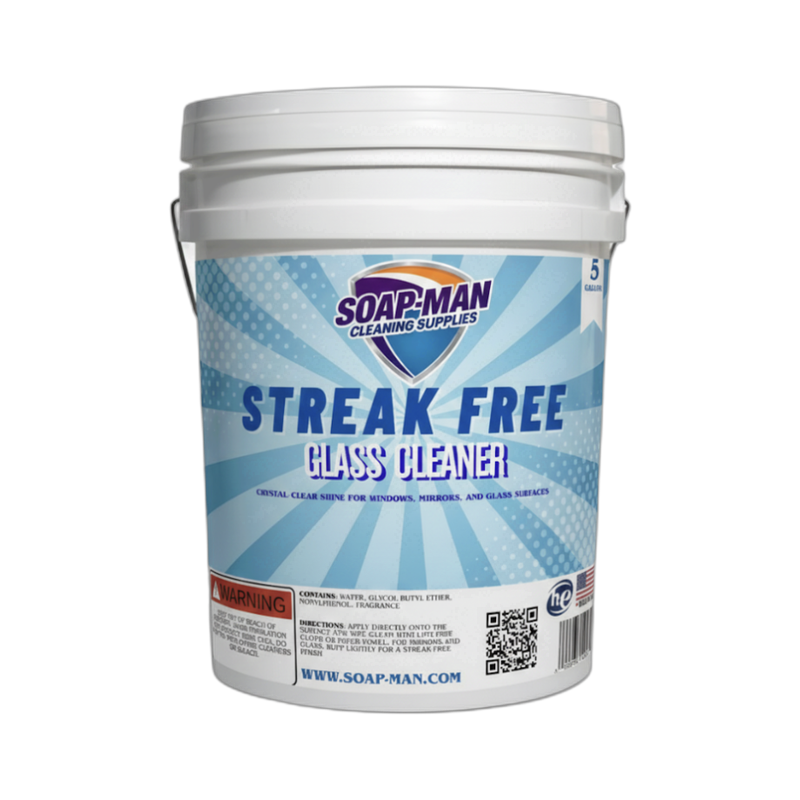
- Streak Free Glass Cleaner -- ammonia-based, streak-free formula. Works as a final wipe-down on epoxy to restore shine after deep cleaning.
All products are available in 1-gallon and 5-gallon sizes with volume discounts starting at 6 units. Request a free quote or call (908) 590-8562 for bulk pricing. Free delivery on orders over $500.
Frequently Asked Questions
How often should you clean an epoxy garage floor?
Sweep or dust-mop daily to remove grit and debris that scratch the finish. Mop with a pH-neutral cleaner weekly for light-use garages or twice weekly for heavy-traffic garages. Deep clean with a degreaser and soft-bristle brush every three to four months. This schedule keeps the coating in good condition for 15 to 20 years.
Can you use a pressure washer on epoxy garage floors?
Yes, but with caution. Use a pressure washer set below 1,500 PSI with a 40-degree or 65-degree fan tip. Keep the nozzle at least 12 inches from the surface. Never use a zero-degree (red) tip or a turbo nozzle on epoxy -- the concentrated stream can lift edges and force water under the coating, causing delamination.
What is the best cleaner for epoxy garage floors?
A pH-neutral floor cleaner (pH 6.5 to 7.5) is the best option for routine cleaning. It lifts dirt without attacking the epoxy resin or dulling the gloss. For tough stains like oil and tire marks, use a commercial-grade degreaser as a spot treatment. Avoid citrus cleaners, vinegar, soap-based products, and harsh acids.
Will vinegar damage an epoxy garage floor?
Repeated use of vinegar as a regular cleaner will dull epoxy floors over time. Acetic acid at household concentration (5%) gradually etches the resin surface. A single diluted vinegar rinse to remove winter salt deposits is acceptable, but vinegar should never be part of your routine cleaning. Use a pH-neutral cleaner instead.
How do you remove oil stains from an epoxy garage floor?
Blot fresh oil immediately with paper towels -- do not wipe, which spreads the stain. Spray the area with a commercial degreaser at 1:10 dilution, let it dwell for 5 to 10 minutes, scrub with a nylon-bristle brush, and rinse with clean water. For set-in oil stains, apply undiluted degreaser under a damp cloth for 15 to 30 minutes before scrubbing.
Can you use bleach on epoxy floors?
Diluted bleach (1 tablespoon per gallon of water) is acceptable for occasional disinfection. However, concentrated bleach above 5% sodium hypochlorite can yellow light-colored epoxy and weaken the resin. Do not use bleach as a regular floor cleaner.
How do you get tire marks off an epoxy garage floor?
Apply a commercial degreaser at 1:10 dilution directly to the tire marks. Let it dwell for 10 minutes, then scrub with a nylon-bristle brush in circular motions. Rinse with clean water and repeat if marks remain. Prevent future tire marks by parking on rubber mats or letting tires cool for 10 minutes after long drives before pulling into the garage.
How long do epoxy garage floors last?
Professionally installed epoxy garage floors last 15 to 20 years with proper maintenance, according to ASTM resinous flooring standards. DIY epoxy kits typically last 5 to 10 years depending on surface preparation quality and coating thickness. Regular cleaning, prompt spill removal, and a maintenance topcoat every 3 to 5 years maximize the coating's lifespan.