
The Great Cleaning Debate: Bleach or Vinegar?
Walk into any cleaning supply aisle and you'll see products built around two core ingredients: bleach (sodium hypochlorite) and vinegar (acetic acid). They're both inexpensive, widely available, and effective at cleaning — but they are not interchangeable. Using the wrong one can damage surfaces, waste your time, or in the worst case, create toxic fumes that send people to the emergency room.
As a commercial cleaning supply company, we get asked this question constantly: "Can I just use vinegar for everything?" or "Is bleach always the strongest option?" The answer to both is no. Each has specific strengths, clear limitations, and situations where it's the only correct choice. Understanding the difference isn't just about getting a cleaner result — it's about safety, efficiency, and protecting the surfaces you're cleaning.
This guide breaks down exactly when to reach for bleach, when vinegar is the better call, when neither works, and the one thing you should absolutely never do with both of them at the same time.
What You'll Need
To follow the cleaning methods in this guide, keep these supplies on hand.
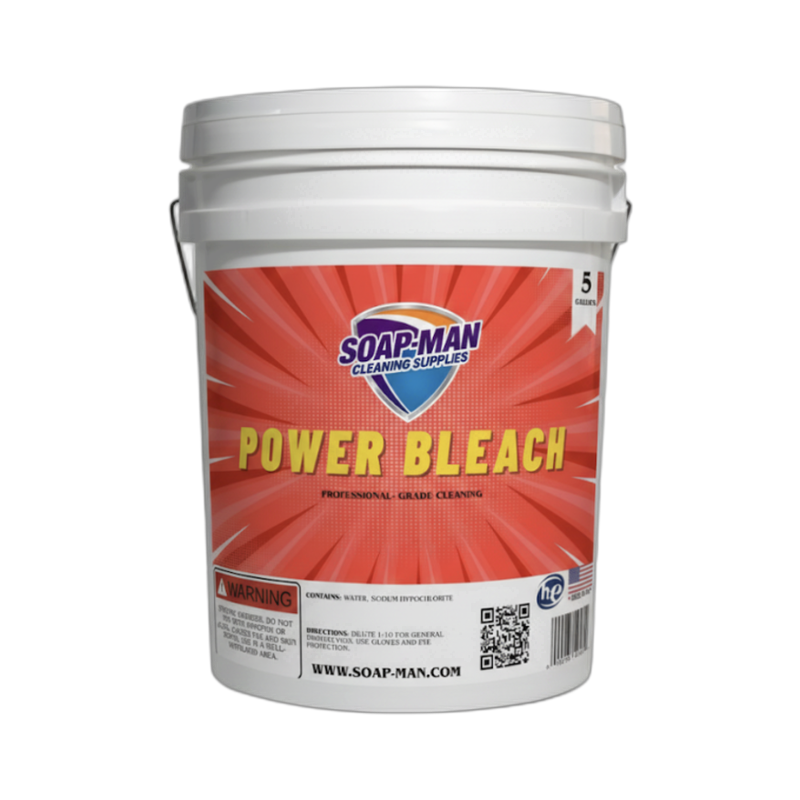
- Professional-grade bleach — A commercial-strength bleach like Soap-Man Power Bleach delivers consistent concentration for reliable disinfection. Household bleach varies widely in strength, which makes dilution ratios unreliable.
- White distilled vinegar — Standard 5% acidity. Don't use apple cider vinegar or flavored varieties for cleaning — they leave residue and can stain.
- Spray bottles (separate, labeled) — One for bleach solution, one for vinegar solution. Never mix them in the same bottle. Label clearly.
- Rubber gloves — Essential when working with bleach. Recommended for vinegar on extended contact.
- Eye protection — Required for bleach use, especially when diluting from concentrate.
- Microfiber cloths — Separate sets for each solution to avoid cross-contamination.
- Measuring cups — Accurate dilution matters, especially with commercial-strength bleach.
- Ventilation — Open windows or run fans when using either product in enclosed spaces.
Understanding the Chemistry: How Each One Works
How Bleach Works
Bleach — specifically sodium hypochlorite — is an oxidizing agent. When it comes into contact with organic material like bacteria, viruses, mold, or mildew, it breaks down their cellular structure by stealing electrons from their molecules. This is what makes bleach such a powerful disinfectant: it doesn't just remove pathogens, it destroys them at the molecular level.
Commercial-grade bleach like Power Bleach contains 12.5% sodium hypochlorite — significantly stronger than household bleach, which typically ranges from 3% to 8%. This higher concentration means more reliable disinfection and the ability to dilute to precise ratios for different applications. It also means you need to handle it with more care.
Bleach is alkaline, typically with a pH between 11 and 13. This high pH contributes to its cleaning power but also means it can damage acid-sensitive surfaces like natural stone, certain metals, and colored fabrics.
How Vinegar Works
Vinegar is acetic acid, typically at a 5% concentration for household cleaning. It works by lowering the pH of whatever it contacts. This acidic environment dissolves mineral deposits (calcium, lime, rust), cuts through soap scum, and creates conditions that many bacteria find inhospitable.
Note the distinction: vinegar creates conditions that discourage microbial growth, but it doesn't kill pathogens the way bleach does. Studies show vinegar can reduce certain bacteria populations, but it's not registered as a disinfectant by the EPA and shouldn't be relied on for sanitizing surfaces in healthcare, food service, or any environment where pathogen elimination is critical.
Vinegar's pH sits around 2.5 — strongly acidic. This makes it excellent at dissolving alkaline deposits (hard water, soap residue) but means it can etch or damage alkaline-sensitive surfaces like marble, granite, and certain grouts.
The Critical Safety Rule: Never Mix Them
When bleach (sodium hypochlorite) contacts vinegar (acetic acid), the acid lowers the pH of the bleach solution. This releases chlorine gas — the same toxic gas used as a chemical weapon in World War I. Even small amounts of chlorine gas cause coughing, breathing difficulty, and eye irritation. Higher concentrations can cause chemical burns to the lungs, unconsciousness, and death.
This isn't a theoretical risk. Poison control centers handle thousands of calls every year from people who accidentally mixed bleach with an acidic cleaner. If you use bleach on a surface, rinse thoroughly with plain water and let it dry completely before applying vinegar to the same surface. Better yet, choose one and stick with it for each cleaning job.
When to Use Bleach
Disinfection and Sanitization
Bleach is the correct choice when you need to actually kill pathogens — bacteria, viruses, fungi, and mold spores. This includes bathroom sanitization, kitchen surface disinfection after handling raw meat, sick-room cleanup, and mold remediation. Vinegar cannot replace bleach for these applications.
The CDC recommends a bleach solution of 1/3 cup bleach per gallon of water (approximately 1:48 dilution) for general disinfection. With commercial-strength bleach, follow the manufacturer's dilution chart — the higher concentration means you need less product per gallon.
Mold and Mildew Removal
Bleach kills mold on non-porous surfaces like tile, glass, porcelain, and sealed countertops. Apply a diluted bleach solution, let it sit for 10 minutes, then scrub and rinse. For shower grout, bathroom caulk, and tile surfaces, bleach is the most effective single-step mold killer available.
Important limitation: bleach only kills surface mold on non-porous materials. On porous surfaces like wood, drywall, or unsealed concrete, the water in bleach solution can actually soak into the material and feed mold growth deeper inside while only bleaching the visible surface mold white. For porous surfaces with mold penetration, professional remediation may be necessary.
Laundry Whitening and Stain Removal
Bleach is unmatched for whitening white fabrics and removing organic stains (blood, wine, grass, food). Add bleach to the designated bleach dispenser in your washing machine — never pour it directly onto fabric, as this can cause uneven bleaching and damage fibers.
Only use bleach on white, colorfast fabrics. It will strip color from dyed fabrics permanently. For commercial laundry operations, having a dedicated bleach cycle for whites is standard practice.
Water Treatment
Bleach is used worldwide for water disinfection, from municipal water treatment to emergency water purification. In emergency situations, 8 drops of household bleach per gallon of clear water (or 16 drops for cloudy water) can make it safe to drink after 30 minutes of contact time.
When to Use Vinegar
Hard Water and Mineral Deposit Removal
This is where vinegar genuinely outperforms bleach. Calcium, lime, and mineral deposits from hard water are alkaline — bleach (also alkaline) won't dissolve them. Vinegar's acidity breaks down these deposits effectively. Showerheads, faucets, coffee makers, and anywhere you see white crusty buildup is vinegar territory.
For heavily scaled showerheads, fill a plastic bag with undiluted vinegar and rubber-band it around the showerhead overnight. The deposits will dissolve and rinse away in the morning.
Soap Scum Removal
Soap scum forms when soap combines with hard water minerals, creating an alkaline film on glass and tile. Vinegar dissolves this effectively. Spray undiluted vinegar on glass shower doors, let it sit for 15-20 minutes, then scrub with a non-abrasive pad and rinse. Repeat for heavy buildup.
Glass and Mirror Cleaning
A diluted vinegar solution (1 part vinegar to 4 parts water) makes an effective glass cleaner that cuts through film and leaves a streak-free finish. It's particularly good for windows and mirrors that have mineral deposits from hard water or cleaning product residue.
Odor Neutralization
Vinegar neutralizes odors rather than masking them. It's effective on pet urine, smoke, musty smells, and food odors. Place a bowl of vinegar in a room to absorb ambient odors, or spray a diluted solution on soft surfaces. The vinegar smell dissipates as it dries, taking the offending odor with it.
Kitchen Degreasing (Light Duty)
Vinegar can handle light grease films and cooking residue on countertops and stovetops. For heavy grease — the kind you find in commercial kitchens, around fryers, or on range hoods — vinegar won't cut it. You need a purpose-built degreaser for those situations.
Pro Tips
- Always dilute commercial bleach. Products like Power Bleach are concentrated for professional use. Using undiluted commercial bleach wastes product, can damage surfaces, and creates unnecessary fume exposure. Follow the dilution chart for each application.
- Let contact time do the work. Both bleach and vinegar need dwell time to be effective. Spraying and immediately wiping achieves almost nothing. Bleach needs 5-10 minutes for disinfection; vinegar needs 15-30 minutes for mineral deposits.
- Store bleach properly. Bleach degrades over time, especially when exposed to heat and light. Store it in a cool, dark place and replace it every 6 months. Expired bleach loses its disinfecting power.
- Warm vinegar works faster. Heating vinegar (not boiling — just warm) increases its effectiveness on mineral deposits. Warm vinegar dissolves calcium buildup roughly twice as fast as room-temperature vinegar.
- Rinse between products. If you use bleach on a surface and later want to use vinegar (or vice versa), rinse the surface thoroughly with plain water first and let it dry. Never use them in sequence without a complete rinse between.
- Use the right tool for the job. Neither bleach nor vinegar is a universal cleaner. For everyday surface cleaning, a dedicated multi-surface cleaner is often more practical and safer than either of these specialty products.
Common Mistakes
Mixing Bleach and Vinegar
We've covered this but it bears repeating: combining bleach with vinegar (or any acid) produces chlorine gas. This is the single most dangerous cleaning mistake you can make. It happens more often than you'd think — someone cleans the toilet with bleach, then decides to "double up" with vinegar. Don't do it. Ever.
Using Bleach on Natural Stone
Bleach can etch, discolor, and permanently damage marble, granite, limestone, travertine, and other natural stone surfaces. If you need to disinfect natural stone, use a stone-safe disinfectant. For general cleaning, use a pH-neutral cleaner designed for stone.
Using Vinegar on Marble or Granite
Vinegar etches natural stone surfaces, leaving dull spots that can only be fixed by professional re-polishing. Marble countertops, granite vanities, and stone tile floors should never contact vinegar. This also applies to vinegar-based cleaning products.
Using Vinegar as a Disinfectant
Vinegar has some antibacterial properties, but it's not a disinfectant. It won't kill norovirus, influenza, E. coli O157:H7, Salmonella, or MRSA. If you're cleaning up after illness, handling raw meat, or sanitizing high-touch surfaces during an outbreak, you need bleach or an EPA-registered disinfectant.
Using Bleach on Colored Fabrics
Bleach removes color — permanently and irreversibly. Even a small splash of bleach on a colored garment creates a permanent discolored spot. Keep bleach away from anything that isn't white or designated as bleach-safe.
Not Ventilating
Both bleach and vinegar produce fumes that can irritate the respiratory system, especially in enclosed spaces like bathrooms without windows. Always ensure adequate ventilation when using either product. Open windows, run exhaust fans, and take fresh air breaks during extended cleaning sessions.
The Quick-Reference Decision Chart
Here's the fast answer for common cleaning situations:
- Killing germs on hard surfaces: Bleach
- Removing hard water stains: Vinegar
- Mold on tile or grout: Bleach
- Soap scum on glass: Vinegar
- Whitening laundry: Bleach
- Cleaning coffee makers: Vinegar
- Sanitizing after illness: Bleach
- Deodorizing a room: Vinegar
- Cleaning natural stone: Neither — use a pH-neutral cleaner
- Heavy kitchen grease: Neither — use a dedicated degreaser
Frequently Asked Questions
Can vinegar kill mold?
Vinegar can kill some species of mold (studies show it's effective against about 82% of mold species), but it's not as reliable or fast-acting as bleach for this purpose. Bleach kills mold on contact on non-porous surfaces. If you're dealing with a mold problem in a bathroom, commercial kitchen, or any space where health is a concern, bleach is the correct choice. Vinegar is acceptable for minor mold on low-risk surfaces like a windowsill or shower curtain.
Is vinegar safe for all surfaces?
No. Vinegar damages natural stone (marble, granite, limestone, travertine), waxed wood floors, cast iron, aluminum, and some rubber seals. It can also degrade the glue in certain floor tiles over time. Always check whether a surface is acid-safe before using vinegar.
How long does bleach take to disinfect a surface?
A properly diluted bleach solution needs at least 5 minutes of wet contact time to disinfect a surface. The surface should remain visibly wet for the entire dwell time. If it dries before the 5 minutes are up, reapply. This contact time is critical — spraying and immediately wiping doesn't disinfect anything.
Does bleach expire?
Yes. Bleach loses potency over time as the sodium hypochlorite degrades. Household bleach is generally effective for about 6 months after purchase. Commercial-strength bleach like Power Bleach has a shelf life noted on the label. Using expired bleach means you're cleaning with water that smells like bleach but doesn't actually disinfect.
Can I use bleach and vinegar on the same day if I rinse between them?
Yes, but with extreme caution. Rinse the surface thoroughly with plain water after using the first product, and let the surface dry completely before applying the second. Even trace amounts of bleach reacting with vinegar can produce chlorine gas. If you can smell either product on the surface, it hasn't been rinsed well enough. When in doubt, use them on different days or in different areas.