
Know Your Rug Before You Clean It
The single biggest mistake in area rug cleaning is treating every rug the same. A synthetic polypropylene rug can handle aggressive cleaning and hot water. A wool rug will felt, shrink, and bleed color if you do the same thing. An antique silk rug needs professional cleaning only. Before you put any water or chemical on a rug, you need to know what you're working with.
The label on the back usually tells you the fiber content and cleaning codes. If there's no label, a burn test (snip a single fiber and see how it burns) or a basic inspection can tell you enough to choose the right method. Most modern area rugs are synthetic (polyester, polypropylene, nylon) or wool blends, and those are the ones this guide covers. If you have a genuine antique, hand-knotted silk, or hand-woven wool heirloom, skip this guide and call a professional.
For the common 90% of area rugs, here's the professional hand-cleaning method.
What You'll Need
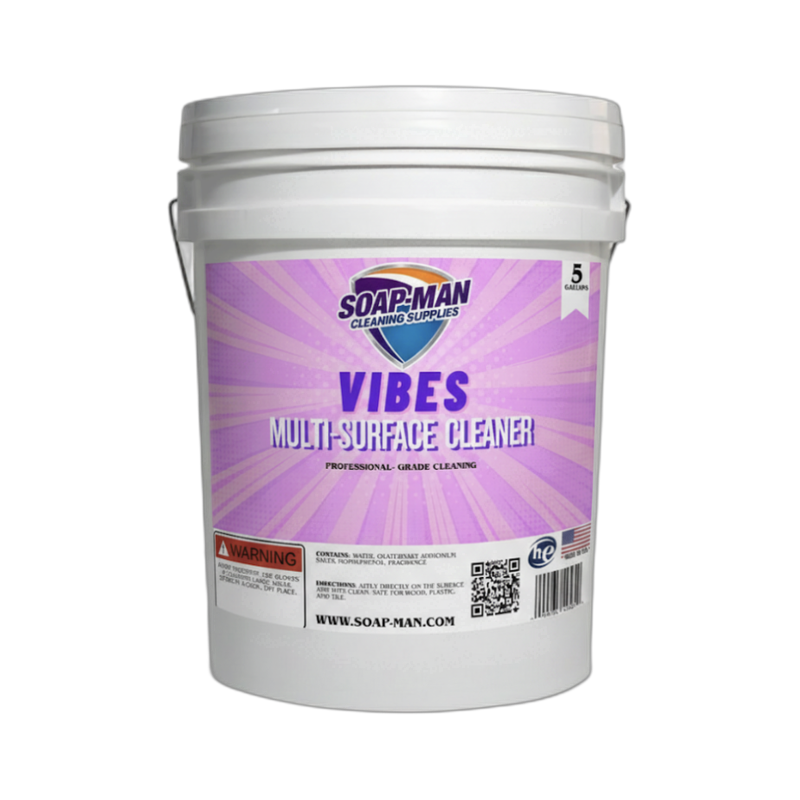
- A quality cleaner — Vibes Multi-Surface Cleaner, well-diluted for gentle cleaning.
- A vacuum with brush attachment.
- Two buckets — one for cleaning solution, one for rinse water.
- A soft-bristled brush or sponge.
- Clean white towels.
- A garden hose or handheld shower (if cleaning outdoors).
- A wet/dry vac or squeegee for extraction.
- Rubber gloves.
Step-by-Step: Cleaning a Machine-Made Synthetic or Wool-Blend Area Rug
Step 1: Shake or Beat the Rug
Take the rug outside, hang it over a railing or fence, and beat it with a broomstick or rug beater. This removes loose dirt and dust that would turn to mud once the rug is wet. For smaller rugs, a good shake is enough. You'll be surprised how much dust comes out — don't skip this step.
Step 2: Vacuum Both Sides
Vacuum the top of the rug thoroughly with a brush attachment. Then flip it over and vacuum the back. Dirt collects in the backing layer and works its way up through the fibers over time. Getting it out from the back prevents recontamination.
Step 3: Test Your Cleaner in a Hidden Spot
Before applying any cleaner to the visible rug, test on a corner or hidden edge. Apply a small amount, let it sit for 5 minutes, blot with a white towel. If the towel shows color transfer, stop — the dyes are bleeding and you need a gentler approach. If the towel stays clean and the spot looks unchanged, you're safe to proceed.
Step 4: Dilute and Apply
Mix your cleaner with cool water in a bucket according to label directions, diluted slightly more than normal to be gentle on rug fibers. Dip a soft brush or sponge, wring out excess, and work the cleaning solution into the rug in sections. Move with the nap of the rug, not against it. Don't soak — damp is enough.
Step 5: Rinse Thoroughly
Rinsing is the most-skipped step and the reason most DIY rug cleaning looks dingy afterward. Soap residue attracts dirt. Use clean water and a fresh sponge (or an outdoor hose if the rug is durable) to rinse all cleaner out of the fibers. Keep rinsing until no suds appear and the rinse water stays clear.
Step 6: Extract and Dry
Use a wet/dry vac, a squeegee, or dry white towels to extract as much moisture as possible. Then hang the rug over a railing or lay it flat on a non-porous surface in a well-ventilated area. Never hang wool rugs — the weight of the water will stretch them out of shape. For wool, dry flat. Complete drying takes 24-48 hours. Don't put the rug back on the floor until it's 100% dry or you'll trap moisture underneath and grow mildew.
Pro Tips
- Rotate rugs every 6 months. Even wear keeps them looking newer longer and prevents permanent traffic patterns.
- Use cold water only on wool. Hot water shrinks wool fibers and felts the nap.
- Keep the pad dry. If the rug pad is soaked during cleaning, replace it. Wet pads grow mildew even after the rug dries.
Common Mistakes
- Oversaturating the rug. Wet backing causes shrinking, warping, and smell problems that never fully resolve.
- Skipping the rinse step. Soap residue attracts dirt and makes the rug look dirty again within a week.
- Hanging wool to dry. Wet wool is extremely heavy — hanging stretches the rug permanently out of shape.
FAQ
Can I put an area rug in the washing machine?
Only if it's small, synthetic, and labeled as machine-washable. Wool, silk, hand-knotted, or large rugs should never go in a washing machine. The agitation destroys the backing and the weight damages the machine.
How often should I clean my area rug?
Vacuum weekly, spot-clean as needed, and do a full cleaning every 6-12 months depending on traffic. Entryway rugs need more frequent attention than bedroom rugs.
My rug smells musty. What do I do?
Musty smell means mildew — usually from moisture trapped in the backing. Take the rug outside on a sunny day and let it air out for several hours. If the smell persists, clean and dry thoroughly following the method above. Severe cases may need professional cleaning.
Can I steam clean an area rug?
Yes for synthetics. No for wool or delicate fibers. Steam can shrink wool, dissolve some natural dyes, and damage hand-woven backings. Check the label before steaming anything.
How do I get pet hair out of an area rug?
Vacuum first, then use a rubber squeegee or a dry dishwashing glove to drag pet hair out of deep fibers. The rubber attracts hair electrostatically and pulls it out much more effectively than a vacuum alone.