
Why You Don't Always Need a Machine
Carpet cleaning machines are impressive pieces of equipment, but they're overkill for most household carpet maintenance. A good hand-cleaning method removes 85-90% of what a rented machine removes — without the hassle of transporting a heavy unit, mixing solutions, and waiting 12 hours for the carpet to dry. For spot stains, high-traffic areas, and routine freshening, the hand method is faster, cheaper, and often more thorough because you can focus on the spots that actually need attention.
The key is having the right cleaner, the right technique, and the right expectations. You won't strip years of ground-in filth out of a neglected carpet by hand — that's what a full extraction is for. But if you're dealing with normal wear, spills, pet accidents, or tracked-in dirt, a thorough hand cleaning gets the job done in an hour with materials you can buy at any grocery store.
This guide walks you through the professional hand-cleaning method that carpet technicians use between machine treatments, plus the exact products and techniques that separate a good result from a mediocre one.
What You'll Need
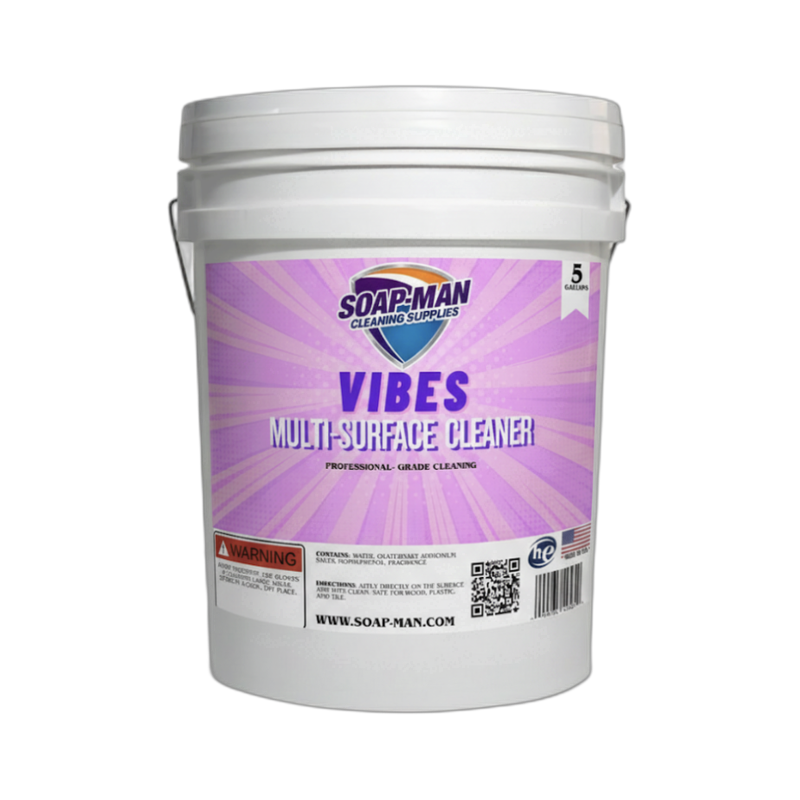
- A quality all-purpose cleaner — Soap-Man Vibes Multi-Surface Cleaner is formulated to lift dirt without leaving residue that attracts new soil.
- A stiff-bristled brush — an old toothbrush for spots, a dish brush for larger areas.
- Clean white microfiber towels — at least four or five. White lets you see what's coming out of the carpet.
- A spray bottle — for applying diluted cleaner evenly.
- A bucket of warm water — for rinsing.
- A vacuum cleaner — used before and after the cleaning process.
- Rubber gloves — to protect your hands during scrubbing.
- Baking soda — for odor neutralization and gentle pre-treatment.
Step-by-Step: The Professional Hand-Cleaning Method
Step 1: Vacuum Thoroughly First
Never skip this step. Vacuuming removes loose dirt, hair, and debris that would otherwise turn to mud when you apply cleaner. Run the vacuum slowly in overlapping passes, then go over the area perpendicular to the first pass. For pet households, use a brush attachment or specialized pet-hair tool. The goal is to remove everything that isn't embedded in the fibers before any liquid touches the carpet.
Step 2: Spot-Treat Stains Individually
Before you tackle the whole carpet, address visible stains one at a time. Dilute your cleaner according to label directions and apply a small amount directly to each stain. Let it sit for 2-3 minutes to penetrate, then blot — don't rub — with a clean white towel. Rubbing spreads the stain and damages the carpet fibers. For stubborn spots, work the cleaner in gently with a soft brush using circular motions, then blot again.
Step 3: Mix Your Cleaning Solution
For general carpet cleaning, dilute your all-purpose cleaner in a spray bottle according to label directions. Too concentrated and you'll leave a sticky residue that attracts dirt. Too weak and you won't lift anything. Err on the side of label-recommended concentration — manufacturers have tested the ratio extensively.
Step 4: Section, Spray, and Scrub
Divide the room into sections roughly 3 feet by 3 feet. Work one section at a time. Lightly mist the section with your cleaning solution — you want the fibers damp, not soaked. Let the solution sit for 2-3 minutes, then scrub gently with a soft brush in small circular motions. This agitation lifts dirt from the carpet fibers into the solution where you can extract it.
Step 5: Extract and Rinse
Press a clean, dry microfiber towel onto the scrubbed section and apply firm, even pressure. The towel absorbs the dirty solution along with the dirt it contains. Rotate to a clean section of the towel and repeat until the towel comes up relatively clean. For a cleaner finish, mist the section lightly with plain water and blot again to remove any remaining cleaner residue. Move to the next section and repeat.
Pro Tips
- Work with air movement. Open windows or run a fan after cleaning. Faster drying means less chance of mildew and dirt re-bonding to damp fibers.
- Always blot, never rub. Rubbing works stains deeper into the fibers and damages the carpet pile.
- Test in a hidden spot first. Every carpet reacts differently to cleaners. Test on a closet edge or under furniture before treating visible areas.
- Sprinkle baking soda after cleaning. For odor-prone carpets, dust baking soda over the dried area, let it sit 30 minutes, then vacuum thoroughly.
- Don't oversaturate. Wet carpet padding leads to mildew, shrinkage, and bad smells that linger for weeks.
Common Mistakes
- Using too much cleaner. Excess soap residue becomes dirt magnets. Dilute properly and rinse thoroughly.
- Skipping the pre-vacuum. Wet dirt becomes mud, which becomes a permanent stain.
- Rubbing stains in circles. This spreads the stain outward and damages the carpet fibers permanently.
FAQ
How often should I deep clean my carpet by hand?
For high-traffic areas, spot-clean weekly and do a full hand deep clean every 2-3 months. For low-traffic bedrooms, every 6 months is sufficient. If you have pets or small children, increase frequency accordingly.
Can I use dish soap on carpet?
Technically yes, but it's not ideal. Dish soap is formulated to bond with grease — carpet soil is mostly dirt, skin cells, and dust. A purpose-built cleaner like Vibes Multi-Surface Cleaner lifts carpet soil more effectively and rinses cleaner.
How long does it take for the carpet to dry?
With the hand method, expect 2-4 hours of drying time depending on humidity and air circulation. Run fans, open windows, and avoid walking on the damp area until it's completely dry.
What about old, set-in stains?
Old stains are the hardest to remove by hand. Apply cleaner, let it sit for 10 minutes, scrub gently, blot, and repeat up to three times. If the stain remains, it may have bonded to the carpet fibers permanently and only professional extraction can remove it.
Will hand cleaning damage my carpet?
Not if you follow the method correctly. The damage risk comes from overwetting (which causes mildew and shrinkage), rubbing too hard (which damages fibers), and using the wrong cleaner (which can bleach colors or leave sticky residue). Use a quality cleaner, blot gently, and work in sections.