
Why Pressure Washing Damages Decks
Everyone reaches for the pressure washer when the deck looks dirty. It feels fast and satisfying, and the immediate result looks great. But pressure washers force water into the wood grain, raise the fibers, strip protective finishes, and can gouge softwoods like pine and cedar permanently. Within a few months, a pressure-washed deck often looks worse than before — rough, splintered, and faded. For composite decks, high-pressure water voids most warranties.
Professional deck cleaners rarely use pressure washers for this reason. They use chemical cleaners, stiff brushes, and garden hoses. The result is a deck that's actually cleaner (because chemistry removes embedded grime that water pressure just moves around) and a finish that lasts longer. This guide walks you through the full professional method for cleaning a deck without a pressure washer.
What You'll Need
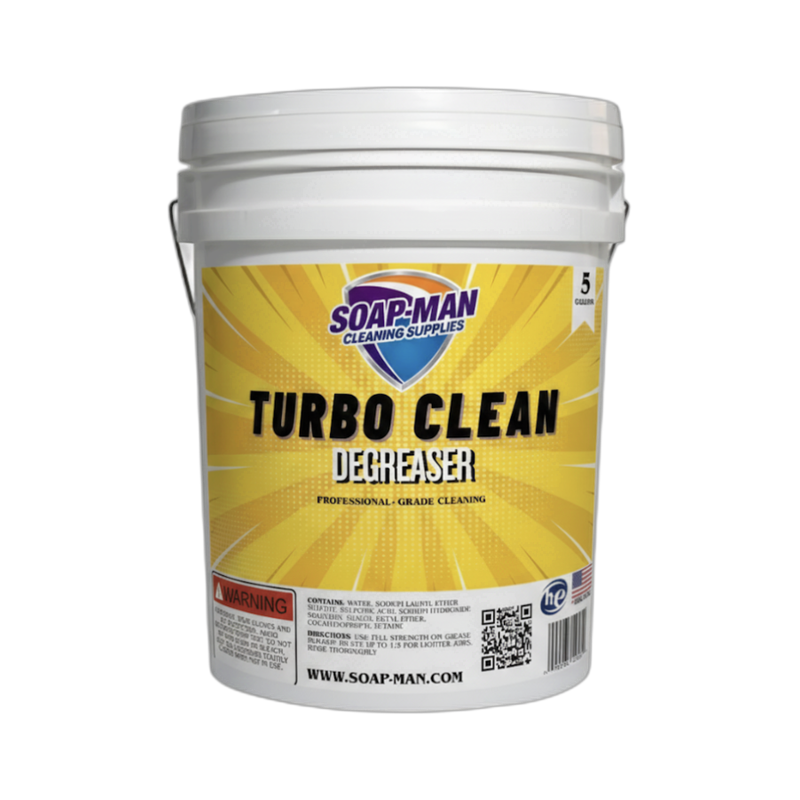
- A quality degreaser — Turbo Clean Degreaser for embedded dirt and organic buildup.
- A general cleaner — Vibes Multi-Surface Cleaner for regular maintenance cleaning.
- A stiff-bristled deck brush — with a long handle.
- A garden hose with a spray nozzle.
- A broom.
- A bucket.
- Rubber gloves and safety glasses.
- A tarp — for protecting nearby plants from cleaner runoff.
Step-by-Step: The Professional Deck Cleaning Method
Step 1: Clear and Sweep
Remove all furniture, plants, grills, and decor from the deck. Sweep the entire surface thoroughly to remove leaves, dirt, twigs, and debris. Pay special attention to gaps between boards where debris collects — a stiff broom or a plastic scraper works well. A clean, dry surface is essential for the cleaner to reach the wood or composite material.
Step 2: Wet the Deck
Spray the entire deck with plain water from a garden hose. This wets the wood and prevents the cleaning solution from absorbing too deeply (which can cause streaking and uneven cleaning). For composite decks, a light wet-down is still recommended.
Step 3: Apply the Cleaner
Mix your cleaner according to the label directions in a bucket. For heavy dirt and organic buildup (mildew, algae, pollen), use a degreaser like Turbo Clean Degreaser diluted as directed. Pour or apply with a spray applicator across a 6-by-6-foot section of deck. Don't try to do the whole deck at once — work in sections so the cleaner doesn't dry before you scrub.
Step 4: Let It Dwell
Let the cleaner sit for 10-15 minutes. This is when chemistry does the work — breaking down organic matter, loosening dirt, and killing mildew. Don't let it dry on the wood. If the section starts drying before dwell time is complete, mist with water to reactivate it.
Step 5: Scrub with a Deck Brush
Using a stiff-bristled deck brush with a long handle, scrub the wetted section using firm, straight strokes. Always scrub with the grain of the wood — never across it. Work methodically, making sure the bristles reach into the grain and between boards. For stubborn mildew spots, apply a bit more cleaner and scrub again.
Step 6: Rinse Thoroughly
Rinse the section with your garden hose on a strong stream (not pressure-washer strength). Flush all cleaning solution off the wood — residue causes spotting and can damage finishes. Then move to the next 6-by-6 section and repeat the cleaner-dwell-scrub-rinse cycle.
Step 7: Let It Dry Completely
Once the entire deck is clean, let it dry for 48 hours before replacing furniture or walking on it heavily. If you plan to reseal or restain, wait for the deck to be fully dry — typically 72 hours or more in humid conditions.
Pro Tips
- Clean in the shade. Hot sun evaporates cleaning solution too fast and leaves streaks.
- Wet down nearby plants. Cleaning solution runoff can harm landscaping. Pre-wet plants and cover sensitive flowers with a tarp.
- Clean every spring. Annual cleaning removes winter grime before it bonds to the wood and keeps the finish lasting years longer.
Common Mistakes
- Using bleach on wood decks. Bleach damages wood fibers and lightens the color. Use a proper deck cleaner instead.
- Scrubbing across the grain. Damages the wood surface and leaves visible scratches.
- Not rinsing enough. Cleaner residue attracts new dirt and dulls any stain or sealer underneath.
FAQ
Is a pressure washer ever safe on a deck?
A pressure washer can be used carefully on concrete or stone decks, but almost never safely on wood or composite decks. If you must use one, keep it at the lowest setting, hold the tip at least 12 inches from the surface, and always spray with the grain.
How often should I clean my deck?
Once a year is standard — usually in spring. High-humidity or high-traffic decks may need a second cleaning in early fall. Swept and rinsed regularly, a well-maintained deck needs less frequent deep cleaning.
Can I use oxygen bleach on my deck?
Yes. Oxygen bleach (sodium percarbonate) is safer for wood than chlorine bleach and effective against mildew and gray weathering. Mix as directed, apply, dwell, scrub, rinse — the same method as this guide.
Do I need to reseal after cleaning?
If your deck has a stain or sealer, any deep cleaning will remove some of that finish. Reseal annually or whenever water no longer beads on the surface. Cleaning is the ideal prep step before applying fresh sealer.
My composite deck has mildew. Can I still use these methods?
Yes. Composite decks respond well to chemical cleaning. Follow manufacturer directions for approved cleaners. Most composite manufacturers specifically warn against pressure washing above a certain PSI.