
Why Vinyl Siding Gets Dirty
Vinyl siding handles weather well, but it's not self-cleaning. Dust settles in the horizontal channels, pollen bonds to the textured surface, mildew grows anywhere there's shade and moisture, and chalky residue forms as the vinyl oxidizes over years of sun exposure. The result is a house that looks tired and faded even though the siding itself is still structurally perfect.
The good news is that cleaning vinyl siding is straightforward. You don't need a pressure washer — in fact, high pressure can force water behind the panels and into your walls. A garden hose, the right cleaner, and a long-handled brush get the job done in an afternoon. This guide walks you through the method professional house washers use.
What You'll Need
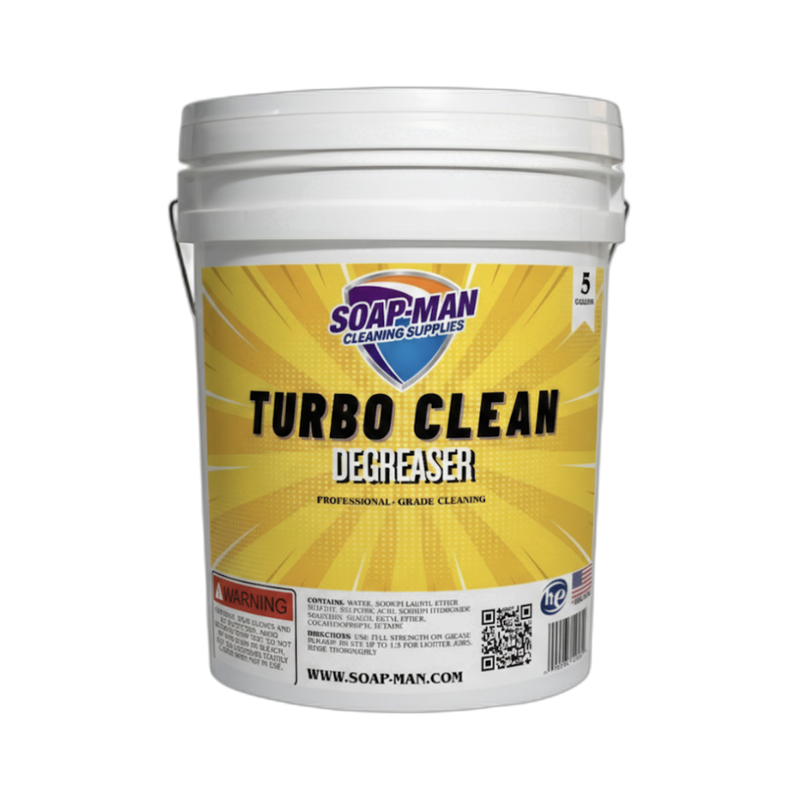
- A heavy-duty cleaner — Turbo Clean Degreaser for embedded dirt and mildew.
- A garden hose with a spray nozzle.
- A soft-bristled scrub brush — long handle, ideally on an extension pole.
- A bucket.
- A ladder — sturdy enough to reach high sections safely.
- Rubber gloves and safety glasses.
- A tarp — to cover plants and landscaping near the walls.
- A second person — for safety when working on ladders.
Step-by-Step: Cleaning Your Vinyl Siding
Step 1: Prep the Area
Cover shrubs, flowers, and delicate landscaping near the house with a tarp or plastic sheeting. Close all windows and doors. Turn off exterior lights and cover electrical outlets. Move any outdoor furniture away from the walls. Pre-wet plants with plain water to dilute any cleaner runoff that reaches them.
Step 2: Rinse the Siding
Starting at the top of the house, rinse the siding with a garden hose using a wide spray pattern. Work from top to bottom so dirty water runs over already-rinsed sections. A good initial rinse removes loose dirt and makes the chemical cleaning much more effective.
Step 3: Mix Your Cleaner
Mix your cleaner with warm water in a bucket according to label directions. For typical residential siding, use the standard dilution. For heavy mildew or weather buildup, use a slightly stronger mix. A heavy-duty cleaner like Turbo Clean Degreaser cuts through the oily film that attracts new dirt.
Step 4: Apply the Cleaner in Sections
Work from bottom to top when applying cleaner — this prevents streaking from dirty water running down over cleaner you're about to wash. Apply to a section roughly 10 by 10 feet, using a soft brush or a pump sprayer. Let the cleaner dwell for 5-10 minutes. Don't let it dry.
Step 5: Scrub Gently
Scrub the cleaned section with a soft-bristled brush. Work in small circular motions along the horizontal channels where dirt collects. Don't scrub hard — the cleaner does the work, and aggressive scrubbing can damage the siding's matte finish.
Step 6: Rinse from Top to Bottom
Now rinse the section with a garden hose, starting at the top. Use plenty of water to flush all cleaner off the siding — residue causes streaks and attracts new dirt. Move to the next section and repeat the cleaner-dwell-scrub-rinse cycle.
Step 7: Spot-Treat Remaining Stains
For stubborn mildew spots that remain after general cleaning, apply a bit more concentrated cleaner directly to the spot, let it dwell, scrub gently, and rinse. For rust stains from metal fasteners, a rust-specific cleaner is more effective than general cleaners.
Pro Tips
- Work on overcast days. Direct sun evaporates cleaner and leaves streaks.
- Never spray water upward under overlapping siding joints. High pressure forces water behind the siding and into wall cavities.
- Use an extension pole brush. Safer than a ladder for reaching second-story sections.
Common Mistakes
- Using a pressure washer. Forces water behind siding, damages panels, and voids warranties.
- Working top-down with cleaner. Causes streaking. Apply bottom-up, rinse top-down.
- Letting cleaner dry on the siding. Leaves streaks and can permanently stain.
FAQ
How often should I clean vinyl siding?
Once a year is standard. Humid climates, wooded lots, or houses under trees may need cleaning twice a year due to faster mildew and pollen buildup.
Is bleach safe on vinyl siding?
In very dilute concentrations, yes. A mixture of one part bleach to three parts water can kill mildew effectively. Test in a hidden area first and rinse thoroughly. Cover landscaping — bleach runoff kills plants.
Can I use a pressure washer at all?
Professional house washers use low-pressure "soft washing" — typically under 500 PSI — with chemical cleaners. A standard homeowner pressure washer at 2,000+ PSI is too aggressive. Stick to garden hoses for DIY work.
What about green algae stains?
Green stains are usually algae. They respond well to oxygen bleach (sodium percarbonate) or a cleaner designed for mildew and algae. Apply, dwell 10-15 minutes, scrub, rinse.
My siding looks chalky. What is that?
Chalky residue is oxidation — a powdery film that develops as vinyl ages. It's cosmetic, not structural. A thorough cleaning with a good detergent removes most of it. Very old or heavily oxidized siding may need a vinyl restorer product or a repaint.