
Why Fence Cleaning Matters
A fence is one of the largest visible surfaces in your yard, and dirt, mildew, and algae make it look neglected fast. Beyond appearance, uncleaned fences degrade faster. Wood fences rot when mildew colonies trap moisture against the grain. Vinyl fences develop permanent green stains from algae if not addressed. Metal fences rust where dirt traps moisture against bare spots. An annual cleaning restores appearance, extends fence life significantly, and takes less time than most homeowners expect.
What You'll Need
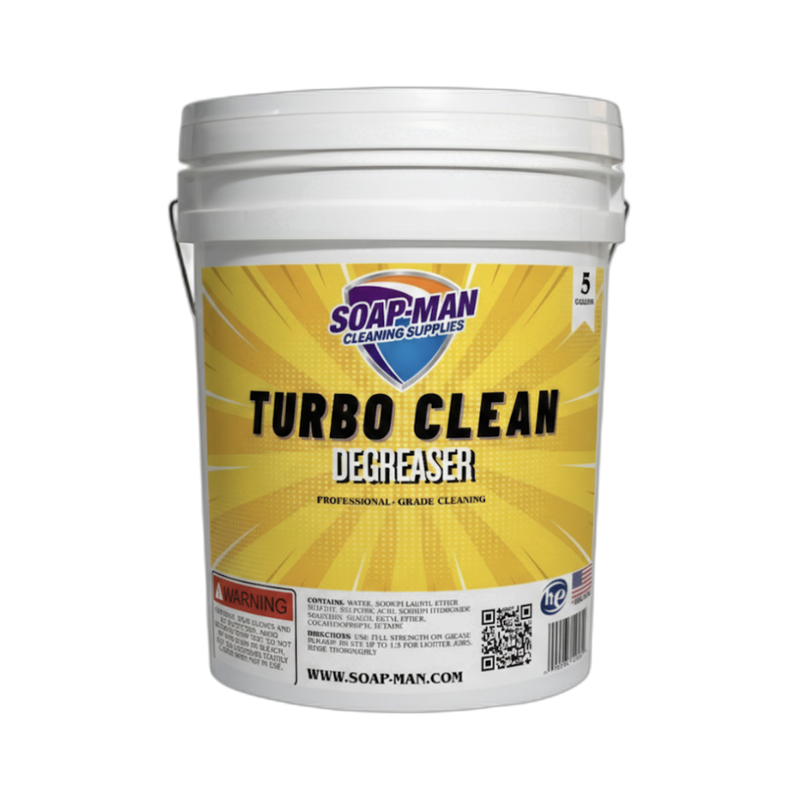
- Heavy-duty cleaner — Turbo Clean Degreaser cuts fence grime effectively.
- Long-handled scrub brush
- Garden hose — or pressure washer for large fences.
- Bucket of warm water
- Drop cloths — to protect plants nearby.
- Oxygen bleach — for mildew on wood.
Step-by-Step: How to Clean a Fence
Step 1: Prep the Area
Cover any plants or landscaping along the fence with drop cloths to protect from runoff. Remove anything leaning against the fence. Sweep off loose debris with a broom — cobwebs, dead leaves, loose dirt — before wetting the surface.
Step 2: Rinse the Fence
Hose down the entire fence from top to bottom. This pre-rinse removes surface dirt and saves cleaning solution. For vinyl and metal fences, you can use a pressure washer on medium setting. For wood fences, avoid high pressure — it splinters and damages the grain.
Step 3: Apply Cleaner and Scrub
Mix Turbo Clean Degreaser with warm water in a bucket. Apply with the scrub brush, working in sections. Scrub in the direction of wood grain on wood fences, and in circular motions on vinyl and metal. For mildew on wood, mix oxygen bleach with water per label instructions and apply to moldy areas, let sit for 10 to 15 minutes, then scrub.
Step 4: Rinse Thoroughly
Rinse the fence from top to bottom with a hose until all cleaning residue is gone. Check for missed spots and touch them up. For wood fences, let dry completely and assess whether the stain or sealant needs refreshing. Freshly cleaned wood is the best surface for applying new stain or sealer.
Pro Tips
- Work in sections. Don't try to do the whole fence at once. Clean one 8-to-10-foot section at a time, rinse, then move on. Cleaners drying on the surface leave streaks.
- Reseal wood fences every two to three years. Cleaning without resealing just starts the cycle over. Apply a fresh coat of stain or sealer after every cleaning for maximum protection.
- Clean in cloudy weather. Direct hot sun dries cleaners too fast, leaving streaks. An overcast day gives you time to work without the surface drying mid-scrub.
FAQ
Can I pressure wash a wood fence?
Only on the lowest pressure setting (under 1,500 psi) with a wide fan tip held at least 12 inches from the surface. Even then, pressure washing wood can splinter the grain and strip stain prematurely. A brush and garden hose usually gives better results on wood.
How do I remove algae from a vinyl fence?
Mix one cup of oxygen bleach with a gallon of warm water. Apply to algae-covered areas with a brush, let sit for 10 minutes, and scrub. Rinse thoroughly. Oxygen bleach is plant-safe, unlike chlorine bleach.
What about rust on a metal fence?
Scrub rust spots with a wire brush to remove loose flakes. Apply a rust converter or rust-inhibiting primer to affected areas. Once dry, touch up with exterior paint matching the fence color. Address rust early — once it eats through the metal, repair becomes much harder.
How often should I clean a fence?
A full clean once per year is sufficient for most fences. Wood fences in damp, shaded environments may need twice-yearly cleaning to prevent mildew. Spot-clean graffiti or contamination immediately.