
Why Oven Racks Are the Hardest Thing to Clean in Your Kitchen
Oven rack grease isn't regular grease. It's been baked at 350-500 degrees repeatedly, creating a carbon-polymer bond with the metal that regular soap and water can't break. Every time you cook something that splatters, bubbles over, or drips, another layer gets baked on top of the last one. After months or years, the racks go from shiny chrome to dark brown or black, and the grime is so hard it feels like part of the metal itself. Oven self-clean cycles technically work but turn your kitchen into a smoke-filled oven that reaches 900 degrees — and they can warp the racks or damage their chrome finish. The methods below remove baked-on grease effectively without extreme heat or dangerous chemical fumes.
What You'll Need
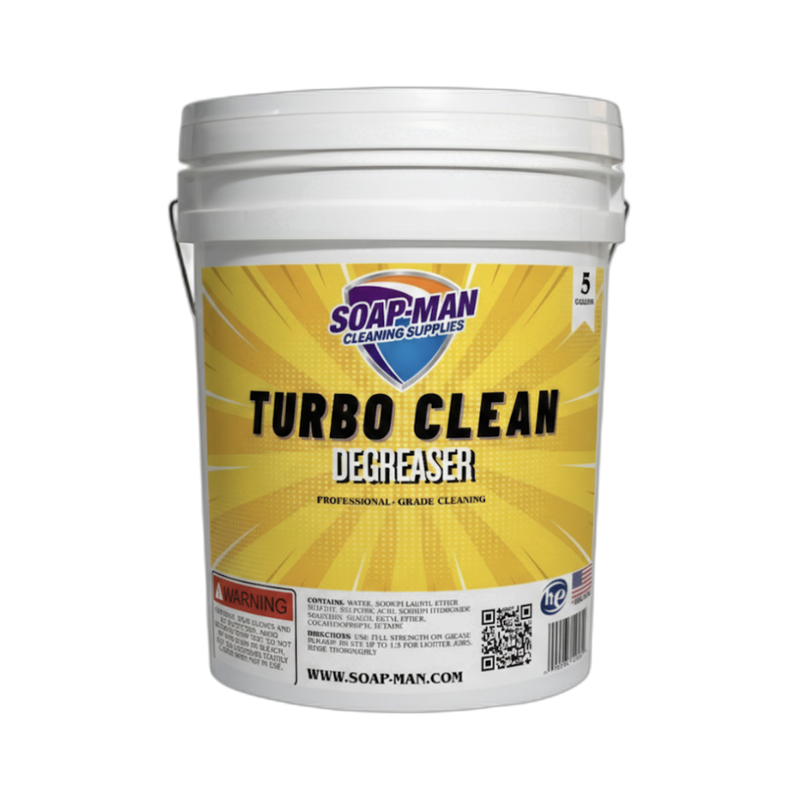
- Heavy-duty degreaser — Turbo Clean Degreaser is formulated to break the carbon bonds that make oven grease so stubborn.
- Large trash bags or bathtub — for soaking.
- Baking soda — for a paste treatment on heavy buildup.
- White vinegar — for the reaction that loosens baked-on residue.
- Dryer sheets (optional) — a surprisingly effective soaking aid.
- Non-scratch scrubbing pad or steel wool — steel wool for chrome racks, non-scratch for porcelain-coated.
- Old towels — to protect surfaces during the soaking process.
- Rubber gloves
Step-by-Step: How to Clean Oven Racks
Step 1: Remove the Racks and Pre-Treat
Take the racks out of the oven and lay them on old towels on the floor, in the bathtub, or outside on the patio. Spray them generously with Turbo Clean Degreaser, making sure to coat every bar and both sides. The degreaser starts breaking down the grease immediately, but it needs dwell time to work on baked-on carbon — this is the pre-treatment step, not the cleaning step. Let the degreaser sit for 15-20 minutes while you prepare the soaking solution.
Step 2: Soak Overnight
The most effective method for oven racks is an overnight soak. Option A: Place each rack in a large garbage bag, spray generously with more degreaser, add half a cup of baking soda, and seal the bag. Lay the bags flat in the bathtub or on a patio surface overnight. Option B: Fill the bathtub with enough hot water to cover the racks, add half a cup of dish soap and a cup of baking soda, and submerge the racks. For either method, the long soak time does 80% of the work — the chemicals and baking soda slowly dissolve the grease bond while you sleep. If using the bathtub, lay an old towel on the bottom first to prevent the racks from scratching the tub surface.
Step 3: Scrub the Loosened Grease
After soaking for at least 8 hours, remove the racks and you'll immediately see the difference — much of the grease will have softened to a paste or detached entirely. Use a non-scratch scrubbing pad for porcelain-coated racks (the ones with a black or gray coating) or steel wool for plain chrome racks. Scrub each bar individually, working along the length of the bar rather than across it. For stubborn spots that survived the soak, make a paste of baking soda and water, apply it directly to the spot, spray with vinegar (it'll fizz), let it sit for 10 minutes, then scrub again. The fizzing reaction lifts the remaining carbon.
Step 4: Rinse and Inspect
Rinse the racks thoroughly under running water or with a garden hose. Hold them up to the light and run your fingers along the bars to check for remaining grease patches. Baked-on spots that are still rough need a second targeted treatment — apply degreaser directly to the spot, wait 10 minutes, and scrub with steel wool. Don't put racks back in the oven with residual grease — it'll bake on harder during the next cooking cycle and become even more difficult to remove next time.
Step 5: Dry and Reinstall
Dry the racks completely with a clean towel to prevent water spots and flash rust on any exposed metal (especially if the chrome is scratched or worn). Slide them back into the oven on their tracks, making sure they sit level and slide smoothly. If the rack slides are stiff, wipe them with a paper towel dampened with a drop of cooking oil — this lubricates the tracks without creating smoke during the next use. Don't use spray lubricants inside the oven.
Pro Tips
- Use dryer sheets in the soaking water. Sounds strange, but dryer sheets contain fabric softening agents that break down baked-on grease surprisingly well. Add 6-8 dryer sheets to your bathtub soak along with the dish soap and baking soda. The anti-static compounds in dryer sheets help release the grease-to-metal bond.
- Line the bottom of a clean oven with foil. After putting your clean racks back, line the bottom of the oven with aluminum foil to catch future drips and spills. Replace the foil monthly. This prevents 90% of the grease buildup that makes rack cleaning necessary.
- Clean racks every 3 months. Don't wait until the grease is a quarter-inch thick. A quarterly soak and scrub takes 30 minutes of active work. An annual deep clean on heavily neglected racks takes hours. Stay ahead of the buildup.
Common Mistakes
- Using the oven self-clean cycle with racks inside. Self-clean cycles reach 900+ degrees, which can warp rack metal, discolor chrome plating, and cause porcelain coatings to chip and flake. Most manufacturers recommend removing racks before running self-clean. The manual soak method produces better results without heat damage.
- Scrubbing porcelain-coated racks with steel wool. Steel wool strips the porcelain coating, exposing the base metal to rust. Use only non-scratch pads or nylon brushes on coated racks. If you're unsure whether your racks are chrome or porcelain, check the oven manual — or look for a matte black or gray finish (porcelain) versus a shiny silver finish (chrome).
- Skipping the soak and going straight to scrubbing. Without a proper soak, you're fighting the chemical bond between baked-on carbon and metal with brute force alone. An overnight soak dissolves that bond so scrubbing requires a fraction of the effort. Patience saves your arms and produces a better result.
FAQ
Can I clean oven racks in the dishwasher?
Most standard dishwashers can't fit a full-size oven rack, and even if it fits, the dishwasher lacks the chemical strength and soak time to remove baked-on grease. The hot water and detergent might remove light surface grime but won't touch carbon buildup. The soak-and-scrub method is significantly more effective.
Will ammonia work for cleaning oven racks?
Ammonia fumes are effective at dissolving grease — place racks in a sealed garbage bag with a bowl of ammonia (the fumes do the work, not the liquid). However, ammonia produces strong, irritating fumes that are dangerous in enclosed spaces. If you use this method, do it outdoors, never mix ammonia with bleach (which creates toxic chloramine gas), and wear gloves. The baking soda soak method achieves similar results without the fume hazard.
How do I clean the oven rack tracks (side rails)?
Spray the tracks inside the oven with degreaser, let it sit for 15 minutes, then scrub with an old toothbrush. Wipe clean with a damp cloth. These tracks accumulate grease drippings and carbon that make racks hard to slide. Clean them every time you clean the racks for smooth operation.
Can I use oven cleaner spray on the racks?
Yes, commercial oven cleaners work on racks — spray them outside or in a well-ventilated area, seal in a garbage bag, and let them sit for the time specified on the product (usually 4-12 hours). However, these products contain sodium hydroxide (lye) that requires careful handling — wear gloves, protect your eyes, and rinse thoroughly. The baking soda and degreaser method is less caustic and equally effective with an overnight soak.
My oven racks are rusting — can I still clean them?
Surface rust on chrome racks can be removed with steel wool or a rust eraser along with the grease. After cleaning, apply a thin coat of high-temperature cooking oil (like avocado oil) to the affected areas to prevent further rusting. If the chrome is extensively peeling and the base metal is heavily corroded, replacement racks ($15-$40 from the manufacturer) are a better investment than trying to restore severely damaged ones.