
Why Microwaves Get So Dirty So Fast
Microwaves take more punishment than almost any other kitchen appliance. Every time you heat something uncovered, food particles and steam coat the interior. Sauces splatter against the ceiling. Coffee boils over. Soup explodes. And because the door is usually closed, you rarely see how bad it's getting until you finally look up and realize the top is caked in dried food from a dozen meals ago.
As cleaning professionals, we see two kinds of microwaves on service calls: the ones that get wiped out weekly and look nearly new after years of use, and the ones that haven't been touched in months and now have baked-on messes that seem impossible to remove. The good news: even the worst microwave can be restored to like-new condition in under 20 minutes using the right method.
This guide walks through the professional approach — cleaning the interior, the turntable, the door seal, and the exterior without damaging anything. No scraping, no harsh abrasives, no scrubbing until your arm gives out.
What You'll Need
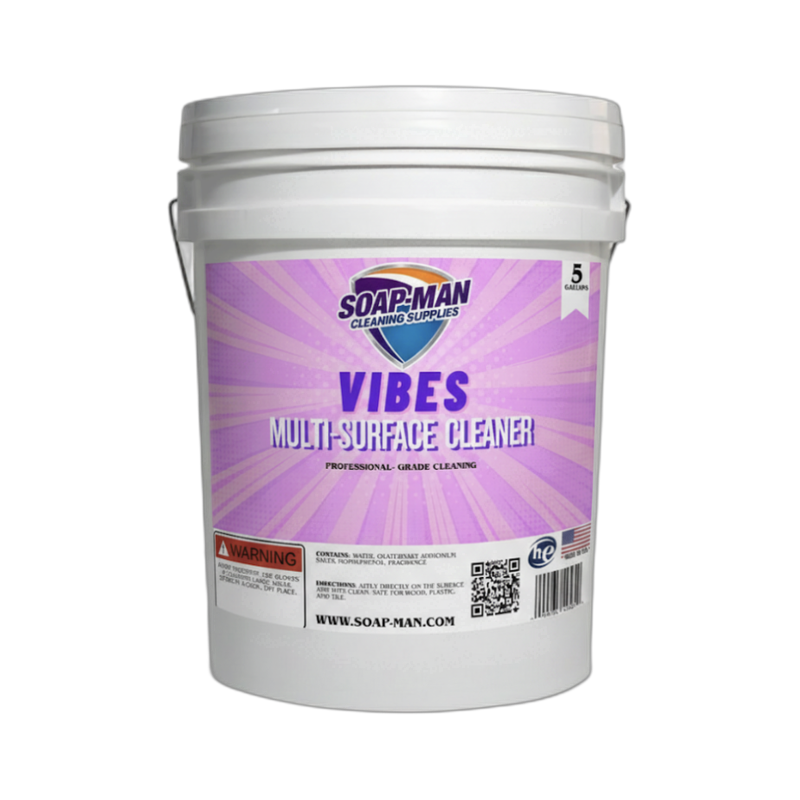
- Multi-surface cleaner — Vibes Multi-Surface Cleaner cuts through grease and food residue without leaving streaks or residue that could contaminate food. It's safe for use inside food-contact appliances when rinsed properly.
- Microwave-safe bowl — For the steam method. Glass is best.
- Water — For steam and rinsing.
- Microfiber cloths — At least two. One for washing, one for drying.
- Soft sponge — Non-abrasive side only. Never use steel wool or scouring pads on microwave interiors.
- Toothpicks or wooden skewers — For getting into door seal crevices.
- Dish soap — For the turntable.
Step-by-Step Method
Step 1: Steam Loose the Baked-On Mess
Before you scrub anything, let steam do the heavy lifting. Fill a microwave-safe bowl with about a cup of water. Place it in the center of the microwave and heat on high for 3-5 minutes, or until the water boils vigorously and steam coats the interior. Let it sit with the door closed for another 2-3 minutes after the cycle ends.
The steam softens dried food splatters and loosens grease so it wipes away with minimal effort. This single step turns a 30-minute scrub session into a 5-minute wipe-down. Do not skip it.
Step 2: Remove the Turntable and Support Ring
Carefully open the door (steam will escape) and remove the turntable and the plastic or metal support ring underneath it. These go in the sink to soak in warm soapy water while you clean the interior. Don't use your dishwasher unless the manual specifically approves it — some turntables will crack or warp in dishwasher heat.
Step 3: Wipe Out the Interior
Spray Vibes Multi-Surface Cleaner onto a damp microfiber cloth (not directly into the microwave — you don't want overspray hitting the magnetron vent). Wipe down the ceiling, walls, floor, and inside of the door in that order. Gravity pulls drips downward, so working top to bottom keeps you from re-dirtying cleaned surfaces.
For stubborn spots, hold a damp cloth over the area for 10-15 seconds to soften the residue further, then wipe. If something absolutely refuses to come off, use the soft side of a sponge with more cleaner. Never scrape with a knife or use steel wool — you can scratch the interior coating and create hot spots that degrade the microwave's efficiency.
Step 4: Clean the Door Seal and Hinges
The rubber gasket around the door traps food particles and grease. Wipe along it with your microfiber cloth folded into a point. For crumbs stuck in the seal grooves, use a toothpick or wooden skewer to dislodge them, then wipe again. A clean door seal is critical — food buildup here prevents the door from sealing properly, which reduces microwave efficiency and creates an uneven cook.
Step 5: Wash the Turntable and Support Ring
Scrub the turntable with a soft sponge and dish soap. For dried-on food, let it soak for 10 minutes first. Rinse thoroughly and dry before reinstalling. The support ring has small grooves where grime collects — use a toothbrush to clean these thoroughly. Reinstall both pieces only once they're completely dry.
Step 6: Clean the Exterior
Spray Vibes onto a cloth and wipe down the outside of the microwave — the door, control panel, sides, and top. The control panel typically has the most fingerprints and needs the most attention. Go over buttons carefully; avoid spraying directly onto electronic controls. Finish with a dry microfiber cloth to remove any streaks.
Pro Tips
- Steam first, always. Even if the microwave only looks slightly dirty, steam it before wiping. You'll be shocked at how much more comes off.
- Add lemon juice to the steam water. A tablespoon of lemon juice in the steam bowl helps neutralize lingering food odors — especially helpful if someone burned popcorn or reheated fish.
- Cover food when reheating. A paper towel or microwave-safe lid prevents 90% of the splatter that causes buildup in the first place. Five seconds of prep saves hours of cleaning.
- Clean immediately after spills. A 30-second wipe when a spill is fresh saves a 15-minute scrub when it's been baked on through three more reheat cycles.
Common Mistakes
Using Abrasive Scrubbers
Steel wool, scouring pads, and abrasive powders scratch the interior coating of microwaves. Those scratches become hot spots where future messes bond even harder, and over time they can actually damage the microwave's ability to heat evenly. Always use soft cloths and sponges.
Spraying Cleaner Directly Inside
Spraying cleaner directly into a microwave risks getting product into the vents, the magnetron housing, or electronic components. Always spray onto the cloth first, then wipe. This protects the internal components and gives you more control over where the cleaner goes.
Ignoring the Door Seal
The rubber gasket is the most overlooked part of a microwave. A dirty or damaged seal leaks microwave energy, reduces efficiency, and can be a food safety concern. Clean it every time you clean the interior, and inspect it for tears or gaps.
Cleaning Without Unplugging (for Deep Cleans)
For regular weekly cleaning, unplugging isn't necessary. But if you're doing a deep clean that involves the vent areas, the grease filter (in over-the-range models), or any disassembly, unplug the microwave first. Water and electricity don't mix.
Frequently Asked Questions
How often should I clean my microwave?
Wipe the interior after every spill, do a steam-and-wipe every week, and do a full clean (including the door seal and exterior) every 2-4 weeks. Commercial kitchens should clean microwaves daily at minimum.
Can I use bleach to clean a microwave?
We don't recommend it. Bleach can corrode metal components and leave residue that's hard to rinse completely from a small enclosed space where food is heated. Use a food-safe multi-surface cleaner instead.
How do I get burnt popcorn smell out of a microwave?
Steam a bowl of water with 2 tablespoons of lemon juice for 5 minutes, then let it sit for 10 minutes before wiping. Repeat if needed. For stubborn odors, follow up by placing an open container of baking soda in the microwave overnight (door closed).
What causes the rotating plate to stop turning?
Usually food debris stuck in the support ring or the drive coupler underneath the turntable. Remove the turntable and support ring, clean both thoroughly, and make sure the drive coupler (the small knob the turntable sits on) is free of debris. If it still doesn't turn, the motor may need service.
Is it safe to clean a microwave while it's still warm?
Yes — in fact, warm interiors are easier to clean because grease is softer. Just make sure it's not hot enough to burn you, and give glass surfaces a minute to cool before touching them with a wet cloth (thermal shock can crack glass).