
Why a Clean Oven Matters More Than You Think
As cleaning professionals, we've seen ovens that haven't been cleaned in years. The carbonized grease coating the walls, the burnt food pooled on the bottom, the racks so blackened they look like they belong in a different appliance. Beyond the obvious unpleasantness, a dirty oven creates real problems: it produces smoke that sets off fire alarms, generates unpleasant odors that transfer to your food, reduces energy efficiency by insulating the heating elements, and in commercial kitchens, it's a fire hazard and a health code violation.
The good news is that cleaning an oven is straightforward once you know the right approach. The key is matching your method to the level of buildup and using proper dwell times rather than relying on brute-force scrubbing. This guide covers every scenario: the standard home oven that needs a deep clean, the self-cleaning oven feature (and when not to use it), natural cleaning methods, and commercial oven maintenance protocols.
Before You Start: What You'll Need
Gather everything before you begin so you're not hunting for supplies mid-clean with greasy gloves.
For Manual Deep Cleaning
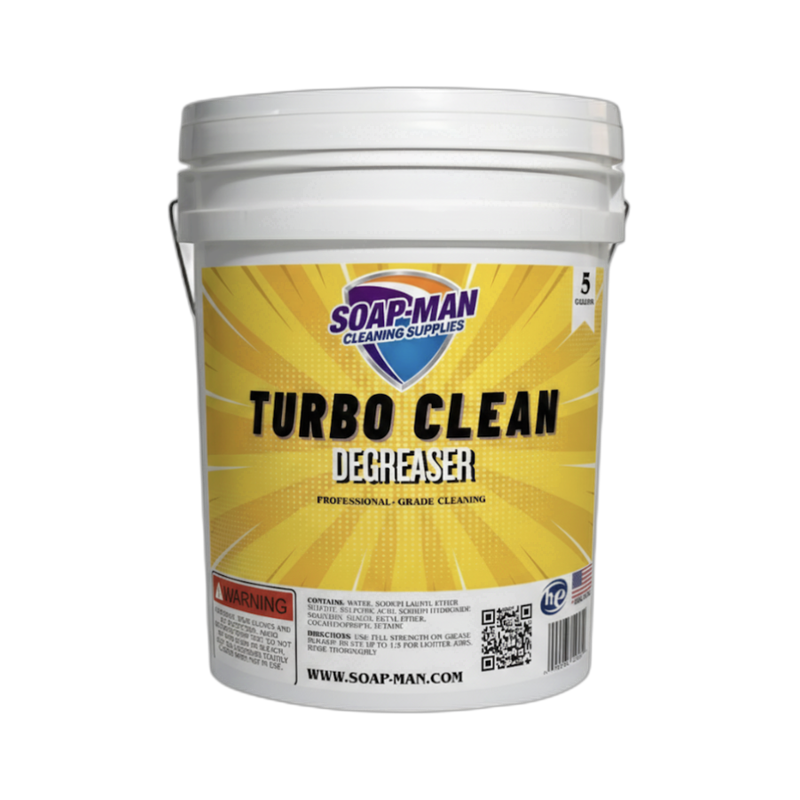
- Heavy-duty degreaser (a commercial-grade product like Turbo Clean works best on baked-on grease)
- Baking soda (a full box)
- White vinegar in a spray bottle
- Dish soap
- Rubber or chemical-resistant gloves
- Safety glasses (for spray-back when working on the ceiling of the oven)
- Non-scratch scrub sponges or nylon pads
- An old toothbrush for crevices and hinges
- Plastic or silicone scraper (not metal, which scratches enamel)
- Microfiber cloths (at least 4)
- Old towels to protect the floor
- Bucket of warm water
- Trash bag (large, for soaking oven racks)
For Routine Maintenance Cleaning
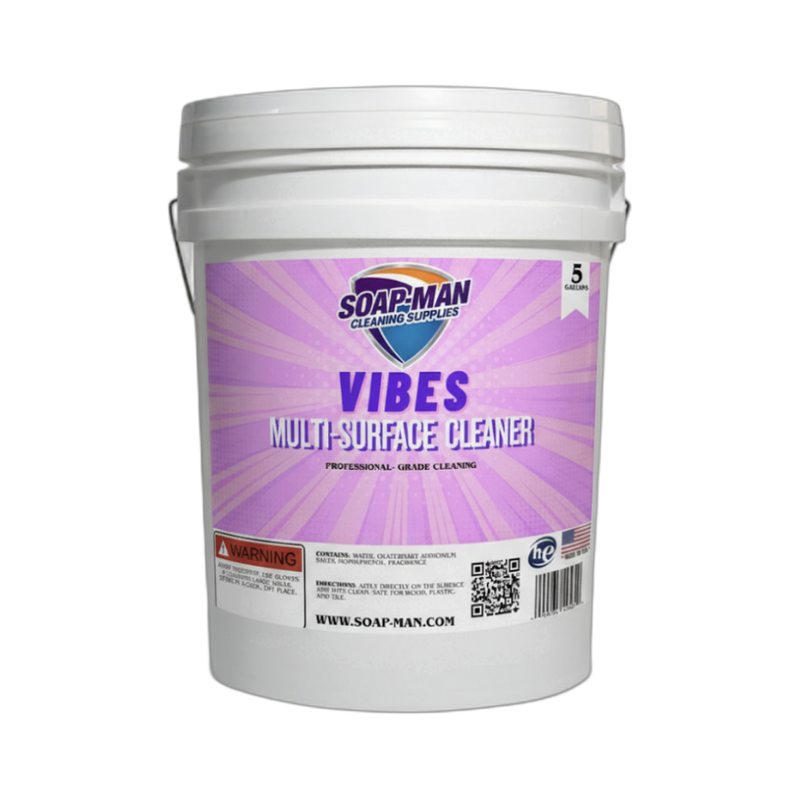
- Multi-surface cleaner (Vibes or similar)
- Microfiber cloth
- Non-scratch sponge
- Spray bottle with water and dish soap
Method 1: Manual Deep Clean (Best Results)
This is the method we recommend for any oven with moderate to heavy buildup. It takes about 30 minutes of active work plus overnight soaking time, and it delivers the best results on even the most neglected ovens.
Step 1: Preparation
Remove everything from inside the oven — racks, thermometers, pizza stones, and anything else. Pull the oven away from the wall slightly so you can access the back panel for cleaning. Lay old towels on the floor in front of the oven to catch drips. Open a window or turn on the kitchen exhaust fan for ventilation.
Make sure the oven is completely cool and turned off. If it has been recently used, give it at least two hours to cool down. Cleaning products on a hot surface produce fumes and evaporate before they can work.
Step 2: Remove and Soak the Racks
Place the oven racks in a bathtub, large utility sink, or on a flat surface inside a large trash bag. If using the bathtub, lay an old towel on the bottom first to prevent scratching.
For heavily soiled racks: Spray generously with degreaser, place in the trash bag, add half a cup of dish soap and enough hot water to submerge, then seal the bag and let it soak for at least 4 hours — overnight is better. The combination of degreaser, soap, and prolonged soaking does 90% of the work for you.
For lightly soiled racks: Soak in hot water with dish soap for 2 hours, then scrub with a nylon pad.
Step 3: Apply the Baking Soda Paste
Mix half a cup of baking soda with 2-3 tablespoons of water to form a thick paste. You want the consistency of peanut butter — spreadable but not runny. Add water gradually until you reach the right thickness.
Wearing gloves, spread the baking soda paste over every interior surface of the oven — walls, floor, ceiling, door interior, and around (but not on) the heating elements. Apply it thicker on areas with heavy buildup. Avoid coating the heating elements directly, as the paste can interfere with their function. The paste will turn brown as it reacts with the grease, which is exactly what you want.
Close the oven door and leave the paste on for at least 12 hours. Overnight is ideal. The baking soda works by slowly breaking down the carbonized grease and food, making it far easier to remove without aggressive scrubbing.
Step 4: Spray with Vinegar
After the 12-hour soak, open the oven and spray the baking soda residue with white vinegar from a spray bottle. The mixture will fizz and foam — this reaction helps lift the loosened grime from the surface. Let it fizz for 15-20 minutes.
Step 5: Wipe and Scrub
Using a damp microfiber cloth, start wiping away the baking soda paste and dissolved grime. You'll need to rinse the cloth frequently in your bucket of warm water. For stubborn spots that the baking soda didn't fully dissolve, use the plastic scraper to gently lift the carbonized residue, then follow with the non-scratch sponge.
For really tough baked-on deposits: apply a commercial degreaser directly, let it dwell for 5-10 minutes, then scrub with the nylon pad. The degreaser handles what the baking soda couldn't reach. Work in sections — ceiling first, then walls, then floor — so drips fall onto areas you haven't cleaned yet.
Use the old toothbrush to clean the hinges, corners, and the gap around the door seal. These areas trap grease that's easy to miss.
Step 6: Clean the Oven Door
The oven door has two challenges: the glass panel and the area between the glass panes.
For the interior glass: spray with degreaser or apply the baking soda paste during Step 3. After soaking, scrub gently with a non-scratch pad. Rinse thoroughly with a damp cloth and follow with a dry microfiber to prevent streaks.
For between the glass: Most oven doors can be partially disassembled by removing screws along the bottom edge of the door. Consult your oven manual before attempting this. Once open, clean the interior surfaces with a damp cloth and mild cleaner, then reassemble. If disassembly seems too complex, a long, thin microfiber cloth wrapped around a flexible ruler can reach between the panes through the slot at the bottom of the door.
For the exterior: a multi-surface cleaner and microfiber cloth handles the outside of the door. Avoid heavy degreasers on the exterior controls and displays.
Step 7: Finish the Racks
Remove the racks from their soak. The grease should wipe away easily now. Use a nylon scrub pad on any remaining spots. Rinse thoroughly with clean water and dry with a towel before returning them to the oven. Wet racks can develop flash rust, so don't skip the drying step.
Step 8: Final Rinse and Dry
Go over all interior surfaces one final time with a clean, damp microfiber cloth to remove any remaining residue. Follow with a dry cloth. Replace the racks. Run the oven empty at 300 degrees for 15 minutes to burn off any remaining moisture and product residue. The oven may produce a slight smell during this burn-off — that's normal and will dissipate quickly.
Method 2: Self-Clean Function
Many modern ovens include a self-clean cycle that locks the door and heats the interior to approximately 900 degrees Fahrenheit, incinerating food residue into ash that you can wipe out afterward. It sounds convenient, and it can be — but there are important caveats.
When Self-Clean Works Well
- Light to moderate buildup with no large chunks of food debris
- The oven is relatively new and in good mechanical condition
- You can ventilate the kitchen well during the 2-4 hour cycle
- You don't have pet birds (the fumes from the extreme heat can be fatal to birds)
When to Skip Self-Clean
- Heavy grease buildup — the extreme heat can cause large deposits to catch fire inside the oven
- The oven is older — the self-clean cycle stresses the thermostat, door lock mechanism, and heating elements. It's the most common cause of oven breakdowns
- You have respiratory sensitivities — the cycle produces significant fumes
- The oven seal (gasket) is worn or damaged — heat can escape and damage surrounding cabinetry
How to Use Self-Clean Safely
Remove the oven racks (the extreme heat discolors and warps them). Remove any large food debris manually. Open windows and run the exhaust fan. Start the cycle and leave the kitchen. Once the cycle completes and the oven has cooled completely (which can take several hours), wipe the ash from the interior with a damp cloth.
Method 3: Natural Cleaning (Baking Soda and Vinegar Only)
For people who prefer to avoid commercial cleaning products entirely, the baking soda and vinegar method from Method 1 works on its own — it just requires more patience and elbow grease on heavy buildup. Follow Steps 3 through 8 of Method 1, but extend the baking soda dwell time to 24 hours for severely dirty ovens and use a bit more physical scrubbing where a degreaser would normally be applied.
For moderate buildup, this natural method works surprisingly well. For ovens that haven't been cleaned in more than six months with regular use, you may find that the baking soda alone doesn't fully dissolve the heaviest deposits. In that case, repeat the baking soda application on the stubborn areas for another 12 hours, or consider using a degreaser on those specific spots.
How to Clean Different Types of Ovens
Conventional Electric Oven
The most straightforward to clean. Both heating elements are exposed and accessible. Avoid getting cleaning products directly on the elements — they can smoke and produce odors when heated. Lift the bake element (bottom) if it's hinged to clean underneath. Wipe the broil element (top) carefully with a damp cloth only.
Gas Oven
Similar to electric, but you also need to clean around the gas igniter at the base of the oven. Be extremely careful not to disturb or damage the igniter — it's fragile and expensive to replace. Use a toothbrush to gently clean around it. Never spray cleaning products directly on the igniter or the gas ports.
Convection Oven
Convection ovens have a fan and sometimes an additional heating element on the back wall. Clean the fan blades gently with a damp cloth and toothbrush. Don't spray liquid cleaner into the fan housing. If the fan cover is removable, take it off to clean behind it — grease accumulates there and can produce burning smells during use.
Commercial Kitchen Oven
Commercial ovens face heavier use and require more frequent cleaning — daily spot-cleaning and weekly deep cleaning at minimum to maintain health code compliance. Use a commercial-grade degreaser (diluted per the manufacturer's instructions) as your primary cleaning agent. Baking soda paste is impractical for the volume and speed required in a commercial setting.
Commercial protocol: At end of service, while the oven is still warm (not hot), spray the interior with degreaser, close the door, and let it dwell for 15-20 minutes. The residual warmth enhances the degreaser's effectiveness. Then scrub with a heavy-duty nylon pad, rinse with clean water, and dry. Clean the racks in a three-compartment sink with degreaser and hot water.
Oven Cleaning Schedule
How often you need to clean your oven depends entirely on how heavily it's used. Here's what we recommend:
Home Ovens (Used 3-5 Times Per Week)
- After every use: Wipe up any visible spills once the oven cools
- Monthly: Quick wipe-down of interior with multi-surface cleaner
- Every 3-6 months: Full deep clean using Method 1
Heavy-Use Home Ovens (Daily Use, Large Family)
- After every use: Wipe up spills immediately
- Bi-weekly: Quick interior wipe with degreaser on buildup areas
- Every 2-3 months: Full deep clean
Commercial Kitchen Ovens
- After every service: Spray and wipe interior with degreaser
- Daily: Clean racks, clean door glass, wipe exterior
- Weekly: Full deep clean including behind fan (convection), under elements, and door gasket
Tips to Keep Your Oven Cleaner, Longer
Prevention is always easier than remediation. These habits dramatically reduce how often you need a full deep clean.
Use a Baking Sheet or Drip Pan
Place a rimmed baking sheet on the rack below whatever you're cooking to catch drips and overflow. This single habit eliminates 80% of the mess that leads to baked-on buildup. Clean the baking sheet after each use — it's much easier to clean a baking sheet in the sink than the oven interior.
Line with Oven-Safe Mats
Non-stick oven liners placed on the bottom of the oven catch drips before they bake onto the surface. Make sure the liner is rated for your oven's maximum temperature and doesn't block airflow vents. Never use aluminum foil on the oven floor — it can block airflow, damage the enamel coating, and create a fire hazard by reflecting excessive heat.
Cover Dishes That Splatter
Loosely tent casseroles, roasts, and other splatter-prone dishes with foil during cooking. Removing the foil for the last 15-20 minutes allows browning while preventing the majority of the splatter.
Wipe Spills Immediately
When something overflows, wipe it up as soon as the oven is cool enough to touch. Fresh spills take 30 seconds to clean. Baked-on spills take 30 minutes. The return on immediate cleanup is enormous.
What NOT to Do When Cleaning Your Oven
- Don't use steel wool or metal scrapers on enamel surfaces. They leave scratches that collect grease and become harder to clean over time.
- Don't spray cleaner on heating elements, gas igniters, or into fan housings. These components can be damaged by cleaning products.
- Don't use the self-clean cycle on a heavily soiled oven. The extreme heat can ignite large grease deposits.
- Don't mix cleaning products. Especially bleach with ammonia-based oven cleaners — the resulting fumes are toxic.
- Don't clean a hot oven. Products evaporate before working, fumes intensify, and you risk burns.
- Don't forget the door gasket. The rubber seal around the door traps grease and crumbs. Wipe it gently with a damp cloth — don't pull or stretch it.
Frequently Asked Questions
How long does it take to clean an oven?
Active cleaning time is about 30-45 minutes for a full deep clean. The baking soda paste needs 12 hours to soak (most people apply it at night and clean in the morning), and the racks need 4-8 hours in their degreaser soak. Total elapsed time is about 13 hours, but the vast majority of that is passive soaking while you do other things.
Can I use a pressure washer to clean my oven?
No. The water pressure can damage gaskets, force water into electrical components, and dislodge insulation. Stick to cloths, sponges, and spray bottles.
Is the self-clean function bad for my oven?
It's not inherently bad, but it does stress the components. The extreme heat (around 900 degrees) is harder on the thermostat, door lock, and heating elements than normal cooking. If you use self-clean sparingly — 2-3 times a year on light buildup — most modern ovens handle it fine. Using it monthly or on heavy grease significantly increases the risk of a breakdown.
What about oven cleaning sprays from the store?
Commercial oven cleaning sprays (like Easy-Off) contain sodium hydroxide (lye), which is effective but produces strong fumes and requires careful handling. They work well in a pinch, especially on heavy buildup. Use them in a well-ventilated kitchen, wear gloves and eye protection, and follow the label instructions exactly. For regular maintenance, a degreaser or baking soda method is usually sufficient and produces fewer fumes.
How do I remove the blue discoloration on stainless steel racks?
Blue or rainbow discoloration on stainless steel is heat tinting — a reaction of the chromium in the steel with high temperatures. It's cosmetic, not harmful. Bar Keepers Friend (an oxalic acid cleanser) removes it effectively. Make a paste, apply to the discolored areas, let it sit for 2-3 minutes, then scrub with a non-scratch pad and rinse. The racks will return to their original silver color.
Can I clean my oven with just water and a steam method?
The "steam clean" method — placing a pan of water in the oven and heating to 250 degrees for 30 minutes to create steam — loosens light residue but is ineffective on moderate or heavy buildup. It can help between deep cleanings as a maintenance step, but it's not a substitute for actual cleaning with a chemical or physical agent. Think of it as the equivalent of rinsing a dinner plate without soap — it removes the loose stuff but leaves the stuck-on food behind.
My oven smokes even after cleaning. What's wrong?
Residual cleaning product is the most common cause. Run the oven empty at 300 degrees for 20-30 minutes with good ventilation to burn off remaining residue. If smoking continues, check for cleaning product residue trapped in hard-to-see areas: under the heating element, behind the fan, or in the vent holes. Another common cause is residue on the oven door gasket, which can smolder at high temperatures.