
Why Pool Cleaning Is Five Jobs, Not One
People think cleaning a pool means adding chlorine and running the filter. That handles water chemistry and circulation — but your pool has three other surfaces that need regular attention: the water surface (where leaves, insects, and pollen float), the pool floor (where sediment settles), and the walls and tile line (where algae and calcium deposits form). Neglecting any of these five areas leads to the other four failing faster. Dirty walls seed algae into the water, overwhelming the filter. A clogged filter can't circulate chemicals properly, so the water chemistry drifts. A dirty pool is always a cascade of small neglects, never a single failure. This guide covers the complete weekly routine that keeps a pool clean with minimal effort.
What You'll Need
- Skimmer net — a deep-bag leaf skimmer, not the flat kind.
- Pool brush — nylon bristles for vinyl and fiberglass, stainless steel for concrete and plaster.
- Pool vacuum — manual, suction-side, or robotic.
- Telescoping pole — attaches to skimmer, brush, and vacuum head.
- Water test kit or test strips — for pH, chlorine, alkalinity, and cyanuric acid.
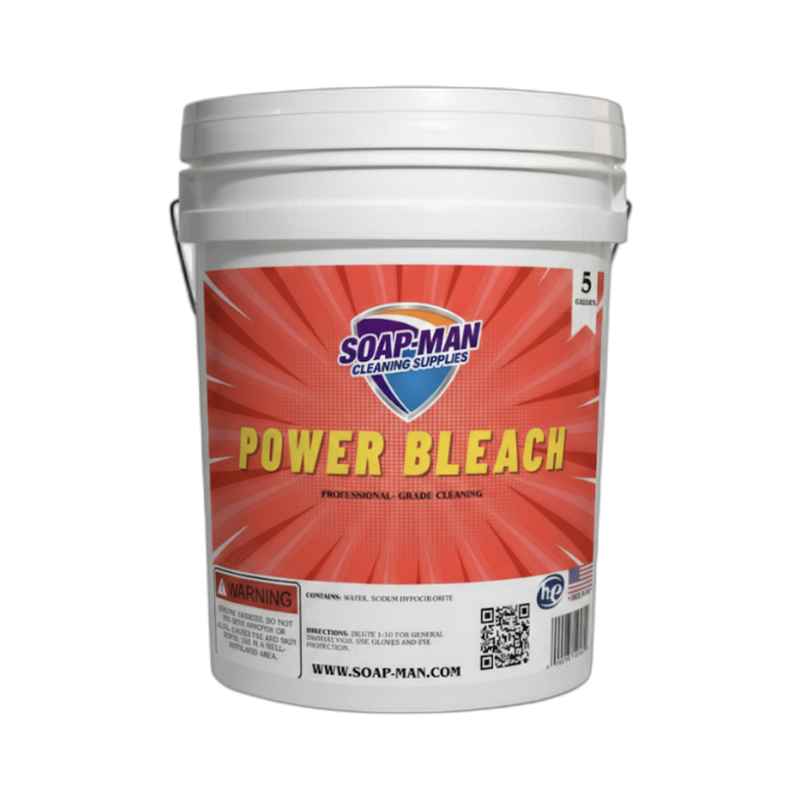
- Chlorine or shock treatment — Power Bleach works for emergency shock treatments when chlorine levels have dropped critically.
- pH adjusters — pH Up (sodium carbonate) and pH Down (muriatic acid or sodium bisulfate).
- Garden hose with spray nozzle — for filter cleaning.
Step-by-Step: How to Clean a Pool
Step 1: Skim the Surface Daily
Use a deep-bag skimmer net attached to a telescoping pole and skim the entire water surface. Remove leaves, insects, pollen, grass, and any debris floating on top. This takes 5 to 10 minutes and should happen daily — or at minimum every other day during heavy tree debris seasons. Debris that sinks absorbs chemicals, feeds algae, and stains the pool floor. Removing it while it's still floating prevents all three problems. Also empty the built-in skimmer baskets (the recessed baskets in the pool wall connected to your pump) at least twice a week. A full basket restricts water flow and reduces filtration efficiency.
Step 2: Brush the Walls and Floor Weekly
Attach the pool brush to your telescoping pole and brush the entire pool surface — walls, floor, steps, ladders, and especially the waterline tile where oils and calcium accumulate. Brush toward the main drain so the debris settles where your vacuum can pick it up. Brushing prevents algae from establishing on surfaces. Algae starts as a microscopic film that's invisible but slippery underfoot. By the time you can see green spots, the algae has already established roots in the plaster or grout. Weekly brushing breaks the biofilm before it becomes visible. Use overlapping strokes with moderate pressure — you're dislodging, not scrubbing paint.
Step 3: Vacuum the Floor
After brushing settles debris to the floor, vacuum the pool. If you have a robotic cleaner, drop it in and let it run its cycle (typically 2-3 hours). For manual or suction-side vacuuming, attach the vacuum head to the telescoping pole and the hose to the suction port. Move slowly across the pool floor in overlapping rows, similar to mowing a lawn. Moving too fast stirs up sediment instead of sucking it up. For heavy debris loads (after a storm or opening for the season), vacuum to waste rather than through the filter — this sends debris directly out of the pool instead of trapping it in the filter.
Step 4: Test and Balance Water Chemistry
Test the water using a liquid test kit or test strips at least twice a week. Target ranges for a properly balanced pool: pH 7.2-7.6 (7.4 ideal), free chlorine 1-3 ppm (2-3 ppm ideal), total alkalinity 80-120 ppm, cyanuric acid 30-50 ppm, and calcium hardness 200-400 ppm. Adjust pH first (it affects how effectively chlorine works), then alkalinity, then chlorine. Add chemicals with the pump running and wait at least four hours between different chemical additions. If chlorine has dropped to zero and the water looks cloudy or green, shock the pool with a heavy chlorine dose to kill bacteria and algae before balancing other levels.
Step 5: Clean or Backwash the Filter Monthly
Your filter is the lungs of the pool — when it's clogged, nothing else works. The cleaning method depends on filter type. For sand filters: backwash when the pressure gauge reads 8-10 psi above the clean starting pressure. Run the backwash until the sight glass runs clear (usually 2-3 minutes). For cartridge filters: remove the cartridge and spray it thoroughly with a garden hose, working from top to bottom between each pleat. Soak in filter cleaner solution overnight every three months. For DE (diatomaceous earth) filters: backwash, then add fresh DE powder through the skimmer per manufacturer specifications. Regardless of type, a clean filter maintains proper flow rate and prevents the pump from overworking.
Pro Tips
- Run the pump 8-12 hours daily. The entire pool volume should circulate through the filter at least once per day (called turnover). For most residential pools, this means 8-12 hours of pump run time. Running the pump during the hottest part of the day maximizes chlorine effectiveness when UV degradation is highest.
- Shock the pool weekly during swim season. Regular shocking (super-chlorination) oxidizes contaminants that regular chlorine levels can't handle — sweat, sunscreen, urine, and organic compounds that cause cloudy water and chloramine smell. Shock in the evening so the chlorine isn't immediately degraded by sunlight.
- Maintain the water level. The water level should reach the middle of the skimmer opening. Too low and the pump sucks air (which damages it). Too high and the skimmer can't pull surface debris effectively. Check weekly and adjust with a garden hose.
Common Mistakes
- Adding chemicals without testing first. Guessing at chemical dosing is how pools end up dangerously over-chlorinated or with pH levels that irritate skin and eyes. Always test, then dose. A $15 test kit prevents hundreds in corrective chemicals.
- Mixing chemicals or adding them at the same time. Pool chemicals can react violently when combined. Never mix chlorine with acid (produces toxic chlorine gas). Add one chemical at a time, with the pump running, and wait at least four hours between additions.
- Only cleaning when the pool looks dirty. By the time a pool looks green or cloudy, the problem has been building for days. The weekly routine in this guide prevents visible problems from ever developing. Prevention takes 2-3 hours per week; recovery from a green pool takes days and significantly more chemicals.
FAQ
How long does it take to clean a pool weekly?
A well-maintained pool takes 1-2 hours per week: 10 minutes daily for skimming (70 minutes/week), 20 minutes for brushing, and 30 minutes for vacuuming. Water testing and chemical adjustment adds 15 minutes. Filter maintenance is monthly and takes 15-30 minutes. The weekly routine gets faster once you establish the habit.
Can I use regular household bleach in my pool?
Yes, unscented regular bleach (sodium hypochlorite) is chemically identical to liquid pool chlorine — just at a lower concentration. Pool chlorine is typically 10-12% sodium hypochlorite while household bleach is 5-8%. You'll need roughly twice as much household bleach to achieve the same chlorine boost. Avoid any bleach with fragrances, thickeners, or additives.
Why does my pool smell so strongly of chlorine?
A strong chlorine smell actually means there isn't enough chlorine — not too much. The smell comes from chloramines, which form when chlorine reacts with contaminants (sweat, urine, sunscreen) but doesn't have enough free chlorine to fully oxidize them. Shocking the pool breaks chloramines down and restores the pool to a clean, minimal-odor state.
How do I get rid of green algae?
Brush all pool surfaces aggressively to break the algae's grip on walls and floor. Shock the pool with triple the normal shock dose. Run the filter continuously for 24-48 hours. Brush again the next day. Test and rebalance chemicals. Vacuum the dead algae (which settles as a gray-green dust) to waste. Clean or backwash the filter. For severe blooms, you may need to repeat the shock-brush-filter cycle two or three times.
Should I drain my pool to clean it?
Almost never. Draining a pool risks structural damage (groundwater pressure can pop a fiberglass or vinyl pool out of the ground, and plaster pools can crack without the water's counter-pressure). The only reason to drain is for major repair or resurfacing, and even then it should be done quickly by a professional. Every cleaning task — no matter how dirty the pool — can be accomplished with the pool full.