
Why Dilution Ratios Matter More Than You Think
If you're pouring cleaning product straight from the bottle onto surfaces, you're making three mistakes at once. First, you're wasting money — most commercial cleaning products are concentrated, designed to be diluted before use. Using them at full strength can cost 5-10 times more per application than proper dilution. Second, you're getting worse results — over-concentrated solutions leave sticky residue that attracts dirt, making surfaces look dirtier within days. Third, you're potentially damaging surfaces — many cleaning products at full concentration are too aggressive for the surfaces they're applied to.
Professional cleaners are obsessive about dilution ratios because they understand the chemistry: more product does not mean more cleaning power. There's an optimal concentration for every task. Below that, the product doesn't work well enough. Above it, you waste product, create residue, and risk damage — with zero improvement in cleaning performance.
This guide covers the right dilution ratio for every common cleaning scenario, why each ratio works, and how to set up a dilution system that saves money and delivers better results.
What You'll Need
Setting up a proper dilution system requires a small investment in equipment that pays for itself almost immediately through product savings.
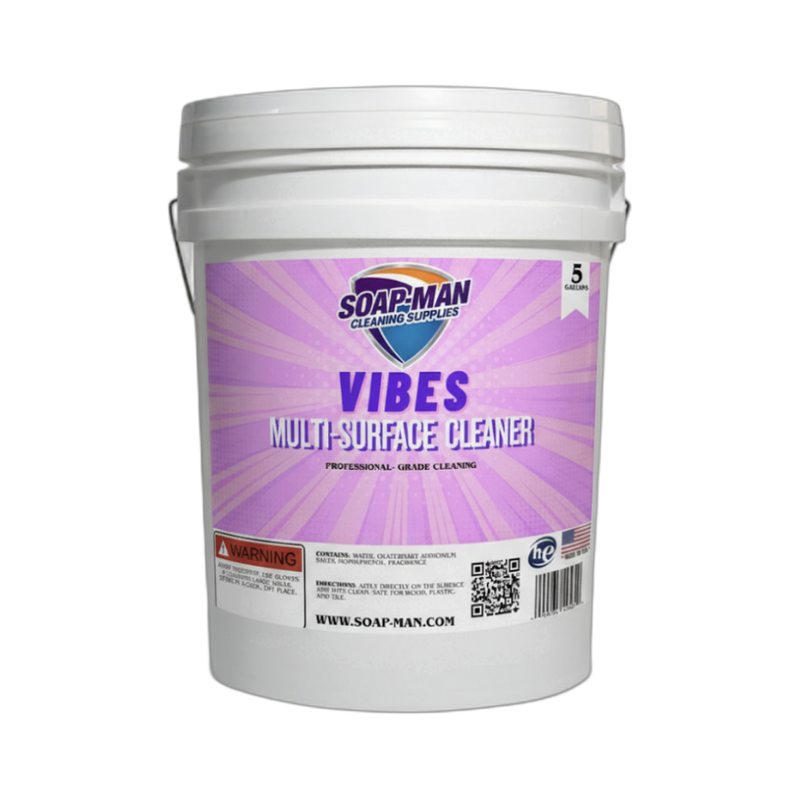
- Concentrated multi-surface cleaner — Vibes Multi-Surface Cleaner is concentrated for dilution, with recommended ratios from 1:32 for general cleaning to 1:64 for light maintenance. One gallon of concentrate makes 32-64 gallons of working solution.
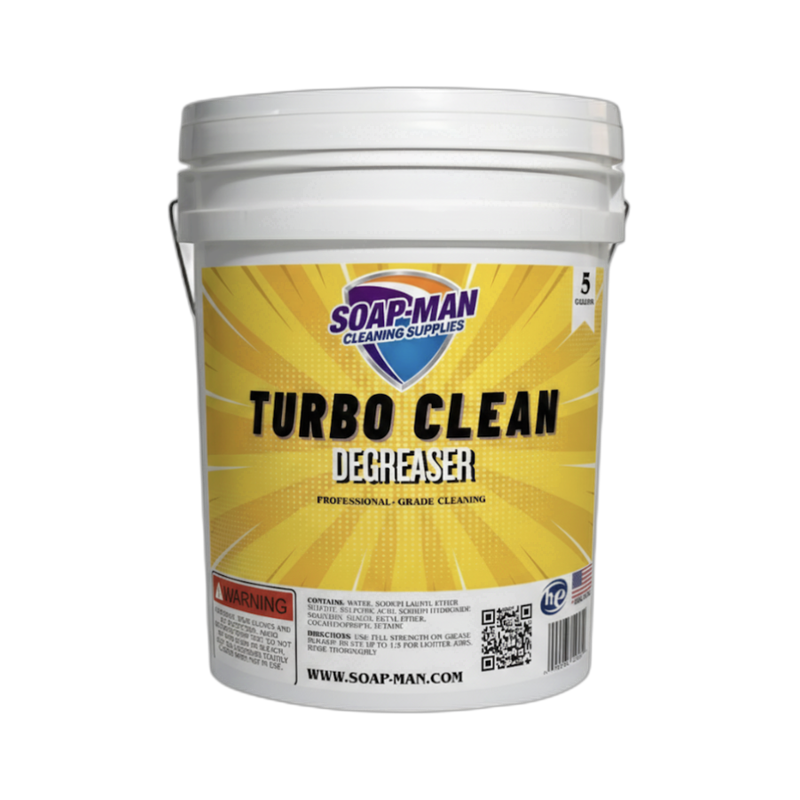
- Concentrated degreaser — Turbo Clean Degreaser dilutes from 1:10 for heavy industrial grease to 1:50 for light kitchen maintenance. Its concentrated formula makes it one of the most cost-effective degreasers per application.
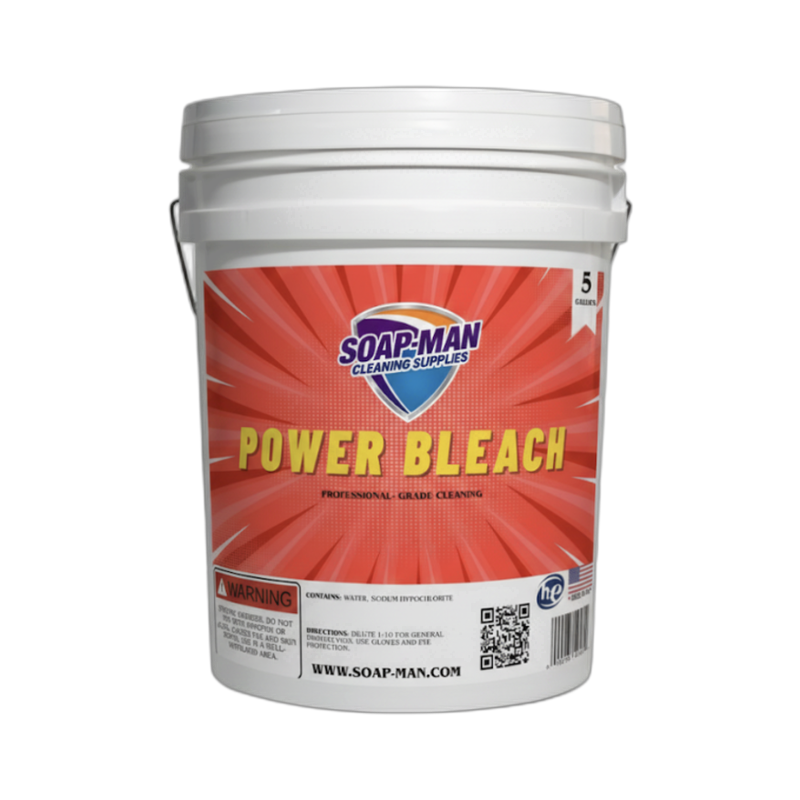
- Concentrated bleach — Power Bleach at 12.5% sodium hypochlorite concentration is significantly stronger than household bleach. Proper dilution is critical for both safety and effectiveness.
- Labeled spray bottles (32 oz) — One for each diluted solution. Label each bottle with the product name, dilution ratio, and date mixed. Replace solutions weekly for optimum effectiveness.
- Measuring cups or a dilution dispenser — Eyeballing dilution is inaccurate and inconsistent. A $3 measuring cup pays for itself on the first use by preventing over-concentration.
- Bucket set — For mop solutions and soaking applications.
- Permanent marker — For labeling bottles. This is not optional — unlabeled spray bottles are a safety hazard, especially when multiple products look similar after dilution.
Understanding Dilution Ratios
What the Numbers Mean
A dilution ratio of 1:32 means 1 part concentrate to 32 parts water. In practical terms: 4 ounces of concentrate in a 128-ounce (1 gallon) container, filled the rest of the way with water. A ratio of 1:64 means 2 ounces per gallon — half as much product.
The first number is always the concentrate; the second number is always water. So 1:10 is a very strong solution (1 part concentrate to 10 parts water) while 1:128 is very dilute (1 part concentrate to 128 parts water). Lower second numbers mean stronger solutions.
Why Proper Dilution Improves Results
Cleaning products work through chemistry. Surfactant molecules in the solution need water to function — they arrange themselves at the interface between water and soil, lifting dirt into suspension. Too little product means not enough surfactant molecules to clean effectively. Too much product means excess surfactant with no soil to attach to — these leftover molecules dry on the surface as sticky residue.
The optimal concentration puts exactly the right number of surfactant molecules in solution for the amount of soil present. This is why lighter soil needs lighter dilution (1:64) and heavy soil needs stronger dilution (1:16 or 1:32) — you're matching surfactant supply to soil demand.
Dilution Ratios by Application
Multi-Surface Cleaner
Vibes Multi-Surface Cleaner dilution guide:
- 1:64 (2 oz per gallon) — Daily light maintenance. Countertop wiping, desk cleaning, general surface dust and fingerprints. This is the daily-driver concentration for offices, retail spaces, and homes.
- 1:32 (4 oz per gallon) — General cleaning. Kitchen and bathroom surfaces with moderate soil. Weekly cleaning of high-touch areas. Standard commercial cleaning concentration.
- 1:16 (8 oz per gallon) — Heavy soil. Accumulated grime, stubborn spots, deep cleaning of neglected surfaces. Use this concentration for quarterly deep cleans or move-in/move-out cleaning.
Degreaser
Turbo Clean Degreaser dilution guide:
- 1:50 (2.5 oz per gallon) — Light kitchen maintenance. Wiping stovetops after cooking, counter degreasing, daily kitchen cleanup. Handles fresh cooking residue before it polymerizes.
- 1:20 (6.5 oz per gallon) — Moderate grease. Weekly kitchen deep clean, cabinet fronts, backsplash near stove, exterior of cooking equipment. Most common working concentration.
- 1:10 (13 oz per gallon) — Heavy buildup. Range hood filters, commercial kitchen equipment, oven exteriors, heavily neglected surfaces with baked-on grease. Soak applications.
- Full strength (for pre-treatment) — Apply undiluted only to specific stains: driveway oil spots, extreme grease accumulation, industrial equipment. Always follow with a diluted rinse.
Bleach
Power Bleach at 12.5% sodium hypochlorite dilution guide (note: household bleach at 3-8% requires different ratios — always check your product's concentration):
- 1:100 (1.3 oz per gallon) — General surface sanitization. Kitchen and bathroom surfaces, food-prep areas, high-touch surfaces. Provides effective sanitization at a safe, low-irritation concentration.
- 1:50 (2.5 oz per gallon) — Disinfection. Toilet bowls, sick-room cleanup, surfaces contaminated with bodily fluids, mold-prone areas. Standard disinfection concentration for commercial-strength bleach.
- 1:10 (13 oz per gallon) — Heavy mold treatment and severe contamination. Apply to mold on non-porous surfaces, heavily soiled bathroom grout, and post-flooding sanitization. Use with gloves and eye protection in well-ventilated areas.
- Never use undiluted. Commercial bleach at 12.5% concentration should never be applied undiluted to household surfaces. It will damage materials, produce excessive fumes, and create unnecessary exposure risk.
How to Set Up a Dilution System
For Home Use
Buy three 32-ounce spray bottles in different colors. Label each one permanently:
- Bottle 1: Multi-surface cleaner at 1:32 (1 oz concentrate + 31 oz water)
- Bottle 2: Degreaser at 1:20 (1.5 oz concentrate + 30.5 oz water)
- Bottle 3: Bleach solution at 1:50 (0.6 oz concentrate + 31.4 oz water)
These three bottles handle 95% of household cleaning tasks. Refill as needed. Replace bleach solutions weekly — bleach at diluted concentration degrades faster than the concentrate.
For Commercial Use
Commercial operations benefit from proportioning dispensers that automatically dilute concentrate to the correct ratio. Wall-mounted dilution control systems connect to water supply and dispense accurately diluted product at the push of a button. The initial investment ($50-150 per station) pays for itself within months through reduced product waste.
For operations without dispensers, establish a dilution protocol: post dilution charts at each cleaning station, provide measuring cups, and train all cleaning staff on the correct ratios for each application. Over-concentration is the number one cause of product waste in commercial cleaning.
The Math: How Much Money Proper Dilution Saves
Cost Per Ready-to-Use Gallon
Let's use Vibes Multi-Surface Cleaner as an example. A gallon of concentrate at standard pricing produces:
- At 1:64 dilution: 64 gallons of working solution
- At 1:32 dilution: 32 gallons of working solution
- At 1:16 dilution: 16 gallons of working solution
Compare this to buying ready-to-use spray bottles at retail, which typically cost $3-5 per 32 ounces. Concentrate diluted properly costs pennies per spray bottle refill. Over a year, a household saves $50-100; a commercial operation saves thousands.
Cost of Over-Concentration
If you use a 1:16 ratio when 1:64 would suffice, you're using 4 times more product per application. Over a year of daily cleaning, that's the equivalent of throwing away three-quarters of your cleaning supply budget. Plus you're dealing with residue problems that require additional cleaning time.
Pro Tips
- Always add concentrate to water, not water to concentrate. This prevents foaming (especially with surfactant-heavy products) and ensures even mixing. Fill the bottle 90% with water, add concentrate, then top off and gently swirl.
- Start with the lightest dilution. You can always apply a stronger solution if the first pass doesn't cut it. Starting strong and then trying to rinse excess residue costs more time and product than starting light.
- Use warm water for mixing. Warm water helps concentrate dissolve and distribute evenly. Don't use hot water — it can degrade some cleaning agents and causes excessive foaming.
- Replace diluted bleach solutions weekly. Bleach at working dilution loses potency rapidly — within 24 hours it starts degrading, and within a week it may be ineffective. Mix fresh bleach solutions frequently. Concentrate in the original bottle stays potent much longer.
- Measure, don't guess. The difference between 1 ounce and 2 ounces in a 32-ounce bottle is the difference between 1:32 and 1:16 — doubling your product usage. A measuring cap or squeeze bottle with ounce markings costs nothing and prevents waste.
- Keep a dilution chart on the wall. Print or write the ratios for each product at each concentration level and post it where you mix solutions. Eliminates guessing, prevents mistakes, and ensures consistency — especially important if multiple people in a household or team do the mixing.
Common Mistakes
Using Products at Full Strength
The most expensive mistake in cleaning. Concentrated products are designed to be diluted — they're sold at high concentration for shipping efficiency and user flexibility, not because full strength is the intended application. Using them undiluted wastes product, damages surfaces, and creates thick residue that attracts dirt.
Mixing Different Products Together
Never combine different cleaning products in the same spray bottle or bucket. Chemical interactions can produce toxic fumes (bleach + ammonia, bleach + acid), neutralize both products' effectiveness (bleach + many surfactants), or create unpredictable reactions. One product per container, properly diluted, is always the correct approach.
Not Labeling Bottles
Diluted cleaning solutions often look identical — clear or slightly tinted liquids in spray bottles. Without labels, someone may use the wrong product on the wrong surface. Worse, they may accidentally mix products when refilling an unlabeled bottle. Every bottle should be labeled with: product name, dilution ratio, date mixed, and any safety warnings.
Keeping Diluted Solutions Too Long
Diluted cleaning solutions degrade over time. Bleach loses potency within a week at working dilution. Surfactant-based cleaners can support bacterial growth after extended periods in diluted form. Mix solutions fresh at least weekly for optimal performance. If a diluted solution starts to smell different from when you mixed it, discard and remix.
Using the Same Ratio for Every Task
A single dilution ratio doesn't work for all situations. Light daily dusting needs a 1:64 solution. Weekly bathroom cleaning needs 1:32. Deep-cleaning a neglected oven needs 1:10 degreaser. Match the concentration to the soil level. Over-cleaning light surfaces with heavy concentrations wastes product; under-cleaning heavy soil with light concentrations wastes time and effort.
Frequently Asked Questions
Does using more product clean better?
No. Beyond the optimal concentration, additional product doesn't improve cleaning — it creates residue. Think of it like adding more soap to your hands: beyond a certain amount, the extra soap doesn't make your hands cleaner, it just takes longer to rinse off. The same principle applies to every cleaning product on every surface.
How do I know the right dilution ratio for my product?
Check the product label — manufacturers specify dilution ratios for different applications. If the label only gives one ratio, that's the general-purpose concentration. For lighter tasks, you can safely dilute further (add more water). For heavier tasks, use the label ratio as your maximum. If in doubt, start lighter and increase concentration only if the first pass doesn't get the job done.
Can I dilute products that are sold "ready to use"?
Ready-to-use products are already at their optimal (often minimum) concentration. Diluting them further reduces effectiveness below the threshold where they work properly. If you find RTU products too expensive per use, switch to a concentrated product that's designed for dilution — the cost per application will be much lower.
Why does my floor get dirty again so fast after mopping?
This is almost always caused by cleaning product residue from over-concentrated mopping solution. The residue creates a sticky film that traps dirt from foot traffic. Reduce your dilution ratio (use less product per gallon of water) and add a clean-water rinse pass after mopping. You'll notice the floor stays clean longer.
How much does proper dilution save per year?
For a household, switching from full-strength or over-concentrated product use to proper dilution typically saves $50-150 per year on cleaning supplies alone. For commercial cleaning operations, the savings scale dramatically — a facility using 5 gallons of concentrate per month at proper dilution versus full strength saves thousands annually. The product you don't waste is pure profit.