
Why Range Hood Cleaning Is More Important Than You Think
Every time you cook with oil, fry food, or sear meat, grease-laden vapor rises from the stovetop. Your range hood is supposed to capture that vapor through its filters and either exhaust it outside (ducted hoods) or filter it and recirculate it (ductless hoods). When the filters are clogged with grease, neither system works — the fan strains against the blockage, the motor overheats, and the grease vapor settles on your cabinets, ceiling, and walls instead. A heavily clogged range hood also becomes a fire hazard because grease is flammable and the motor generates heat. The filters, fan assembly, and exterior surfaces all need regular cleaning, and most people only ever wipe the outside.
What You'll Need
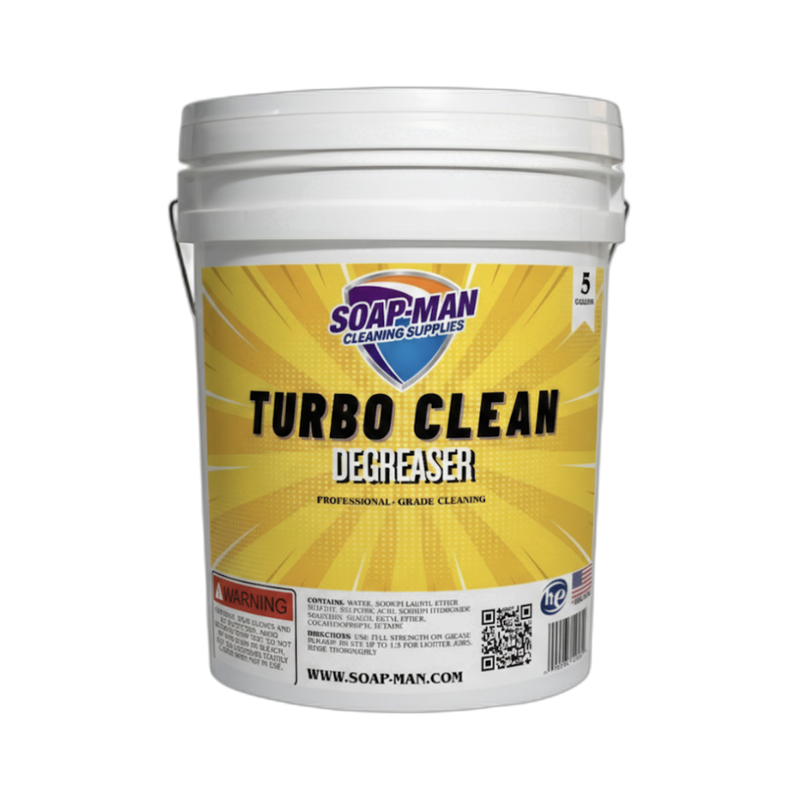
- Heavy-duty degreaser — Turbo Clean Degreaser is essential here. Range hood grease is polymerized by heat and resists regular cleaners.
- Baking soda — for boosting the soak solution.
- Large pot or sink basin — big enough to submerge the filters.
- Boiling water
- Non-scratch scrub pad — for metal mesh filters.
- Old toothbrush — for fan blades and crevices.
- Microfiber cloths
- Paper towels
Step-by-Step: How to Clean a Range Hood
Step 1: Remove the Filters
Turn off the range hood and let it cool if you've been cooking. Most range hood filters slide out or unclip from the underside of the hood — look for a latch, squeeze tab, or sliding mechanism. Some hoods have one large filter, others have two smaller ones side by side. Aluminum mesh filters are reusable and cleanable. Charcoal filters (found in ductless hoods as a secondary filter behind the mesh) are not washable and need to be replaced every 3-6 months. Set the mesh filters aside for soaking and check the charcoal filter's condition — if it's gray and saturated, order a replacement.
Step 2: Soak the Filters in Degreaser
Fill your sink or a large pot with boiling water. Add a generous squirt of Turbo Clean Degreaser and two tablespoons of baking soda. The baking soda boosts the degreaser's alkalinity, which is what breaks down cooking grease. Submerge the filters completely and let them soak for 15-30 minutes. For heavily clogged filters (you can't see through the mesh anymore), extend the soak to one hour and refresh with more boiling water and degreaser halfway through. You'll see the water turn yellow-brown as the grease releases — that's exactly what's supposed to happen.
Step 3: Scrub and Rinse the Filters
After soaking, use a non-scratch scrub pad to work over both sides of each filter, paying attention to the corners and edges where grease accumulates thickest. Scrub with the grain of the mesh, not against it — scrubbing against the grain can bend the aluminum mesh and create gaps that reduce filtration. For stubborn spots, spray concentrated degreaser directly on the area, wait five minutes, and scrub again. Rinse under hot running water until the water runs clear. Hold the filter up to a light — you should be able to see through the mesh clearly. If areas are still opaque, re-soak and scrub those spots.
Step 4: Clean the Fan and Interior
With the filters removed, you have access to the fan assembly and the interior of the hood. Spray the interior surfaces and fan blades with degreaser. Let it sit for 10 minutes. Use an old toothbrush to scrub the fan blades — they collect a thick grease coating that reduces airflow and creates noise. Wipe the interior surfaces with paper towels to absorb the dissolved grease (don't use your good microfiber cloths here — range hood grease ruins them). For the duct opening (if visible), wipe as far inside as you can reach. On ducted systems, professional duct cleaning is recommended every few years for heavy cooking households.
Step 5: Clean the Exterior and Reassemble
Spray the exterior of the hood with degreaser and wipe with a microfiber cloth. For stainless steel hoods, wipe in the direction of the grain to avoid streaks. For painted or powder-coated hoods, use a gentler touch — aggressive scrubbing can dull the finish. Clean the light covers (if removable) with soap and water. Replace any burned-out hood bulbs while everything is apart. Once the interior is dry and the filters are clean and dry, slide the filters back into place and ensure they click or latch securely. Run the fan on high for one minute to verify airflow.
Pro Tips
- Clean filters monthly if you cook daily. Monthly cleaning prevents the heavy grease buildup that requires long soaks and aggressive scrubbing. A monthly filter takes 10 minutes; a neglected filter takes an hour.
- Run the hood for 10 minutes after cooking. The grease vapor doesn't stop when the burner turns off — residual heat continues releasing grease particles. Running the fan for 10 extra minutes captures this residual vapor instead of letting it settle on surfaces.
- Dishwasher as a backup. Aluminum mesh range hood filters are generally dishwasher safe. Run them on the hottest cycle with a heavy dose of detergent. It won't be as effective as a dedicated degrease soak for heavy buildup, but it works well for monthly maintenance cleans.
Common Mistakes
- Never cleaning the fan blades. People clean the filters and forget the fan. A grease-coated fan moves less air, vibrates more, and works harder — shortening the motor's life. Clean the fan every time you clean the filters.
- Using abrasive pads on stainless steel exteriors. Steel wool and green scrub pads scratch stainless steel permanently. Use only microfiber cloths or soft non-scratch pads on the exterior. The interior and filters can handle more abrasion, but the visible exterior needs a gentle touch.
- Not replacing charcoal filters in ductless hoods. Charcoal filters absorb odors and grease particles that the mesh filter misses. Once saturated (typically every 3-6 months with regular cooking), they do nothing and the hood becomes purely decorative. Check and replace on schedule.
FAQ
How do I know if my range hood is ducted or ductless?
Look at the top or back of the hood for a duct pipe going into the wall or ceiling — that's a ducted system venting outside. If there's no duct and the hood has a charcoal filter behind the mesh filter, it's ductless and recirculates filtered air back into the kitchen. Some hoods are convertible and can be installed either way.
Can I clean range hood filters in the dishwasher?
Aluminum mesh filters are generally dishwasher-safe — check your hood manual to confirm. Run them on the hottest setting. However, dishwashers may not remove heavy, polymerized grease as effectively as a dedicated soak with degreaser and boiling water. Use the dishwasher for routine maintenance and the soak method for deep cleans.
Why is my range hood so loud?
The three most common causes of a noisy range hood are clogged filters (the fan works harder to pull air through blocked mesh), grease-coated fan blades (imbalanced weight causes vibration), and a loose fan assembly. Cleaning the filters and fan blades resolves the first two. If the noise persists after cleaning, check that the fan assembly is secure and tightened properly.
How often should I replace range hood filters?
Aluminum mesh filters are reusable and last the life of the hood if cleaned regularly. Charcoal filters in ductless hoods need replacement every 3-6 months depending on cooking frequency. Some premium hoods have filter replacement indicators. If your mesh filter is physically damaged (bent, torn, or corroded), replace it — damaged mesh doesn't filter effectively.
Is it worth hiring a professional for range hood cleaning?
For residential hoods, DIY cleaning is perfectly adequate and saves $100-$200 per service call. Professional cleaning is worthwhile for commercial kitchen hoods that handle heavy-duty cooking volume and have complex duct systems requiring specialized equipment and fire code compliance.