
Why Toaster Ovens Get So Dirty So Fast
Toaster ovens operate at high temperatures in a small, enclosed space — which means every splatter, crumb, and drip gets baked onto the interior walls, racks, and crumb tray almost immediately. The cheese that dripped off your pizza slice yesterday is now carbon-welded to the bottom of the oven. The bread crumbs from this morning's toast are slowly charring on the heating element. Left uncleaned, this buildup creates smoke, off-flavors in your food, and eventually becomes a fire hazard.
The challenge is that toaster ovens have exposed heating elements that can't be scrubbed aggressively, glass doors that scratch easily, and tight interiors that are hard to reach. This guide gives you a safe, effective method for every part of the toaster oven — without damaging anything.
What You'll Need
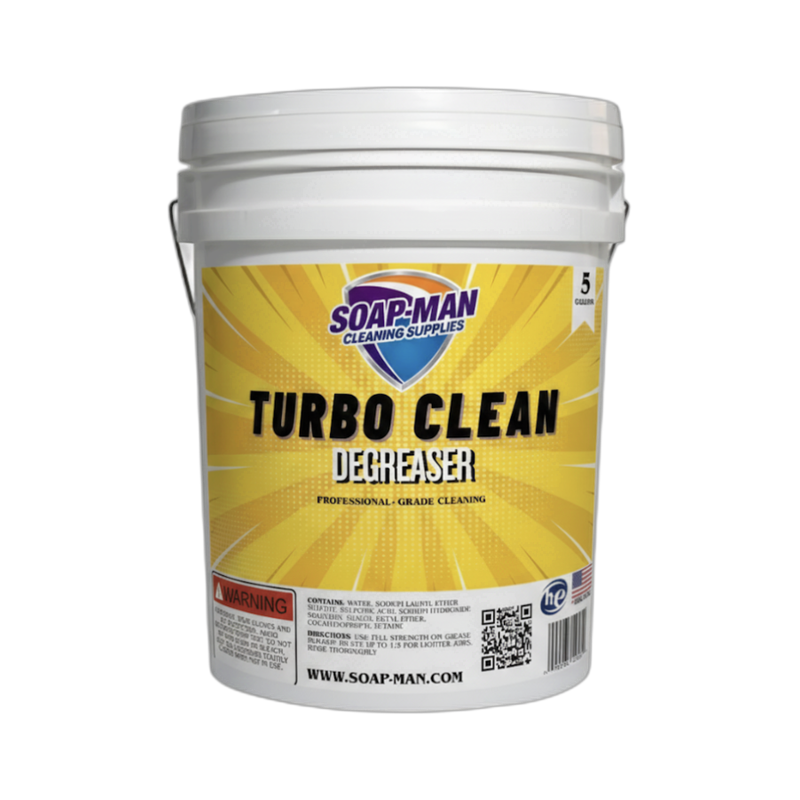
- Degreaser — Turbo Clean Degreaser for dissolving baked-on grease and carbon without heavy scrubbing.
- Baking soda — for creating a cleaning paste for the interior walls.
- White vinegar — for cutting through grease and rinsing baking soda residue.
- Warm water
- Non-abrasive sponge or cloth
- Old toothbrush — for crevices, racks, and around heating elements.
- Dry towels
Step-by-Step: How to Clean a Toaster Oven
Step 1: Unplug and Cool Completely
This seems obvious, but people skip it. Unplug the toaster oven and let it cool completely before cleaning. Cleaning a warm toaster oven is ineffective (cleaning products evaporate before they can work) and dangerous (you can burn yourself on the heating elements or interior walls). Wait at least 30 minutes after last use. Remove the crumb tray, wire racks, and baking pan if your model has one.
Step 2: Empty and Clean the Crumb Tray
Slide out the crumb tray and dump the crumbs into the trash. Wash the tray with warm soapy water or spray with Turbo Clean Degreaser for greasy buildup. If the tray has baked-on residue, soak it in warm water with degreaser for 15 minutes, then scrub with a non-abrasive sponge. Dry completely before reinstalling. Make a habit of emptying the crumb tray after every use — accumulated crumbs are the primary fire risk in toaster ovens.
Step 3: Clean the Racks and Baking Pan
Soak wire racks and baking pans in warm water with a tablespoon of degreaser for 20-30 minutes. The soaking does most of the work — baked-on grease and food loosen significantly. After soaking, scrub with a non-abrasive sponge. For stubborn spots, make a baking soda paste (3 parts baking soda to 1 part water), apply to the spot, let it sit for 10 minutes, then scrub. Rinse thoroughly and dry completely.
Step 4: Clean the Interior Walls and Floor
Make a paste of baking soda and water (thick enough to stick to vertical surfaces). Apply the paste to the interior walls, ceiling, and floor of the toaster oven using a sponge or your fingers. Avoid getting paste directly on the heating elements. Let the paste sit for 15-20 minutes to break down grease and carbon. Then wipe away with a damp cloth, re-wetting the cloth frequently. For stubborn baked-on spots, spray a small amount of degreaser, let it sit for 5 minutes, then wipe. Follow up with a vinegar-dampened cloth to remove any baking soda residue.
Step 5: Clean the Glass Door
The glass door collects grease splatter on the inside and fingerprints on the outside. For the interior, apply baking soda paste, let it sit for 10 minutes, and wipe clean. For the exterior, spray a small amount of cleaner onto a cloth (never directly onto the door, to avoid liquid seeping into the hinge mechanism) and wipe clean. Finish with a dry cloth for a streak-free result. If the glass has brown baked-on grease that won't come off with baking soda, apply degreaser to a cloth and press it against the spot for 2-3 minutes before wiping.
Pro Tips
- Use a damp cloth on heating elements only. Never spray cleaner directly on heating elements. If food is baked onto an element, dampen a cloth, lay it over the spot for a few minutes to soften, then gently wipe. Heavy scrubbing damages the element coating.
- Line the crumb tray with foil. A sheet of aluminum foil on the crumb tray catches drips and makes cleanup instant — just replace the foil. This alone cuts cleaning time in half.
- Clean every two weeks minimum. A biweekly deep clean prevents carbon buildup from reaching the point where it smokes. Monthly cleaning is playing catch-up.
Common Mistakes
- Using oven cleaner spray inside a toaster oven. Commercial oven cleaners are too harsh for the small, confined space of a toaster oven. The chemicals can damage heating elements, non-stick coatings, and leave toxic residue that gets into your food. Use baking soda paste or a food-safe degreaser instead.
- Spraying liquid directly inside the toaster oven. Liquid can seep into electrical connections and heating element sockets. Always apply cleaning products to a cloth first, then wipe the interior.
- Scrubbing the non-stick interior coating. Many toaster ovens have a non-stick interior coating that scratches easily. Use only soft sponges and cloths — never steel wool, metal scrapers, or abrasive pads.
FAQ
How often should I clean my toaster oven?
Empty the crumb tray after every use. Do a full deep clean — interior walls, racks, glass door, and crumb tray — every two weeks for regular use, or weekly if you use it daily. Greasy items like pizza, cheese, and bacon create more buildup and require more frequent cleaning.
Can I use the self-clean feature on my toaster oven?
Very few toaster ovens have a self-clean function (this is a full-size oven feature). If yours does, follow the manufacturer instructions. For the vast majority of toaster ovens, manual cleaning with baking soda and degreaser is the only safe method.
There's smoke coming from my toaster oven. Is it dirty?
Yes, almost certainly. Smoke from a toaster oven is burning grease, crumbs, or food residue on the heating elements or interior surfaces. Unplug it, let it cool, and do a thorough cleaning. If smoke continues after a deep clean, the heating element itself may be damaged — that requires replacement.
Can I put toaster oven racks in the dishwasher?
Most chrome-plated wire racks are dishwasher-safe. Non-stick coated racks and baking pans should be hand-washed to preserve the coating. When in doubt, check your owner's manual. Hand washing with a soak is usually more effective than the dishwasher for baked-on grease anyway.
How do I remove the brown stain from the glass door?
Brown staining on the glass door is polymerized grease — grease that has been heated so many times it's essentially turned into a plastic-like coating. Apply a thick layer of baking soda paste, cover with a damp cloth, and let it sit for an hour. Scrub with a non-abrasive sponge. For extremely stubborn stains, use a razor blade scraper held at a 45-degree angle, but only on flat glass surfaces and only with extreme care.