
Why Stovetop Cleaning Matters More Than You Think
The stovetop is the hardest-working surface in your kitchen. It endures daily heat, grease splatter, boil-overs, and spills — often all at the same time. Every cooking session leaves behind a thin layer of oil, food residue, and carbonized particles. Without regular cleaning, these layers accumulate into the stubborn, baked-on crust that makes stovetop cleaning feel like a renovation project.
The approach depends entirely on your stovetop type. Gas, electric coil, and glass ceramic cooktops all have different surfaces, different heat distribution, and different vulnerabilities. Using the wrong method on the wrong surface can scratch glass cooktops, damage electric coil connections, or clog gas burner ports. This guide covers all three types with the correct technique for each.
What You'll Need
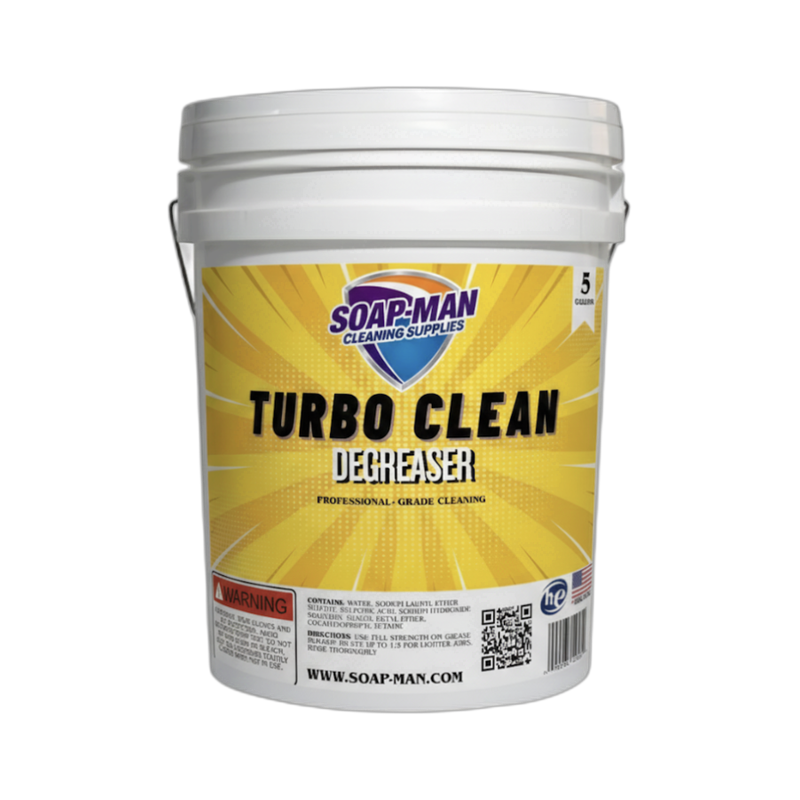
- Degreaser — Turbo Clean Degreaser cuts through cooking grease and baked-on food on all stovetop types.
- Baking soda — for making cleaning paste and gentle abrasive action.
- White vinegar — for cutting grease and rinsing residue.
- Microfiber cloths
- Non-abrasive sponge
- A razor blade scraper — for glass cooktops only.
- Old toothbrush — for gas burner ports and crevices.
- Paper clip or pin — for clearing clogged gas burner ports.
Step-by-Step: How to Clean Every Stovetop Type
Step 1: Gas Stovetop — Remove and Soak Components
Gas stovetops have removable grates and burner caps. Remove all grates, burner caps, and burner heads (if your model allows). Soak them in hot water with a tablespoon of Turbo Clean Degreaser for 20-30 minutes. While they soak, spray the stovetop surface with degreaser and let it sit for 10 minutes. Wipe with a non-abrasive sponge, paying attention to the area around each burner well. Use a toothbrush to scrub around burner openings. For clogged burner ports (uneven flame pattern), straighten a paper clip and gently clear each port — never use a toothpick, which can break off inside.
Step 2: Electric Coil Stovetop — Lift and Clean Underneath
Electric coil stovetops have removable drip pans under each burner element. Unplug or disconnect the burner coils (most pull straight out of their socket). Remove the drip pans. Soak the drip pans in hot water with degreaser for 20-30 minutes. While soaking, spray the stovetop surface under the burners with degreaser and wipe clean. Never submerge or wet the electrical connections on the burner coils — wipe the coils themselves with a damp cloth only. For the drip pans, scrub after soaking and rinse. If the drip pans are beyond cleaning (severely blackened and pitted), replace them — they cost a few dollars each at any hardware store.
Step 3: Glass Ceramic Cooktop — Baking Soda and Razor Blade
Glass ceramic cooktops require the most careful approach because they scratch easily. Spray the surface with degreaser and wipe with a damp microfiber cloth for routine cleaning. For baked-on food, sprinkle baking soda over the stain, spray vinegar over the baking soda (it will fizz), lay a hot damp cloth over the mixture, and let it sit for 15 minutes. Wipe clean. For stubborn burnt-on spots that won't come off with baking soda, hold a razor blade scraper at a 45-degree angle and gently scrape the carbonized food off the glass. Use only a razor blade, not a knife or metal spatula, and keep the blade flat to avoid scratching.
Step 4: Deep Clean All Types
Regardless of stovetop type, every few weeks do a thorough deep clean. Make a paste of baking soda and water (consistency of toothpaste). Apply the paste to every surface — the stovetop, knobs, back panel, and side edges. Let it sit for 20 minutes. Wipe away with a damp cloth. Follow with a spray of vinegar to dissolve any remaining baking soda residue, then a final wipe with a clean damp cloth. This removes the buildup that daily wiping doesn't catch — the thin grease film that accumulates over weeks of cooking.
Step 5: Reassemble and Polish
Once everything is clean and dry, reassemble all components. For gas stoves, make sure burner caps and heads are seated properly — misaligned caps cause uneven flames. For electric coils, ensure connections are fully inserted. For glass cooktops, buff with a dry microfiber cloth to remove any streaks or water spots. A clean, dry stovetop after cooking takes 2 minutes to maintain — waiting until it's covered in baked-on grease takes 30 minutes.
Pro Tips
- Clean while still slightly warm. A stovetop that's warm (not hot) is easier to clean than a cold one — grease is softer and wipes away more easily. The sweet spot is 10-15 minutes after you finish cooking, when the surface is warm to the touch but not hot enough to burn.
- Line drip pans with foil. Aluminum foil on electric stovetop drip pans catches spills and makes cleanup instant. Replace the foil when it gets dirty. Don't do this on gas burners — foil can block gas ports.
- Daily wipe-down prevents deep cleaning. A 60-second wipe with a damp cloth after every cooking session prevents 90% of the buildup that requires deep cleaning. The people who never need to deep clean their stovetop are the ones who wipe it after every use.
Common Mistakes
- Using abrasive pads on glass cooktops. Steel wool, abrasive sponges, and scouring pads permanently scratch glass ceramic surfaces. Once scratched, the damage is irreversible and stains become harder to remove because they settle into the scratches. Use only soft cloths, non-abrasive sponges, and razor blade scrapers on glass.
- Soaking electric burner coils. The coils themselves are waterproof during normal use (they handle boil-overs), but submerging the electrical connection points can cause corrosion and malfunction. Only wipe coils with a damp cloth.
- Using glass cleaner on a hot stovetop. Ammonia-based glass cleaners can etch glass ceramic cooktops when applied to hot surfaces. Always let the stovetop cool before applying any cleaner.
FAQ
How do I remove the cloudy white film on my glass cooktop?
The white haze is mineral deposit buildup from water and cleaning product residue. Apply white vinegar directly to the surface, let it sit for 10 minutes, and wipe clean with a dry microfiber cloth. For stubborn haze, use a cooktop-specific cleaner or a paste of baking soda followed by a vinegar rinse. Avoid using too much water when cleaning — the minerals in water are what cause the haze.
Can I use oven cleaner on my stovetop?
Never on glass ceramic cooktops — oven cleaner is far too harsh and will damage the surface. On gas stovetop grates, oven cleaner can be effective for heavily baked-on grease, but rinse extremely thoroughly. For the stovetop surface itself (any type), a proper degreaser is safer and more effective than oven cleaner.
How do I fix discolored gas burner grates?
Cast iron grates naturally darken over time and this is cosmetic, not a problem. If you want to restore them, soak in a solution of one part vinegar to three parts water for 2 hours, scrub with a stiff brush, rinse, and dry immediately (cast iron rusts when wet). Coat lightly with cooking oil to protect. Enameled grates can be cleaned with baking soda paste but shouldn't be soaked in acidic solutions.
Why does my glass cooktop have burn marks that won't come off?
These are usually from sugar-based spills (sauces, jam, syrup) that caramelize and bond with the glass surface. The razor blade scraper is your best tool — hold it at a 45-degree angle and gently scrape. If the mark is discoloration rather than buildup (a dark shadow in the glass), it may be heat damage from a warped pan or an exposed coil, which is permanent and cosmetic.
How often should I clean my stovetop?
Daily wipe-down after cooking (60 seconds). Weekly cleaning of grates, drip pans, and knobs (10 minutes). Monthly deep clean of all components and the back/side panels (30 minutes). If you cook daily, this schedule prevents the stovetop from ever reaching the point where it needs heavy scrubbing or harsh chemicals.