
Why Most People Get Streaks
Streaks on windows aren't caused by bad glass cleaner. They're caused by dried product residue, dirty cloths, or washing in direct sunlight. You can use the most expensive cleaner on the market and still end up with a streaky mess if you skip a few basic steps. Conversely, professionals clean windows with plain water and a squeegee and leave perfect, streak-free glass every single time.
The good news is that the professional method is simple, fast, and uses almost no product. Once you learn it, you'll never go back to paper towels and a spray bottle. This guide walks you through the full technique for both squeegee-based cleaning (the professional approach) and microfiber-based cleaning (the easier alternative for small windows).
What You'll Need
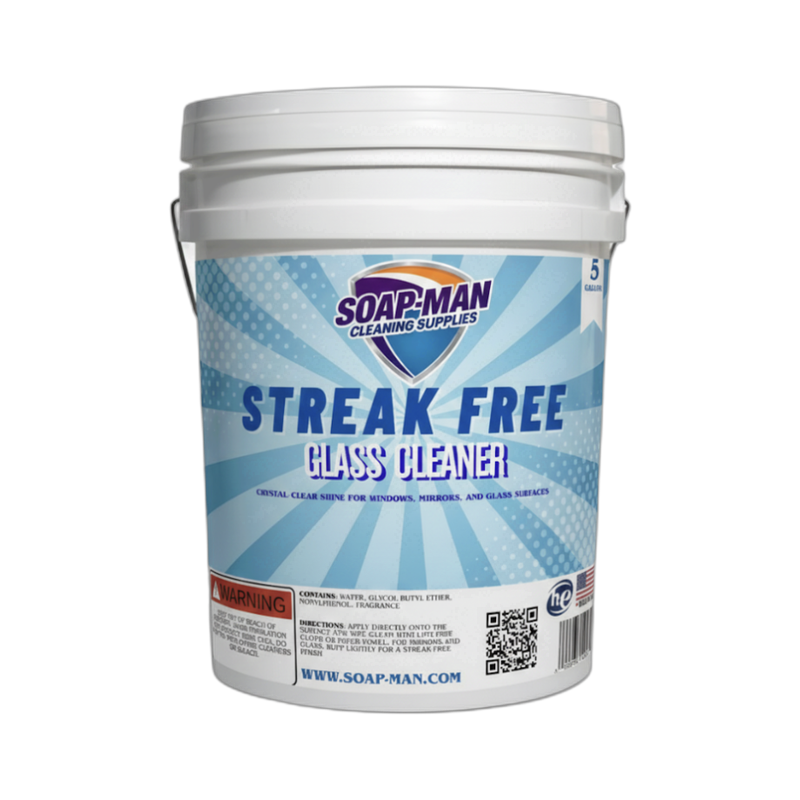
- Streak-free glass cleaner — Soap-Man Streak-Free Glass Cleaner is formulated to evaporate clean without residue.
- A squeegee — 12-18 inch professional squeegee with a replaceable rubber blade.
- A microfiber cloth or wash mitt — for applying cleaner and pre-cleaning the glass.
- A bucket of warm water — with a small amount of dish soap or glass cleaner for heavily soiled windows.
- Lint-free microfiber towels — for drying frames and edges.
- A plain cotton T-shirt or dedicated cleaning rag — for wiping the squeegee blade between strokes.
- A ladder or extension pole — for high or exterior windows.
- Newspaper (optional) — old trick for final buffing; works but less consistent than microfiber.
Step-by-Step: The Professional Window Cleaning Method
Step 1: Choose the Right Time
Avoid direct sunlight. Cleaner dries too fast in sun, leaving streaks before you can squeegee. Early morning, late afternoon, or an overcast day is ideal. Interior windows can be cleaned any time as long as the sun isn't beating directly through them.
Step 2: Dust the Frames First
Wipe down window sills, frames, and the top of the glass with a dry cloth. Dust and dirt from frames will drip onto clean glass the moment you start washing. Remove it first.
Step 3: Pre-Wash Heavily Soiled Windows
For exterior windows or any glass with visible dirt, bird droppings, or tree sap, wash first with a wet microfiber cloth and warm soapy water. This removes the debris before you apply glass cleaner. Trying to skip straight to glass cleaner on a dirty window just pushes dirt around.
Step 4: Apply the Glass Cleaner
Spray Streak-Free Glass Cleaner directly onto the glass, or onto a microfiber cloth for smaller windows. Don't oversaturate — a light, even coating is enough. Too much cleaner actually causes streaks because it takes longer to evaporate or squeegee off.
Step 5: Squeegee Technique (For Larger Windows)
This is the professional approach:
- Start at the top of the window. Place the squeegee flat against the glass at the upper left corner.
- Pull the squeegee horizontally across the top, keeping firm, even pressure.
- At the end of the stroke, lift the squeegee off the glass and wipe the blade on a clean cloth or cotton T-shirt.
- Return to the left side and make the next stroke, overlapping the previous stroke by about half an inch.
- Continue down the window, wiping the blade between each stroke, until you reach the bottom.
- Wipe any remaining cleaner from the bottom edge of the window with a dry microfiber cloth.
Step 6: Microfiber Technique (For Smaller Windows)
For windows where a squeegee is impractical:
- Spray cleaner directly onto the glass in light mist.
- Wipe with a clean, lint-free microfiber cloth in one direction (horizontal or vertical).
- Flip the cloth to a clean section and wipe in the opposite direction to catch any remaining streaks.
- Buff with a third clean section or a separate dry microfiber cloth.
Step 7: Detail the Edges
Wipe around the edges of the window with a dry microfiber cloth to catch any cleaner that pooled in the frame or corners. Edges are where most visible streaks show up later.
Step 8: Clean Both Sides in Different Directions
Pro trick: clean interior windows with horizontal strokes and exterior windows with vertical strokes (or vice versa). This way, if you see a streak, you instantly know which side it's on.
Pro Tips
- Never clean windows in direct sunlight. Cleaner evaporates too fast, leaving streaks you can't squeegee off.
- Use two cloths minimum. One for initial application or wet work, one dry for buffing.
- Don't wash paper towels across glass. They leave lint and don't actually clean as well as microfiber.
- Wipe your squeegee blade every stroke. Dirt and cleaner residue on the blade streaks the next stroke.
- Replace the squeegee blade when it's worn. A dull or nicked blade is the most common cause of streaks for home users.
- Use less product, not more. Excess cleaner is the number one cause of streaks. A light misting is all you need.
- Top to bottom, always. Drips flow downward. Cleaning top to bottom means drips land on glass you haven't cleaned yet.
- Store microfiber cloths separately. Wash them without fabric softener — softener ruins the microfiber's ability to absorb and lift.
Common Mistakes
- Cleaning in direct sunlight. Guaranteed streaks.
- Using too much cleaner. More isn't better. Excess product pools in corners and streaks.
- Using paper towels. They leave lint, absorb unevenly, and create more streaks than they remove.
- Dirty cloths. Reusing yesterday's cloth or using one fresh from the laundry that still has fabric softener residue.
- Washing fabric softener into your microfiber. Ruins the cloth permanently. Wash microfiber without softener.
- Skipping the pre-wash on dirty windows. Glass cleaner alone can't handle heavy dirt.
- Wiping the squeegee blade on a dirty cloth. Transfers the grime back to the next stroke.
- Using window cleaner on tinted glass without checking compatibility. Ammonia-based cleaners can damage certain window tints over time.
FAQ
Why do my windows streak no matter what I use?
Usually one of three things: cleaning in sunlight, using too much product, or using dirty cloths. Try cleaning in the shade with a light misting and a fresh microfiber cloth. If streaks persist, replace your cleaning cloths (especially if they've been washed with fabric softener).
Is a squeegee really better than a microfiber cloth?
For windows larger than about 12 inches wide, yes. A squeegee leaves less residue and is much faster. For smaller windows, microfiber is easier to work with and produces the same results if you use the right technique.
Can I use vinegar and water to clean windows?
Yes, but it's not ideal. Vinegar leaves a slight residue and a lingering smell. Purpose-built glass cleaners like Streak-Free Glass Cleaner are formulated to evaporate completely without residue, producing a cleaner finish with less technique.
How often should I clean my windows?
Interior windows: once a month for visible areas, every 2-3 months for less-used windows. Exterior windows: twice a year at minimum — once in spring and once in fall — and after major storms or anything that leaves visible grime.
Can I use glass cleaner on my car windshield?
Yes, but avoid ammonia-based cleaners if your vehicle has tinted windows. Ammonia can degrade the adhesive backing on aftermarket tints over time. Streak-Free Glass Cleaner works well on both auto glass and home windows.
Why do exterior windows get streaky faster than interior ones?
Pollution, rain spots, pollen, and bird droppings accumulate faster on exterior glass. Also, hard water from sprinkler systems leaves mineral deposits that look like streaks but are actually etched into the glass. Clean exterior windows more often and dry thoroughly to prevent mineral buildup.