
Clean First, Disinfect Second
The most common mistake in home disinfecting is skipping the cleaning step. Disinfectants need to reach the surface to work. When you spray a dirty counter with disinfectant, the active ingredient binds to the dirt instead of the pathogens underneath. You used product. You didn't disinfect anything.
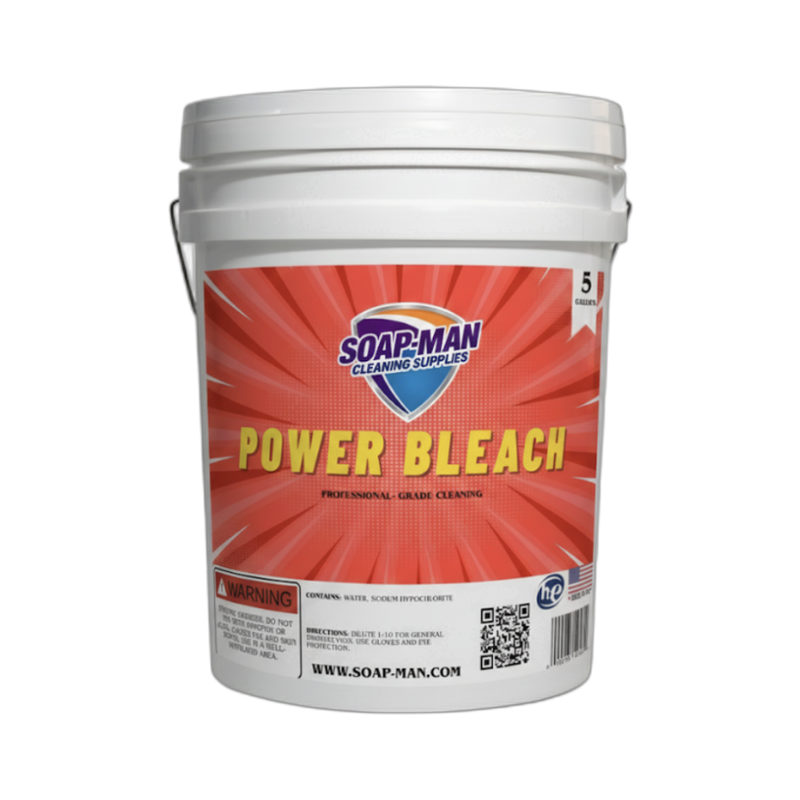
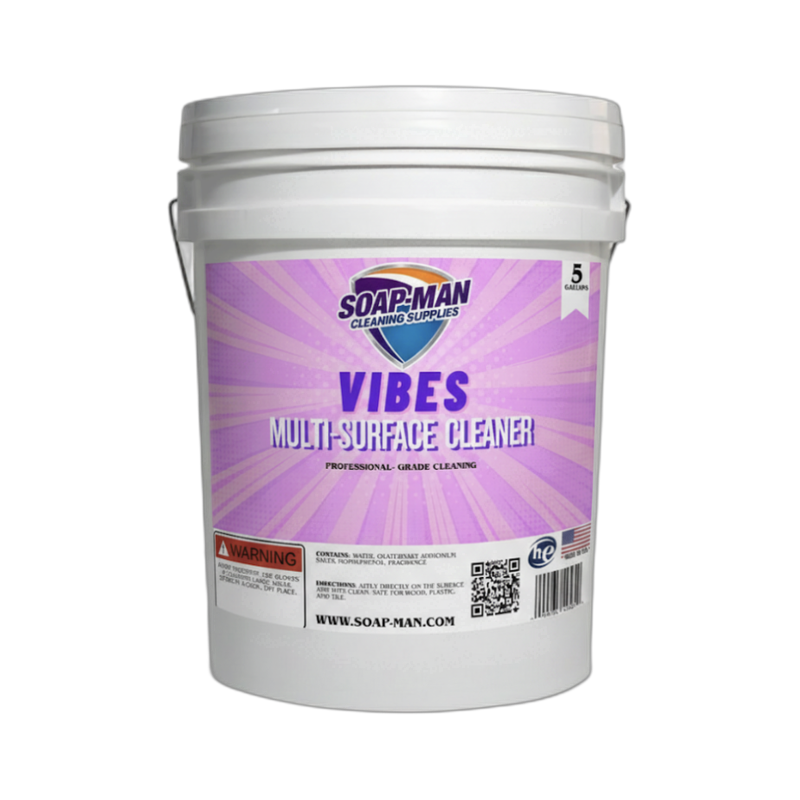
Professional cleaners follow a two-step rule: clean to remove visible soil and biological material, then disinfect to kill what's left. For a residential setting, this means wiping with a general-purpose cleaner like Soap-Man Vibes Multi-Surface Cleaner first, then following up with a proper disinfectant like diluted Power Bleach. Two steps. Two products. Non-negotiable if you want actual disinfection.
This guide walks you through the full process for every area of your home where disinfection actually matters — and explains the "contact time" rule that determines whether your effort works at all.
What You'll Need
- A general-purpose cleaner — Vibes Multi-Surface Cleaner for the pre-disinfection wipe-down.
- An EPA-registered disinfectant — commercial-grade Power Bleach is the workhorse for serious disinfection.
- Microfiber cloths — at least two sets, one for cleaning and one for disinfecting. Color-code them.
- Rubber gloves — to protect skin from bleach and quat exposure.
- A bucket or spray bottle — labeled with the product and dilution ratio.
- A timer or watch — to enforce contact time.
- Paper towels — for dirtier surfaces where you don't want to recontaminate cloths.
Step-by-Step: Disinfecting Your Home the Right Way
Step 1: Clear the Surface
Remove everything from the surface you're about to disinfect. Countertops should be empty. Toilet seats should be down. Floors should be clear of rugs and toys. You can't disinfect under something you didn't move.
Step 2: Pre-Clean with a General Cleaner
Spray the surface with a general-purpose cleaner and wipe with a microfiber cloth to remove visible dirt, food particles, grease, and biological material. This step isn't optional — it's what allows the disinfectant to actually reach the surface in Step 4.
Step 3: Dilute Your Disinfectant Correctly
For bleach-based disinfection, use the CDC-recommended ratio of 1/3 cup regular bleach per gallon of water, or follow the dilution chart on the bottle for commercial-strength products. Mix fresh — bleach solutions lose effectiveness within 24 hours. Mix too weak, it doesn't disinfect. Mix too strong, it damages surfaces and wastes product.
Step 4: Apply the Disinfectant
Spray or wipe the disinfectant evenly across the pre-cleaned surface. The entire surface should be visibly wet. Don't be stingy — partial coverage means partial disinfection.
Step 5: Respect the Contact Time
This is the step most people skip. Every disinfectant has a required contact time — the amount of time the surface must stay wet for the product to kill pathogens. Bleach needs at least 5 minutes. Hydrogen peroxide needs 6-8. Quat-based products vary. Set a timer. If the surface dries before the contact time is up, reapply.
Step 6: Wipe or Rinse
After the contact time, wipe the surface with a clean cloth. For food-prep areas, follow bleach disinfection with a clean-water rinse to prevent residue from contaminating food. For bathroom surfaces, a simple wipe is sufficient.
Step 7: Launder Your Cloths
Microfiber cloths used for disinfecting get washed in hot water with detergent and a cup of bleach (if the cloths are colorfast). Never reuse a disinfecting cloth on a clean surface without washing it first.
Disinfecting Priority Zones in a Home
Kitchen (Highest Priority)
Countertops (especially after raw meat), cutting boards, sink basins, faucet handles, refrigerator door handles, microwave handles, and garbage can lids. Disinfect daily if possible, especially after food prep.
Bathroom (High Priority)
Toilet seat, flush handle, faucet handles, sink basin, shower floor, and door handle. Weekly deep disinfection with bleach; daily quick wipe with a quat-based product.
High-Touch Points (Daily)
Doorknobs, light switches, remote controls, phones, keyboards, refrigerator handles, faucet handles, and stair railings. These are touched dozens of times per day and rarely cleaned.
Laundry (After Illness)
Wash bedding and clothes from a sick person in hot water with detergent and bleach if colorfast. Disinfect the washing machine drum afterward by running a hot cycle with bleach.
Pro Tips
- Work top to bottom. Disinfect higher surfaces before lower ones to avoid recontaminating as you work down.
- Clean to disinfect, not the other way around. Always clean first, even if the surface looks spotless.
- Use color-coded cloths. One color for bathrooms, another for kitchens. Stops cross-contamination.
- Ventilate aggressively. Bleach fumes concentrate fast in small bathrooms. Open a window or run the fan.
- Disinfect the products you use to disinfect. Spray bottles, bucket handles, and gloves all get touched during cleaning and need wipe-downs too.
Common Mistakes
- Spraying and immediately wiping. This is cleaning, not disinfecting. Contact time is everything.
- Skipping the pre-clean. Disinfectant bound to dirt is wasted disinfectant.
- Using the same cloth for toilet and countertop. Cross-contamination defeats the entire point.
- Mixing products mid-process. Especially bleach with anything acidic like vinegar or citrus cleaners.
- Assuming "natural" means "disinfecting." Vinegar, lemon juice, and baking soda do not disinfect.
- Not wearing gloves. Repeated skin exposure to bleach or quats causes contact dermatitis.
- Over-disinfecting. Disinfecting every surface, every day, is unnecessary and bad for indoor air quality. Focus on high-risk points.
FAQ
How often should I disinfect my home?
Daily for kitchen food-prep surfaces and high-touch points like doorknobs and light switches. Weekly for bathroom deep disinfection. As-needed after illness, raw meat handling, or any biological spill.
Can I just use disinfectant wipes for everything?
Disinfectant wipes work for small surfaces and quick touch-ups, but they're not cost-effective for full-home disinfection. For bathrooms and kitchens, diluted Power Bleach is far more economical and usually more effective.
Is disinfecting with bleach safe around pets and kids?
Yes, when done correctly. Keep pets and kids out of the room during application and contact time, then rinse food and water surfaces thoroughly after disinfection. Ventilate well. Store bleach locked away from children.
Does mopping count as disinfecting the floor?
Only if you're using an actual disinfectant in the mop water, and the floor stays wet long enough for contact time. A quick mop with a cleaner doesn't disinfect — it moves dirt around. For true floor disinfection, mop with a bleach-water solution and let the floor air-dry.
What about steam cleaning — does it disinfect?
Steam at 200°F or higher kills most household bacteria and viruses, and can serve as a chemical-free disinfection method for floors, grout, and fabrics. However, steam only disinfects the exact spot it contacts for a few seconds — coverage is much harder to verify than with a chemical disinfectant, so it's best used as a supplement, not a replacement.