
Why White Clothes Go Gray and Yellow
White clothes don't stay white on their own. Every wash cycle exposes them to dyes from other fabrics, residue from hard water, body oils, sweat, and detergent buildup. Without proper care, whites lose their brightness within 10-20 washes and start looking dingy, gray, or yellow. Most people accept this as normal — but it isn't. Hotels, hospitals, and commercial laundries keep their whites bright for years.
As cleaning professionals who supply commercial laundry operations, we can tell you: the secret to bright whites isn't one magic product. It's a system. Sort correctly, use the right detergent at the right temperature, use bleach strategically, and avoid the things that cause yellowing. Do all four consistently and your whites will stay bright essentially forever.
This guide walks through the complete professional method for washing whites, including how to restore whites that have already gone gray or yellow.
What You'll Need
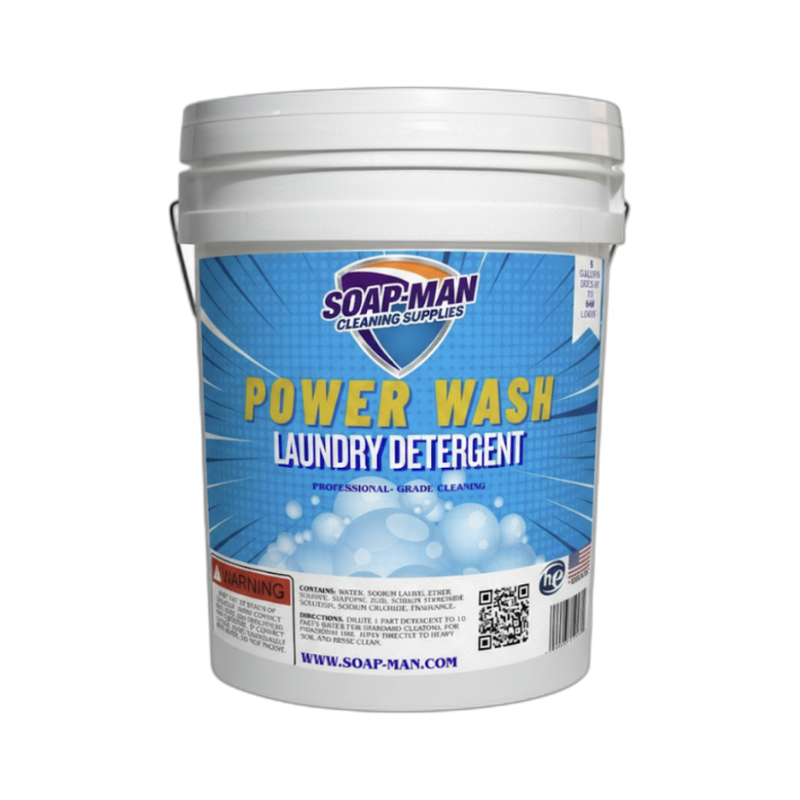
- Heavy-duty laundry detergent — Soap-Man Power Wash Laundry Detergent has enough cleaning power to remove body soils, oils, and residues that cause whites to dull. Weak detergents leave behind the very things that make whites look gray.
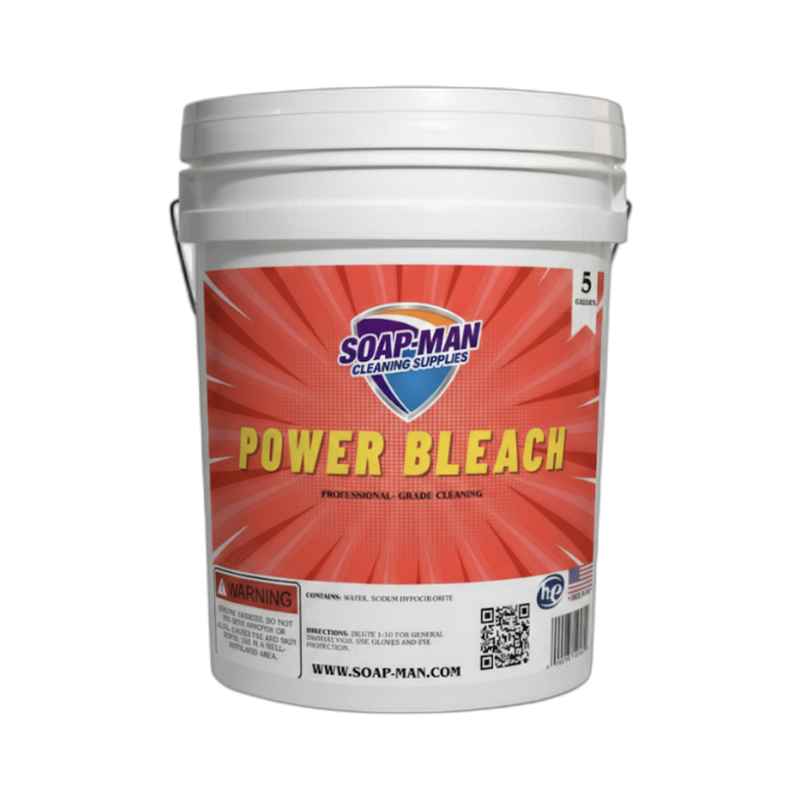
- Professional bleach — Soap-Man Power Bleach at commercial strength (12.5% sodium hypochlorite) delivers reliable whitening when used correctly. Household bleach varies too much in concentration to be predictable.
- Oxygen-based bleach — For colors or fabrics that can't handle chlorine bleach. Safe on most synthetics and colorfast blends.
- White vinegar — Removes detergent buildup and softens water.
- Baking soda — Boosts detergent effectiveness and helps whiten.
- Separate laundry basket — For whites only. Keeps dyes from bleeding onto them before washing.
Step-by-Step Method
Step 1: Sort Ruthlessly
This is where most home laundry goes wrong. "Whites" should mean pure white — no off-white, no cream, no "mostly white with small logos." Anything with color goes in a separate pile, even if the color is tiny. A single red sock in a load of whites ruins everything.
Further sort whites by fabric type. Heavy cottons (towels, sheets, T-shirts) can handle hot water and bleach. Delicate whites (blouses, dress shirts, undergarments) need gentler treatment. Athletic wear with stretch fibers needs warm water, not hot, and oxygen bleach instead of chlorine.
Step 2: Pre-Treat Stains
Any stain on a white garment needs pre-treatment before washing — otherwise you're asking bleach to do everything, and bleach works better on clean stains than dirty ones. For food stains, apply a drop of dish soap and work it in. For armpit yellowing, apply a paste of baking soda and water. For ground-in dirt, use your regular detergent directly on the stain and rub.
Let pre-treatments sit for 10-15 minutes before washing.
Step 3: Use the Right Temperature
White cottons wash best in hot water (130°F / 54°C). Hot water dissolves body oils, sweat residue, and hard water minerals that cause yellowing. It also activates detergents and bleach more effectively. Check care labels — most white towels, sheets, and basic T-shirts handle hot water fine.
Delicate whites, synthetics, and fabrics with elastic should wash in warm water (around 105°F / 40°C) to prevent damage. Never use cold water for whites — cold doesn't remove the oils and residues that cause dulling.
Step 4: Use a Full Dose of Strong Detergent
Underdosing detergent is the single most common cause of dingy whites. Use the full recommended amount of Power Wash Laundry Detergent for your load size. If your water is hard or the load is heavily soiled, add a quarter cup more.
Don't be tempted to double-dose thinking more is better — excessive detergent doesn't rinse out fully and contributes to buildup that causes dulling. Use exactly what's recommended.
Step 5: Add Bleach Correctly
For bleach-safe whites (most cottons), add bleach to the designated bleach dispenser in your washing machine. Never pour bleach directly onto fabric — it causes uneven bleaching and weakens fibers. Use about 1/4 cup of Power Bleach per full load for maintenance; up to 1/2 cup for heavily yellowed items.
For synthetics, athletic wear, or fabrics that can't handle chlorine bleach, use oxygen-based bleach instead. Add it directly to the drum with the clothes. Oxygen bleach is gentler but still effective at removing yellowing and brightening dingy whites.
Step 6: Rinse Thoroughly
Use an extra rinse cycle for whites. Detergent and bleach residue left in fabric causes the very yellowing and dulling you're trying to prevent. An extra rinse adds a few minutes and a small amount of water, but dramatically improves brightness retention.
Step 7: Dry Properly
Line drying in direct sunlight is the best option — UV light is a natural whitener and brightener. If you must use a dryer, avoid high heat, which can yellow whites over time. Medium heat works fine. Remove items promptly to avoid wrinkles and prevent any remaining moisture from causing mildew spots.
How to Restore Yellowed Whites
For whites that have already gone yellow or gray:
- Boiling method: Fill a large pot with water, add 1/4 cup of Power Wash detergent and 1/4 cup of Power Bleach. Bring to a boil, remove from heat, and submerge the white items. Let soak for 30 minutes, then launder as normal.
- Oxygen bleach soak: Dissolve oxygen bleach in hot water according to package directions and soak whites for 6-8 hours or overnight. Launder as normal afterward.
- Lemon juice method: For gentle restoration, soak whites in a mixture of lemon juice and hot water (1/2 cup lemon juice per gallon), then dry in sunlight.
Pro Tips
- Wash whites together, always separately from colors. Even "colorfast" items can bleed over time and dull whites. Keep them in their own loads, every time.
- Skip fabric softener on whites. Fabric softener coats fibers with a residue that attracts dirt and causes yellowing over time. For towels especially, softener buildup is the main cause of that "dingy towel" look.
- Use hot water when you can. Hot water is the single biggest factor in white brightness. Always use the hottest temperature the fabric can safely handle.
- Don't overload the washer. Whites need room to agitate for thorough cleaning. A too-full load leaves residue behind. Fill the drum no more than 3/4 full.
Common Mistakes
Washing Whites with Colors
Even small color transfer from "safe" colored items dulls whites over many wash cycles. Keep whites absolutely separate. This alone can extend white brightness by years.
Using Cold Water
Cold water leaves body oils and residues in the fabric. Over time these accumulate and cause the gray dullness that makes whites look old. Always use warm or hot for whites.
Overusing Bleach
Bleach weakens fibers with every use. Using it on every single load breaks down fabrics faster than necessary. Use bleach only every 3-4 wash cycles for maintenance, or when items are visibly dingy.
Letting Sweat and Deodorant Build Up
Armpit yellowing is caused by the reaction between sweat, body oils, and aluminum in antiperspirants. Pre-treat armpit areas with baking soda paste or hydrogen peroxide before each wash to prevent buildup.
Frequently Asked Questions
Why do my whites turn gray even though I'm using bleach?
Either your detergent is too weak, you're not using enough of it, you're washing in cold water, or you're not rinsing thoroughly. Bleach can't fix all the problems that weak detergent causes. Use a full dose of heavy-duty detergent, wash in hot water, and run an extra rinse cycle.
Can I bleach all white clothes?
No. Chlorine bleach damages synthetics like polyester, spandex, and nylon. Check care labels for bleach safety symbols. For synthetics, use oxygen-based bleach instead.
How do I whiten dingy white socks?
Socks get the dirtiest because they trap foot oils and grime. Pre-soak dingy socks in hot water with detergent and oxygen bleach for several hours, then wash in hot water with regular detergent and chlorine bleach. Repeat for heavily stained socks.
What causes white shirts to get yellow around the armpits?
The combination of sweat, body oils, and aluminum in antiperspirants. This buildup is hard to remove once set. Prevent it by applying a baking soda and hydrogen peroxide paste to armpit areas before washing, or use a specialized pre-treatment every time.
Is it bad to mix white cottons and white synthetics in the same load?
You can, but synthetics need a different temperature and bleach. Either wash them separately, or wash together in warm water with oxygen bleach (safer for synthetics) to avoid damaging the non-cotton fabrics.