
Why Grease Is the Worst Laundry Stain
Grease stains are uniquely frustrating because they don't behave like water-based stains. When you throw a grease-stained shirt in the washer, regular detergent can't fully dissolve the oil. The stain bonds with fabric fibers and sets permanently after a hot dryer cycle. Most of the "ruined" clothes in the back of people's closets were killed by this exact sequence: stain, wash, dry, stain now permanent.
As cleaning professionals working in commercial laundry, we know that grease stains come out — but only if you treat them correctly before they hit the dryer. The right pre-treatment with the right product can save almost any grease-stained garment. The wrong approach (or ignoring the stain until after drying) can ruin a perfectly good shirt in 20 minutes.
This guide covers the method that actually works for every kind of grease: cooking oil, bacon grease, motor oil, butter, salad dressing, and mystery kitchen splatters. The principles apply to any washable fabric.
What You'll Need
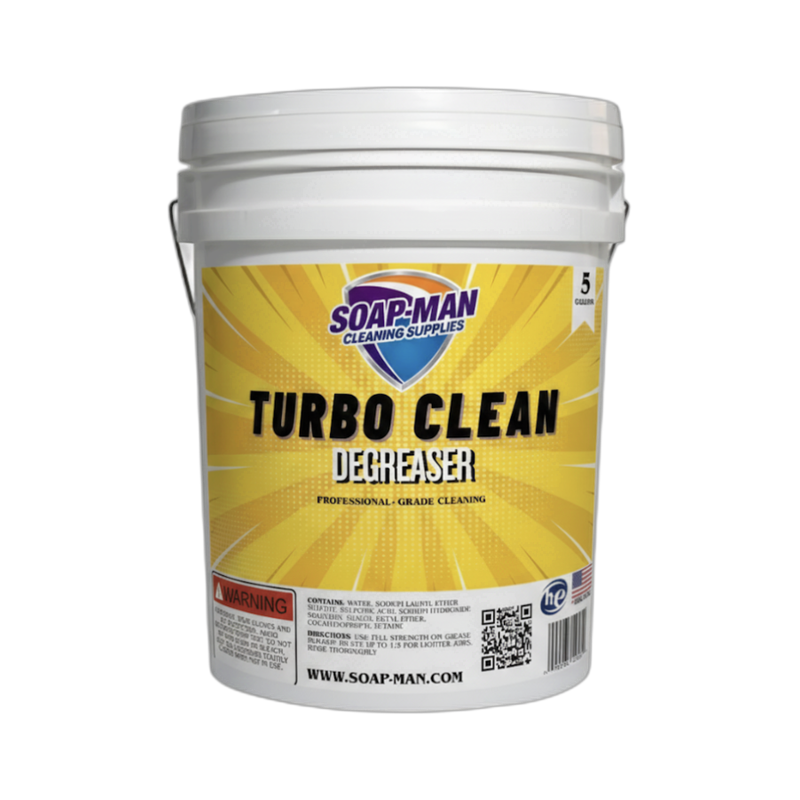
- Commercial-strength degreaser — Soap-Man Turbo Clean Degreaser is the most effective home option. It's formulated to break the chemical bond between grease and any surface, including fabric fibers. A small amount works on even heavy grease stains.
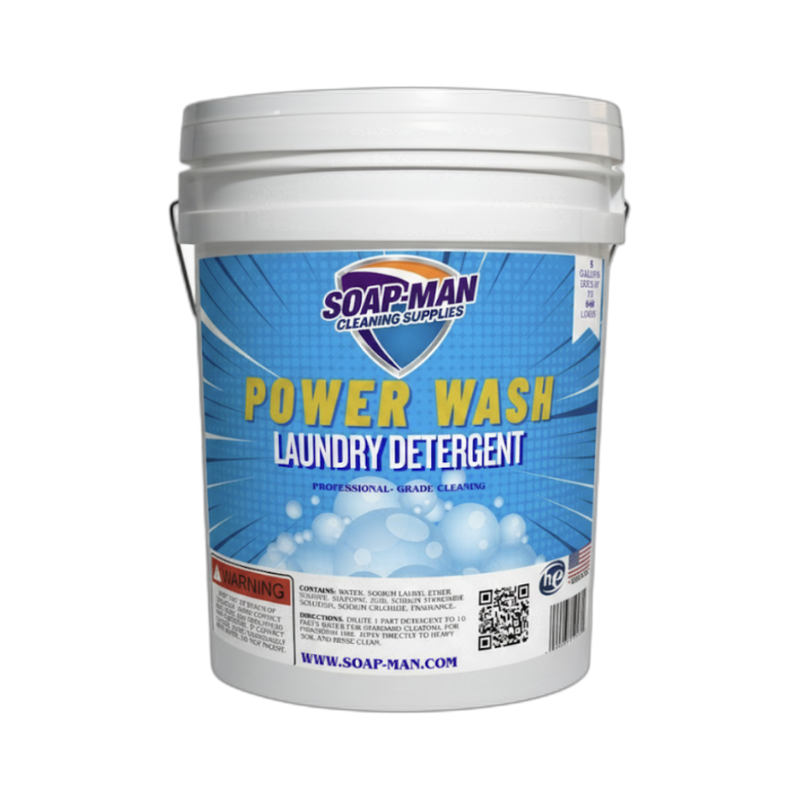
- Heavy-duty laundry detergent — Power Wash Laundry Detergent has the surfactants needed to remove grease residue during the wash cycle. Regular detergents often lack the active ingredients for grease.
- Dish soap (original Dawn or similar) — Standard grease-cutting dish soap works in a pinch for fresh stains. Its surfactants are designed specifically for grease.
- Baking soda or cornstarch — For absorbing fresh grease before treatment.
- White vinegar — Helps with certain stains and brightens whites.
- Soft-bristle toothbrush — For working treatments into the fabric.
- Paper towels or clean cloths
- Hot water — For most fabrics (always check the care label).
Step-by-Step: Fresh Grease Stains
Step 1: Blot Immediately
The moment grease hits fabric, blot it with a paper towel or clean cloth. Press down firmly but don't rub — rubbing pushes grease deeper into fibers. Lift the towel, move to a clean section, and blot again. Keep blotting until no more grease transfers to the towel.
Step 2: Absorb Remaining Grease
Sprinkle a generous layer of baking soda, cornstarch, or talcum powder directly on the stain. These absorb the grease that blotting couldn't lift. Let it sit for 10-15 minutes. You'll see the powder darken as it soaks up the oil. Brush it off gently. Repeat with fresh powder if the stain is heavy.
Step 3: Apply Degreaser or Dish Soap
Work a few drops of Turbo Clean Degreaser or grease-cutting dish soap directly into the stain with your fingers or a soft toothbrush. Let it sit for 5-10 minutes. The surfactants penetrate the fibers and break the bond between the grease molecules and the fabric.
Step 4: Wash in the Hottest Water Safe for the Fabric
Check the care label first — some fabrics can't handle hot water. If the label allows, wash in hot water with Power Wash Laundry Detergent. Hot water helps dissolve remaining grease that degreaser has loosened. For delicate fabrics, use warm water with extra pre-treatment time.
Step 5: Check Before Drying
This is the most important step. Before putting the garment in the dryer, check the stain. Is it completely gone? If not, do not put it in the dryer — heat will set any remaining grease permanently. Repeat the pre-treatment and wash cycle until the stain is gone, then dry as normal.
Step-by-Step: Set-In Grease Stains
Step 1: Apply Degreaser Directly
Set-in stains need aggressive pre-treatment. Apply Turbo Clean Degreaser directly to the stain and work it in with a toothbrush. Let it sit for 30 minutes — don't let it dry out. If it starts to dry, add a few drops of water.
Step 2: Hot Water Soak
Fill a sink or bucket with hot water and add more degreaser or heavy-duty laundry detergent. Soak the garment for at least an hour. For older or larger stains, soak overnight.
Step 3: Wash in Hot Water
Wash the garment in the hottest water safe for the fabric with a full dose of Power Wash Laundry Detergent. If the stain is still visible after washing, do not dry it — repeat the entire process. Set-in stains may need 2-3 treatments to fully remove.
Pro Tips
- Speed is everything. A grease stain treated within 10 minutes of occurring is 5 times easier to remove than one that's had hours to set. Carry a stain pen or small degreaser packet if you're in an environment where grease stains are common.
- Never put a greasy garment in the dryer. Heat permanently bonds grease to fibers. If you're not sure the stain is gone, skip the dryer and air dry. You can always run it through another wash cycle if the stain is still there.
- Treat the back of the fabric too. For heavy grease, place a paper towel under the stain when applying treatment. As you work the cleaner in from the top, grease lifts out the bottom into the towel. Move to clean sections of the towel as it absorbs.
- Use professional degreaser for work clothes. Mechanics, cooks, and anyone who works around heavy grease should use a commercial-strength degreaser as standard pre-treatment. Regular dish soap can't handle industrial grease residues.
Common Mistakes
Using Cold Water
Cold water doesn't dissolve grease. While cold is correct for protein stains (blood, milk, egg), grease stains need hot water to fully release from fibers. Always check the care label, but use the warmest water the fabric can handle.
Rubbing the Stain
Rubbing spreads grease and pushes it deeper into the weave. Always blot — apply pressure straight down, lift, move to a clean section, repeat. This lifts grease out rather than grinding it in.
Drying Before Checking
Tossing a pre-treated garment in the dryer "hoping for the best" is how clothes get permanently stained. Always verify the stain is gone before applying heat. It takes 30 seconds to check; it takes forever to fix a set-in stain.
Using Regular Detergent on Heavy Grease
Regular detergents are formulated for general soil. For heavy grease — like motor oil, bacon grease, or cooking oil splatters — use a degreaser first, then a heavy-duty detergent. Regular detergent alone may leave a faint oily outline even after washing.
Frequently Asked Questions
Can I get grease stains out of dry clean only clothes?
Take them to a professional dry cleaner as soon as possible and point out the stain. Don't try to pre-treat with water or detergent at home — this can damage dry-clean-only fabrics. The cleaner will use solvents designed for grease.
Will an old set-in grease stain come out?
Often yes, but it takes multiple treatment cycles and patience. Apply degreaser, soak in hot water, wash, check. Repeat until the stain is gone. Stains more than a few months old sometimes require professional cleaning.
Does WD-40 really remove grease stains?
This is a counterintuitive trick that works for some set-in grease stains — WD-40 can re-liquefy old grease so it can be washed out. Spray it on the stain, let it sit for 20 minutes, then pre-treat with dish soap or degreaser as normal and wash. Only use this method as a last resort on old stains, not fresh ones.
Why do grease stains sometimes come back after drying?
Incomplete removal plus heat setting. The wash cycle pulls grease to the surface but doesn't fully extract it. The dryer then sets what remained. Always ensure the stain is completely gone before drying.
Can I use degreaser on colored clothes?
Most commercial degreasers are safe on colorfast fabrics, but always test in an inconspicuous area first. Apply a small amount to a hidden spot (inside seam, hem), wait 10 minutes, and check for color change before treating the visible stain.