Ammonia vs Bleach: Which Should You Use?
Ammonia vs bleach: when to use each and why you should NEVER mix them. Learn the key differences for safe, effective cleaning.
Quick Verdict
Ammonia and bleach serve completely different purposes. Ammonia is for cleaning and degreasing. Bleach is for disinfecting and whitening. They should never be used interchangeably and must NEVER be mixed. A complete cleaning program uses both products for different tasks, stored and used separately.
Side-by-Side Comparison
Ammonia
Pros
- Streak-free shine on glass, mirrors, and stainless steel
- Excellent degreaser for kitchen hoods and stovetops
- Evaporates cleanly without leaving residue
- Safe on a wider range of surfaces than bleach
Cons
- Not a disinfectant and does not kill germs
- Strong irritating fumes even at normal dilution
- Creates deadly chloramine gas if mixed with bleach
- Can damage copper, brass, and some rubber materials
Best For
Glass cleaning, degreasing kitchen equipment, stainless steel polishing, and any surface where streak-free shine matters.
Bleach
Pros
- Powerful disinfectant killing bacteria, viruses, and fungi
- Whitens and removes stains from white fabrics and surfaces
- Extremely cheap per gallon at commercial dilution
- Industry standard for healthcare and food service sanitation
Cons
- Leaves streaks on glass and shiny surfaces
- Damages colored fabrics, wood, and many materials
- Creates deadly chloramine gas if mixed with ammonia
- Strong fumes that irritate lungs and eyes
Best For
Disinfection of bathrooms, white laundry, mold removal, and sanitization of non-porous surfaces in healthcare and food service.
When to Use Ammonia
Use ammonia for glass cleaning, degreasing commercial kitchen equipment, cleaning stainless steel appliances, and mopping floors where a streak-free finish is needed. Always ventilate the area and dilute according to label instructions.
When to Use Bleach
Use bleach for bathroom disinfection, sanitizing food-service equipment (with proper rinse), whitening laundry, mold removal on tile and grout, and any situation requiring pathogen elimination. Always dilute and ventilate.
Buying cleaning supplies for a business?
If this Ammonia vs Bleach decision affects a facility, kitchen, laundry room, vehicle fleet, or recurring cleaning program, Soap-Man can quote the right bulk supply mix instead of retail-size bottles.
Bulk supplies related to this guide
Turn the comparison into an order path with Soap-Man products available by case, bucket, and volume quote.
Bleach & Disinfectants
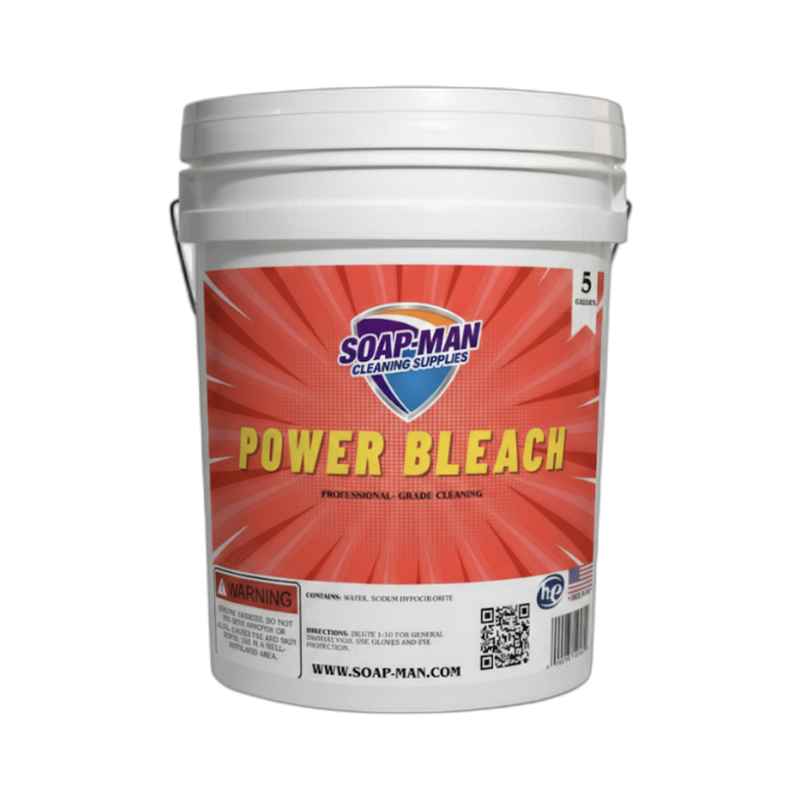
Power Bleach
Professional-grade bleach for commercial disinfecting and whitening. Available in 1-gallon and 5-gallon sizes.
From $68.00/case or $58.00/bucket
View product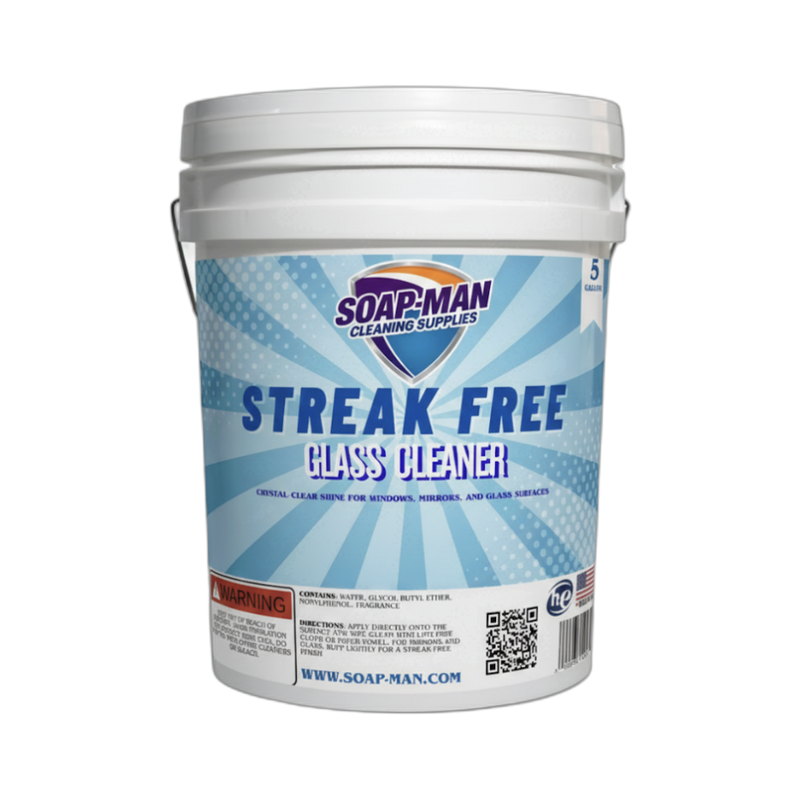
Specialty Cleaners
Streak Free Glass Cleaner
Professional streak-free glass and mirror cleaner for commercial use. Available in 1-gallon and 5-gallon sizes.
From $64.00/case or $56.00/bucket
View product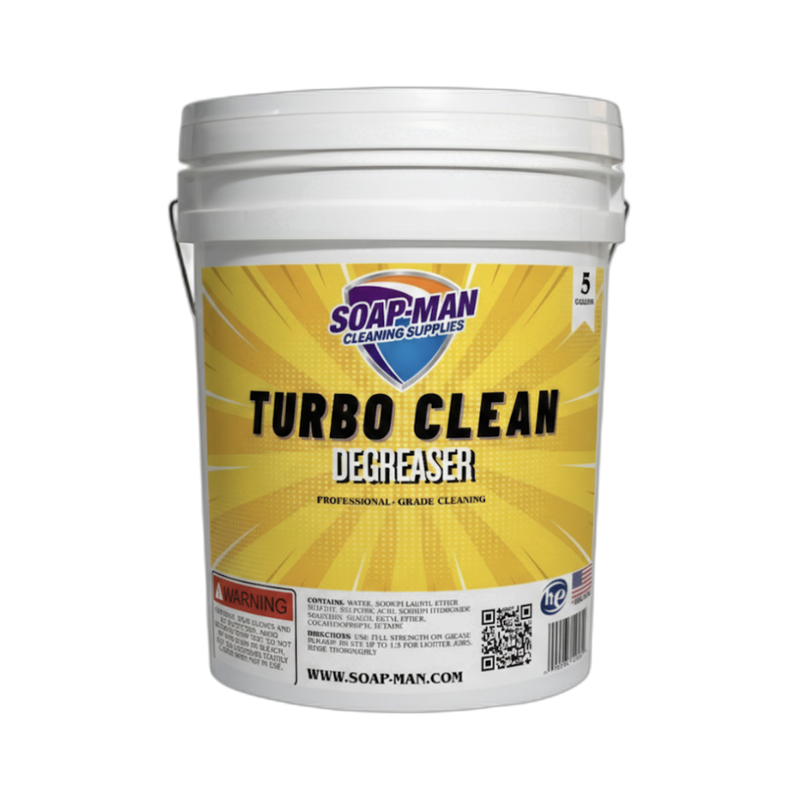
Degreasers & Multi-Surface Cleaners
Turbo Clean Degreaser
Industrial-strength degreaser for commercial kitchens and heavy-duty applications. Available in 1-gallon and 5-gallon sizes.
From $74.00/case or $65.00/bucket
View productOur Verdict
Ammonia and bleach serve completely different purposes. Ammonia is for cleaning and degreasing. Bleach is for disinfecting and whitening. They should never be used interchangeably and must NEVER be mixed. A complete cleaning program uses both products for different tasks, stored and used separately.
Choose Ammonia when: Glass cleaning, degreasing kitchen equipment, stainless steel polishing, and any surface where streak-free shine matters.
Choose Bleach when: Disinfection of bathrooms, white laundry, mold removal, and sanitization of non-porous surfaces in healthcare and food service.
Frequently Asked Questions
Related Comparisons
Disinfectant vs Sanitizer
Disinfectant vs sanitizer: which kills more germs? Learn the key differences, when to use each, and which is better for your cleaning needs.
Read comparisonChemicals & SolutionsHydrogen Peroxide vs Rubbing Alcohol (Isopropyl)
Hydrogen peroxide vs rubbing alcohol: compare disinfecting power, surface safety, contact time, and the best cleaning uses for each solution.
Read comparisonChemicals & SolutionsBleach vs Vinegar (White Distilled)
Bleach vs vinegar for mold removal: which actually kills mold at the root? Learn the science behind each method and when to use them.
Read comparisonNeed cleaning supplies? Shop Soap-Man Products