Hydrogen Peroxide vs Bleach (Sodium Hypochlorite): Which Should You Use?
Hydrogen peroxide vs bleach: which disinfectant and cleaner is safer and more effective? A practical guide for homes and businesses.
Quick Verdict
Bleach is the stronger disinfectant and far more cost-effective for commercial-scale cleaning. Hydrogen peroxide is the safer, more eco-friendly choice for everyday cleaning and food-contact surfaces. Choose based on what matters more: maximum disinfection power (bleach) or safety and environmental impact (hydrogen peroxide).
Side-by-Side Comparison
Hydrogen Peroxide
Pros
- Breaks down into water and oxygen with no toxic residue
- Safer for colored fabrics at lower concentrations
- Effective stain remover for organic stains like blood and wine
- Can be used on food-contact surfaces safely
Cons
- Weaker disinfecting power than bleach at standard concentrations
- Loses potency quickly when exposed to light
- Higher concentrations (above 10%) can cause chemical burns
- More expensive per ounce than bleach
Best For
Eco-conscious cleaning, food-prep surfaces, gentle fabric stain removal, and environments where chemical sensitivity is a concern.
Bleach (Sodium Hypochlorite)
Pros
- Maximum disinfection power killing virtually all pathogens
- Extremely cost-effective at pennies per gallon when diluted
- Industry standard for healthcare and food service sanitation
- Powerful whitening and stain removal on white fabrics
Cons
- Toxic fumes require excellent ventilation
- Permanently damages colored fabrics and many surfaces
- Creates dangerous chlorine gas when mixed with ammonia or acids
- Degrades rubber, metal, and certain plastics over time
Best For
Maximum disinfection in healthcare, food service sanitation, white laundry whitening, and mold removal on non-porous surfaces.
When to Use Hydrogen Peroxide
Use hydrogen peroxide for food-prep surface cleaning, gentle stain removal on colors, eco-friendly bathroom cleaning, and anytime you need a disinfectant that leaves zero harmful residue. Great for businesses focused on green cleaning practices.
When to Use Bleach (Sodium Hypochlorite)
Use bleach for heavy-duty disinfection in bathrooms, food service sanitation, white laundry, and outbreak response. Always dilute properly (1:10 ratio for general disinfection), ventilate the area, and never mix with other chemicals.
Buying cleaning supplies for a business?
If this Hydrogen Peroxide vs Bleach (Sodium Hypochlorite) decision affects a facility, kitchen, laundry room, vehicle fleet, or recurring cleaning program, Soap-Man can quote the right bulk supply mix instead of retail-size bottles.
Bulk supplies related to this guide
Turn the comparison into an order path with Soap-Man products available by case, bucket, and volume quote.
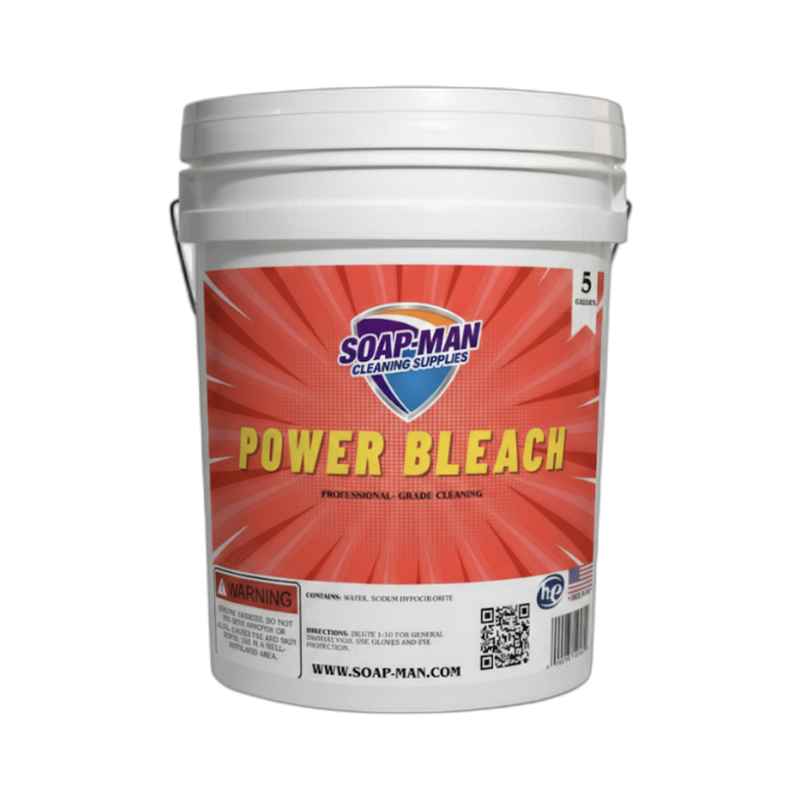
Bleach & Disinfectants
Power Bleach
Professional-grade bleach for commercial disinfecting and whitening. Available in 1-gallon and 5-gallon sizes.
From $68.00/case or $58.00/bucket
View product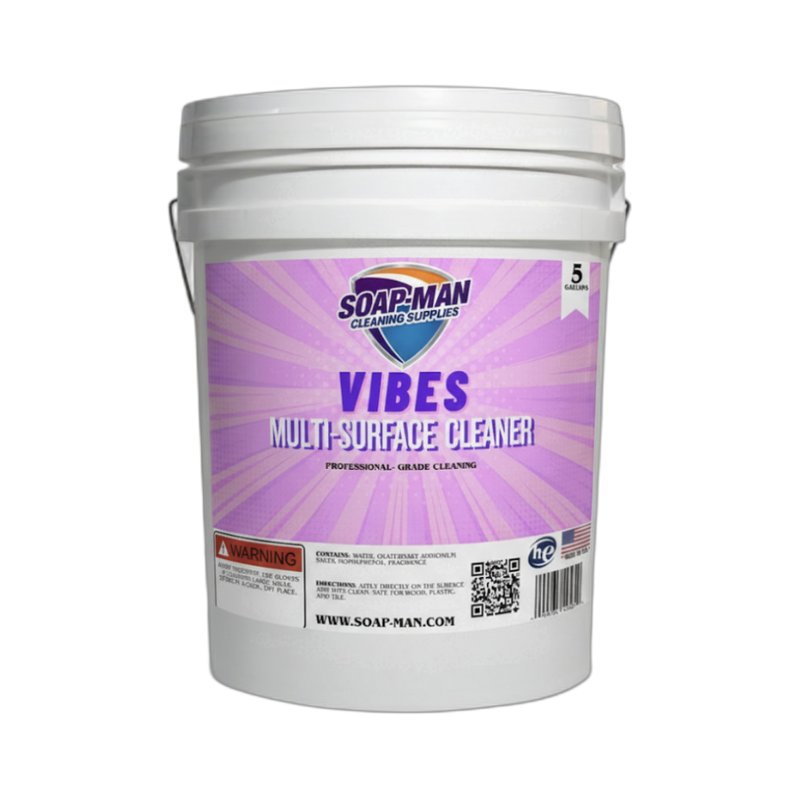
Degreasers & Multi-Surface Cleaners
Vibes Multi-Surface Cleaner
Premium multi-surface cleaner for all commercial and household environments. Available in 1-gallon and 5-gallon sizes.
From $67.00/case or $58.00/bucket
View productOur Verdict
Bleach is the stronger disinfectant and far more cost-effective for commercial-scale cleaning. Hydrogen peroxide is the safer, more eco-friendly choice for everyday cleaning and food-contact surfaces. Choose based on what matters more: maximum disinfection power (bleach) or safety and environmental impact (hydrogen peroxide).
Choose Hydrogen Peroxide when: Eco-conscious cleaning, food-prep surfaces, gentle fabric stain removal, and environments where chemical sensitivity is a concern.
Choose Bleach (Sodium Hypochlorite) when: Maximum disinfection in healthcare, food service sanitation, white laundry whitening, and mold removal on non-porous surfaces.
Frequently Asked Questions
Related Comparisons
Disinfectant vs Sanitizer
Disinfectant vs sanitizer: which kills more germs? Learn the key differences, when to use each, and which is better for your cleaning needs.
Read comparisonChemicals & SolutionsHydrogen Peroxide vs Rubbing Alcohol (Isopropyl)
Hydrogen peroxide vs rubbing alcohol: compare disinfecting power, surface safety, contact time, and the best cleaning uses for each solution.
Read comparisonChemicals & SolutionsBleach vs Vinegar (White Distilled)
Bleach vs vinegar for mold removal: which actually kills mold at the root? Learn the science behind each method and when to use them.
Read comparisonNeed cleaning supplies? Shop Soap-Man Products