Industrial Degreaser — Heavy Alkaline pH 12-13
Turbo Clean is Soap-Man's industrial degreaser: pH 12-13 alkaline chemistry, 1:10 to 1:50 dilution, non-flammable, food-service safe. Cuts petroleum grease, baked-on food, shop floor buildup, and engine block residue. Ships in 4×1gal cases and 5gal buckets from East Orange, NJ with 24-unit pallet pricing.
What makes a degreaser "industrial" vs commercial
The word industrial on a degreaser label means one thing: pH 12 or higher. At pH 12-13, alkaline chemistry saponifies petroleum grease — the caustic breaks the grease molecule into a water-soluble soap, which then rinses cleanly with potable water. At pH 10-11 (retail grade), the chemistry emulsifies grease but doesn't break it; you end up wiping grease from one surface to another.
Turbo Clean is Soap-Man's industrial-grade degreaser. It ships as a concentrate at pH 12-13, diluted 1:10 to 1:50 depending on soil load. Non-flammable (zero flash point), food-service safe, water-based. Safe on steel, stainless, sealed concrete, painted steel, epoxy, and quarry tile. NOT safe on bare aluminum, anodized finishes, waxed floors, or raw copper.
For operations needing a complete degrease-then-neutral program, pair Turbo Clean with Vibes Multi-Surface (pH 9-10) for daily maintenance after deep-degrease cycles. Add Lemon Glow (pH 7-8 neutral) for direct food-contact surfaces where alkaline chemistry is too aggressive. Call (908) 590-8562 to spec the full program for your facility.
Three chemistries for a complete industrial clean program
Turbo Clean for the deep-degrease. Vibes for daily. Lemon Glow for food-contact. All three ship bulk from East Orange.
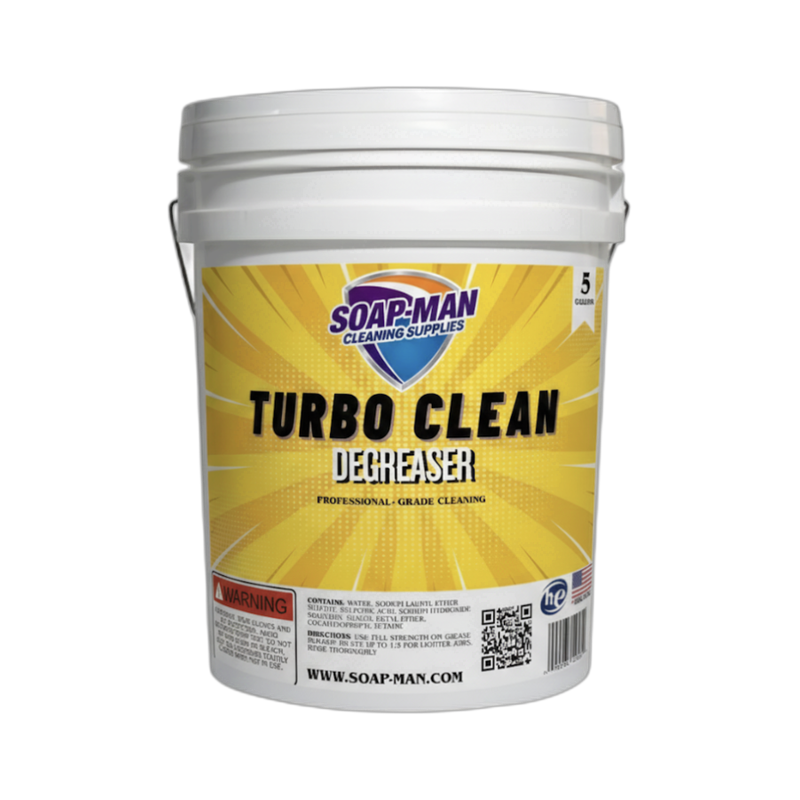
Turbo Clean Degreaser
Primary industrial alkaline degreaser
pH 12-13 · 1:10 to 1:50 · non-flammable · food-service safe
Hood filters, fryer decks, concrete shop floors, equipment housings, engine bays, degreasing metal parts before paint prep.
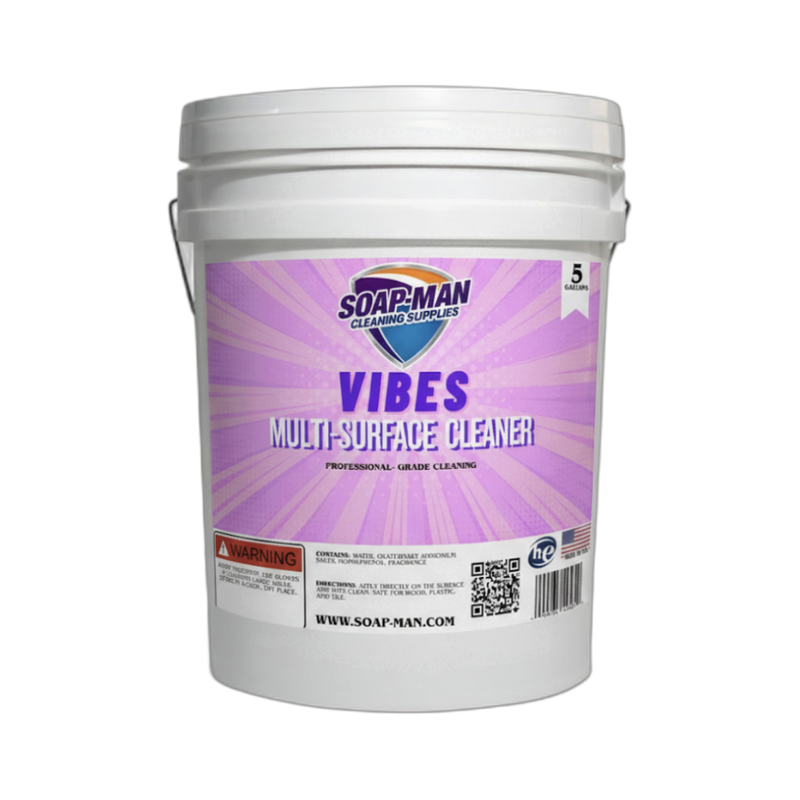
Vibes Multi-Surface Cleaner
Daily light-soil cleaner / degreaser rinse
pH 9-10 · 1:32 to 1:64 · streak-free · safe on sealed surfaces
Daily wipedown after Turbo Clean deep-degrease. Safe on electronics, counters, fixtures where Turbo Clean's pH 12-13 is too aggressive.
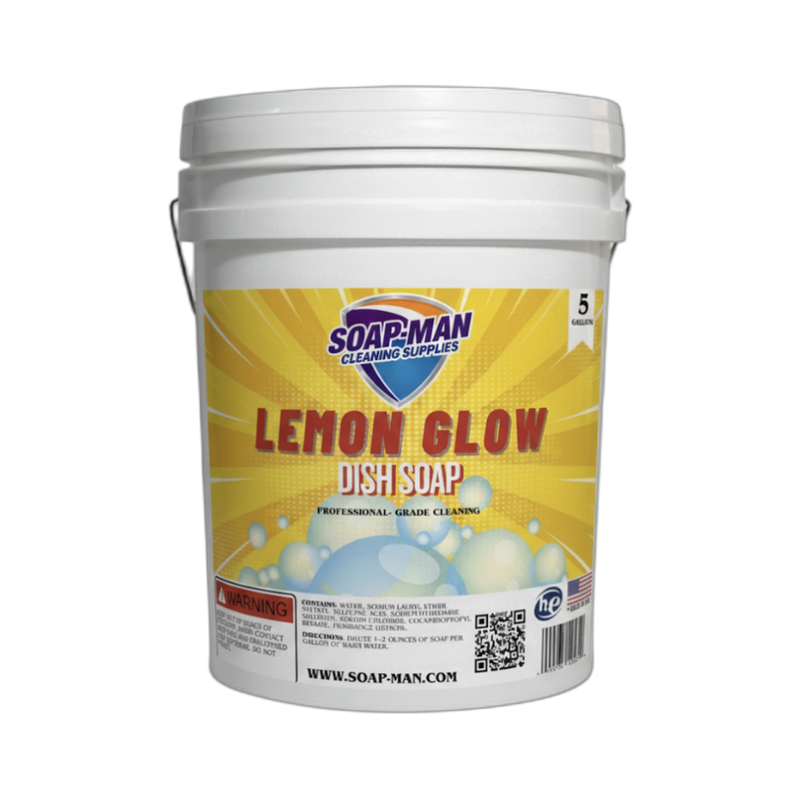
Lemon Glow Dish Soap
Neutral grease-cutter for dish / glassware
pH 7-8 · rinse-aid compatible · heavy grease-cutting surfactant
Three-compartment sinks, dish machines, pot-wash stations, glassware. When Turbo Clean is too caustic for direct-contact food vessels.
Six technical criteria for picking an industrial degreaser
pH threshold, flammability, food-service compliance, dilution economics, substrate compatibility, and freight classification. The specifics procurement needs before approving a degreaser for a regulated operation.
pH 12-13 is the industrial threshold
Retail degreasers (Simple Green, Purple Power) run pH 10-11. Industrial degreasers hit pH 12-13 to saponify petroleum-chain grease — the caustic chemistry breaks the grease molecule into water-soluble soap, which then rinses away. Below pH 11, you're wiping grease around. Above pH 13, you're attacking aluminum, wax, and skin.
Non-flammable is a safety + insurance line
Many petroleum-solvent degreasers (mineral spirits, xylene, d-limonene heavy) carry flammability classifications (flash point under 140°F). Water-based alkaline degreasers like Turbo Clean are non-flammable — zero flash point — which matters for OSHA 1910.106, fire-code hot-work permits, and commercial property insurance.
Food-service safe means NSF or comparable equivalent
Degreasers used in food-contact-adjacent areas (hood filters, fryer decks, grill surrounds) must be food-service safe — no residual off-flavor, no solvents that migrate to food. Turbo Clean is formulated food-service safe: water-based, rinses to neutral with potable water flush, no solvent residue.
Dilution = cost control
Turbo Clean runs 1:10 for cold-mix degreasing of heavy baked grease (fryer fronts, engine housings). 1:20-1:50 for daily line maintenance. At 1:50, a 5gal bucket yields 255gal of finished degreaser — about $0.25/gal of working solution. Going stronger than 1:10 wastes chemistry and increases rinse burden.
Substrate compatibility is non-negotiable
Turbo Clean (pH 12-13) is SAFE on: steel, stainless, sealed concrete, cast iron, most ceramics, epoxy, quarry tile, painted steel. NOT SAFE on: bare aluminum, anodized aluminum (dulls finish), galvanized (flash-darkens), raw copper, waxed surfaces (strips wax), natural stone (etches limestone-based stone).
Freight: palletized LTL, not parcel
Alkaline degreasers at pH 12-13 ship as corrosive liquid under LTL common-carrier protocol. Turbo Clean ships Class 65-70 palletized — not via UPS/FedEx parcel. For tri-state customers we deliver direct from East Orange. National: LTL carrier with 3-7 day transit.
Turbo Clean dilution matrix — five common scenarios
Scenario-specific dilution, dwell, rinse, and yield data. Use to build a standard operating procedure for your facility.
| Scenario | Dilution | Dwell | Rinse | 5gal Yield |
|---|---|---|---|---|
| Kitchen hood filter soak | 1:10 hot (140°F+) | 15-30 min soak | Potable hot water rinse to neutral | A 5gal bucket soaks ~10-15 filter sets |
| Fryer front + grill surround daily | 1:20 cold | 3-5 min dwell, scrub, rinse | Potable water wipe | 5gal bucket runs 2-3 weeks at one line |
| Concrete shop floor autoscrub (petroleum) | 1:20 to 1:10 | 3-min dwell before scrub head | Clean water fresh tank, squeegee pickup | 5gal covers ~4,000 sq ft at 1:10 |
| Equipment housings / motor block degrease | 1:10 brush apply | 5 min dwell, agitate with stiff brush | Pressure rinse or bucket-and-brush potable water | 5gal degreases ~6-10 small engines |
| Daily kitchen line walls + backsplash | 1:50 spray-and-wipe | 1-min dwell, wipe | Food-service safe, no forced rinse required | 5gal = 255 gal RTU = ~50,000 sq ft wipe |
Three safety protocols you should never skip
pH 12-13 alkaline chemistry is effective because it's aggressive. The same property that breaks petroleum grease will irritate skin, attack aluminum, and generate heat if mixed with acids. Three rules that keep operations safe.
PPE required
At working dilution (1:20-1:50), nitrile gloves and splash goggles per OSHA HCS 2012. At concentrate or 1:10, add a chemical-resistant apron. Accidental skin contact: rinse with water 15 minutes, neutralize with a mild acid rinse (diluted vinegar) only if irritation persists.
Never mix with acid or chlorine bleach
Mixing alkaline degreaser with acidic products (descaler, phosphoric acid cleaner) neutralizes both and releases heat. Mixing with sodium hypochlorite bleach (Power Bleach) in the wrong proportions can liberate chlorine gas. Rinse between chemistry types.
Substrate test first
Every first-time application on a new substrate: test a 6×6 inch patch at working dilution, 5-min dwell, rinse, inspect for dulling or etching. Especially critical on painted surfaces over 5 years old, anodized finishes, and specialty coatings.
Industrial degreaser — technical FAQ
Seven operational questions from facility engineers, kitchen managers, and industrial cleaning contractors.
Spec a Turbo Clean degreaser program for your facility
Call with your substrate mix, soil load, and consumption rate. We'll spec dilution, pack size, and pallet cadence. Palletized LTL nationwide.