
Why Regular Cleaners Don't Work on Kitchen Grease
Kitchen grease is a fundamentally different cleaning challenge than dirt, dust, or most stains. Cooking oils polymerize when exposed to heat — they undergo a chemical change that turns them from liquid oil into a sticky, hardened film that bonds to surfaces at the molecular level. This is the same process that seasons a cast iron skillet: heat transforms oil into a durable, plastic-like coating.
That's why your all-purpose cleaner barely dents the film on your range hood or the buildup behind your stove. Standard cleaners are designed for water-soluble dirt. Polymerized grease isn't water-soluble — it requires a product specifically formulated to break the chemical bonds that hold it to surfaces.
This guide explains how degreasers work, what separates a good one from a bad one, and which type you need for every kitchen grease scenario — from light stovetop film to the industrial-strength buildup you find in commercial kitchens.
What You'll Need
For a thorough kitchen degreasing session, have these supplies ready.
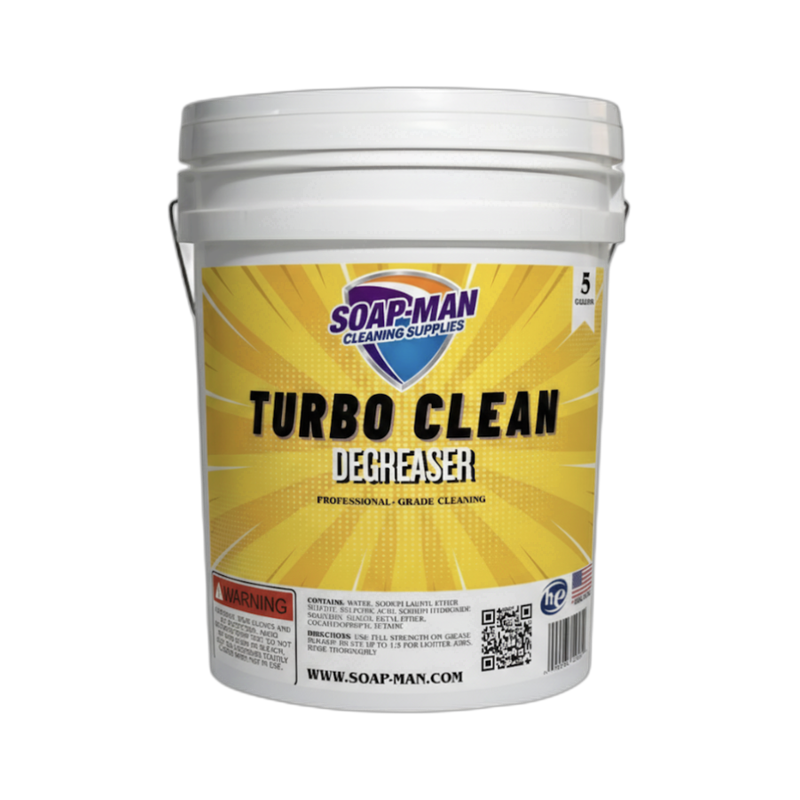
- Industrial-strength degreaser — Turbo Clean Degreaser is formulated to dissolve petroleum-based oils and cooking grease on contact. Its high-alkaline formula (pH 12-13) breaks down polymerized grease without requiring heavy scrubbing.
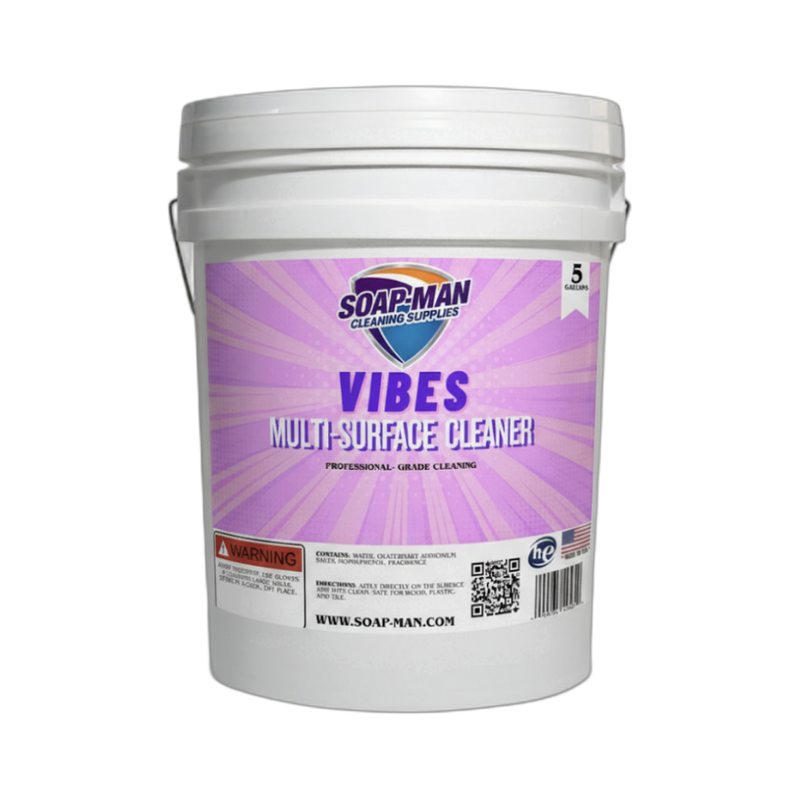
- Multi-surface cleaner — Vibes Multi-Surface Cleaner for lighter grease and for follow-up cleaning after the degreaser has done the heavy lifting. Perfect for daily kitchen maintenance to prevent heavy buildup.
- Microfiber cloths — At least 6. Degreasing work saturates cloths quickly.
- Non-abrasive scrub pads — White or blue pads. Never green or black scouring pads on kitchen surfaces — they scratch.
- Rubber gloves — Industrial degreasers are alkaline and will dry out or irritate skin on contact.
- Spray bottle — For diluting degreaser to the right concentration for each surface.
- Bucket of warm water — For rinsing cloths and diluting solutions.
- Plastic bags or basins — For soaking removable parts like range hood filters, stove grates, and vent covers.
How Degreasers Work: The Science
Surfactants: The Active Ingredient
Every degreaser relies on surfactants — molecules with a dual personality. One end of the molecule is attracted to water (hydrophilic) and the other is attracted to oil and grease (lipophilic). When a degreaser contacts grease, the lipophilic ends of surfactant molecules burrow into the grease while the hydrophilic ends stay oriented toward the water. This lifts the grease off the surface and suspends it in solution so you can wipe it away.
The quality and concentration of surfactants is what separates a good degreaser from a bad one. Cheap products use lower concentrations or less effective surfactant blends, which means more scrubbing and multiple applications.
Alkalinity: The pH Factor
Most effective kitchen degreasers are alkaline — they have a high pH. Turbo Clean Degreaser operates at pH 12-13, which is strongly alkaline. This high pH helps break down grease through a process called saponification — essentially turning fats and oils into soap, which then rinses away with water.
The higher the pH, the more aggressive the degreaser. This is why you need different strength levels for different situations: a pH 10 multi-surface cleaner handles light daily grease, while a pH 12-13 industrial degreaser is necessary for heavy buildup.
Solvents: Dissolving Power
Some degreasers include solvents — chemicals that dissolve grease directly rather than lifting it with surfactants. Solvent-based degreasers are extremely effective on heavy industrial grease but can be harsh on some surfaces and may require good ventilation. Water-based degreasers (like most kitchen-grade products) rely primarily on surfactants and alkalinity, making them safer for regular use on food-contact surfaces.
Matching the Right Degreaser to the Job
Light Daily Grease (Countertops, Stovetop After Cooking)
For everyday cooking residue — the film that forms on countertops after frying or the splatters on the stovetop from dinner — a multi-surface cleaner with degreasing properties is sufficient. Vibes Multi-Surface Cleaner at standard dilution (1:32) handles light daily grease without the intensity of a dedicated degreaser.
This is the appropriate tool for nightly kitchen cleanup. Using a heavy degreaser for daily light grease is overkill — you waste product, expose surfaces to unnecessarily high alkalinity, and create more rinse work for yourself.
Medium Buildup (Weekly Stovetop, Backsplash, Cabinet Fronts)
After a week of cooking, grease film on the stovetop, backsplash, and cabinet fronts near the stove becomes too heavy for a standard multi-surface cleaner. This is where a concentrated multi-surface cleaner (1:16 dilution) or a light degreaser application works. Spray, let it sit for 2-3 minutes, and wipe clean.
Cabinet fronts near the stove deserve special attention — cooking grease becomes airborne during frying and lands on every surrounding surface. The area above and beside the stove accumulates grease fastest. A weekly degreasing of these surfaces prevents the buildup from hardening into a permanent film.
Heavy Buildup (Range Hood, Oven Exterior, Behind Stove)
This is dedicated degreaser territory. Turbo Clean Degreaser at working dilution (1:10 to 1:20 depending on severity) applied and left to dwell for 5-10 minutes breaks down heavy grease buildup without intensive scrubbing.
Range hood filters are the worst offenders in most kitchens. Remove them and soak in a basin of hot water mixed with degreaser for 20-30 minutes. The grease will dissolve into the solution. Scrub lightly with a non-abrasive pad, rinse under running water, and let dry before reinstalling.
Behind and beside the stove — the areas you only see when you pull the stove out — accumulate months or years of grease and food debris. Spray with degreaser, let it work, and wipe clean. This is a once-or-twice-a-year task that prevents insect attraction and fire hazard from grease buildup.
Industrial Grease (Commercial Kitchen Equipment, Fryers, Grills)
Commercial kitchen grease is on another level entirely. Deep fryers, commercial grills, exhaust hoods, and cooking lines accumulate layers of polymerized grease that has been heated and reheated hundreds of times. This requires full-strength industrial degreaser (1:10 dilution or less), extended dwell times (15-30 minutes), and mechanical agitation with scrub pads or brushes.
Turbo Clean Degreaser is rated for food-service applications, meaning it's effective on commercial kitchen grease while being safe for food-contact surfaces when rinsed properly. This is critical for restaurant and food service operations that must meet health code requirements.
Surface Compatibility Guide
Safe for Degreasers
Most kitchen degreasers are safe on: stainless steel, ceramic tile, porcelain, glass, chrome, painted metal, sealed concrete, and most plastics. These surfaces handle alkaline solutions well and don't react with standard degreaser formulations.
Use with Caution
Some surfaces require diluted solutions and shorter dwell times: anodized aluminum (can discolor), painted wood cabinets (test in an inconspicuous area first), laminate countertops (some cheaper laminates can swell at edges with prolonged moisture), and rubber gaskets (extended contact can degrade rubber over time).
Avoid Degreasers On
Keep strong degreasers away from: natural stone (marble, granite, soapstone), unfinished or unsealed wood, brass and copper (can tarnish or discolor), and non-stick cookware surfaces (alkaline solutions can degrade non-stick coatings). For these surfaces, use a pH-neutral cleaner instead.
Pro Tips
- Heat helps. Warm grease is softer and more responsive to degreasers than cold grease. Spraying degreaser on a slightly warm stovetop (not hot — you don't want product evaporating on contact) is more effective than spraying a cold surface. For soaking parts, use hot water rather than cold.
- Dwell time matters more than scrubbing. Most people spray and immediately start scrubbing. Let the degreaser sit for 5-10 minutes. The chemical reaction between the surfactants and the grease is what does the work. Your cloth just removes the broken-down grease — it shouldn't have to fight it.
- Always rinse after degreasing. Degreaser residue left on surfaces attracts dust, can feel tacky, and may transfer to food on countertops. After wiping with degreaser, follow with a cloth dampened with clean water to remove all product residue.
- Dilute for cost efficiency. Commercial-grade degreasers are concentrated for a reason — you control the strength. A 1:50 dilution handles light grease. A 1:10 dilution handles heavy buildup. Using full-strength on light grease wastes product without cleaning better.
- Prevent buildup instead of fighting it. A 2-minute wipe-down of the stovetop and backsplash after cooking prevents the weekly or monthly degreasing marathon. Daily light maintenance is always easier and cheaper than periodic heavy degreasing.
- Soak removable parts. Range hood filters, stove grates, drip pans, and vent covers respond better to soaking than to spray-and-wipe. Submerge in hot water with degreaser for 20-30 minutes, then most grease wipes off with minimal effort.
Common Mistakes
Using All-Purpose Cleaner on Heavy Grease
All-purpose cleaners are designed for general dirt and light soil. They don't have the surfactant concentration or alkalinity to break down polymerized cooking grease. Using them on heavy grease means you'll scrub harder, use more product, and still not get the surface truly clean. Use the right tool for the job.
Not Diluting Concentrated Products
Using a concentrated degreaser at full strength on a surface that only needs a light treatment wastes product, can damage sensitive surfaces, and requires more rinsing. Read the dilution chart on the label and match the concentration to the severity of the grease.
Spraying Directly on Electronics
Kitchen appliances have electronic control panels. Spraying degreaser directly on these can cause moisture to seep behind buttons and screens, causing short circuits or display damage. Always spray onto a cloth first, then wipe control panels. This applies to microwave touchpads, oven controls, and dishwasher panels.
Using Abrasive Pads on Stainless Steel
Green scouring pads and steel wool scratch stainless steel permanently. These scratches trap grease and make future cleaning harder. Use white or blue non-abrasive scrub pads only. Microfiber cloths handle most degreased surfaces without any pad needed.
Mixing Degreasers with Bleach
Some people try to combine a degreaser with bleach for extra cleaning power. Many degreasers are alkaline, and mixing with bleach can produce toxic fumes or neutralize both products' effectiveness. Use one or the other, with a thorough rinse between if you need both. Degrease first, then disinfect with bleach as a separate step.
Frequently Asked Questions
Can I use a degreaser on my oven interior?
Yes, as long as the oven is cool and you rinse thoroughly before using the oven again. Apply degreaser to the interior, let it dwell for 15-30 minutes, and scrub with a non-abrasive pad. Wipe clean and rinse with a damp cloth multiple times to remove all residue. Some people prefer to run the oven at 200 degrees for 15 minutes after rinsing to evaporate any remaining residue before cooking.
How often should I degrease my commercial kitchen?
Cooking stations, fryers, and grills should be degreased daily at closing. Range hoods and exhaust systems should be deep-degreased weekly. Walls, ceilings, and behind equipment should be done monthly. This schedule meets most health code requirements and prevents the dangerous grease buildup that creates fire hazards.
Is it safe to use degreaser on food-prep surfaces?
Yes, if the product is rated for food-service use (like Turbo Clean Degreaser) and you rinse thoroughly after application. The key is complete rinsing — wipe with clean water at least twice after degreasing to ensure no chemical residue remains on surfaces that contact food.
What's better: spray degreaser or gel degreaser?
Spray degreasers cover large horizontal surfaces quickly and are the better choice for stovetops, counters, and backsplashes. Gel degreasers cling to vertical surfaces like oven walls, range hood interiors, and grill backs where spray would drip off before having enough dwell time. For a complete kitchen degreasing kit, having both forms is ideal.
Can I make a homemade degreaser?
Baking soda paste and dish soap solutions handle light grease. For medium buildup, some people use vinegar-based solutions. However, none of these match the effectiveness of a commercial degreaser on heavy or polymerized grease. The surfactant chemistry in commercial products is engineered specifically for grease dissolution — household ingredients are limited by their chemistry. For occasional light degreasing, homemade works fine. For serious kitchen grease, use a purpose-built product.