
What Is EPA List N?
EPA List N is the official list of disinfectants registered by the U.S. Environmental Protection Agency as effective against emerging viral pathogens. It was created specifically during the COVID-19 pandemic to give consumers and businesses a definitive answer to the question: "Does this product actually work against SARS-CoV-2?"
But the list has broader significance. To appear on List N, a disinfectant has to be EPA-registered, contain a proven active ingredient, and have data demonstrating effectiveness against either SARS-CoV-2 directly or a harder-to-kill virus that serves as a proxy. This makes List N a quick, reliable reference for anyone trying to find a product that actually disinfects — not just something labeled to suggest it does.
If you're buying disinfectants for a home, a business, a healthcare facility, or a school, knowing how to read and verify EPA registration is essential. This guide breaks down the basics.
What You'll Need
- Access to the EPA List N database — searchable on the EPA's website by product name or registration number.
- Your current disinfectant labels — look for the EPA registration number, usually listed as "EPA Reg. No." followed by digits.
- A smartphone or computer — to verify products in real time.
- A list of pathogens you need to kill — different products are registered against different organisms.
- The product's master label — EPA registration covers specific use instructions, which are tied to the label.
How EPA Disinfectant Registration Works
Step 1: Active Ingredients Must Be Proven
The EPA maintains a list of approved active ingredients for disinfection. These include sodium hypochlorite (bleach), quaternary ammonium compounds (quats), hydrogen peroxide, isopropyl alcohol, phenolics, and a handful of others. A disinfectant must be built around one or more of these.
Step 2: Lab Testing Against Specific Pathogens
Manufacturers submit efficacy data to the EPA showing the product kills specific pathogens under specific conditions (concentration, contact time, temperature). For List N inclusion, the product must be proven effective against SARS-CoV-2 or a "harder to kill" virus like Norovirus or Rhinovirus — the logic being that if it kills those, it almost certainly kills enveloped viruses like coronaviruses too.
Step 3: EPA Assigns a Registration Number
Once approved, the product receives an EPA registration number (format: two sets of numbers separated by a dash, like "9150-2"). This number must appear on the label. The first set identifies the primary registrant; the second identifies the specific product.
Step 4: Labels Must Match Approved Claims
Manufacturers can only make disinfection claims that match the EPA-approved label. If the product is only registered against bacteria, they can't claim it kills viruses. If it's only tested against enveloped viruses, they can't claim it kills non-enveloped viruses like norovirus.
Step 5: Ongoing Compliance
The EPA audits registered products. Manufacturers must maintain quality control, report adverse events, and re-register periodically. A product can be removed from List N if it fails audits or if the manufacturer stops producing it.
How to Verify a Product Is Actually EPA-Registered
- Look at the product label. Find "EPA Reg. No." followed by a number like "9150-2" or "1677-215."
- Visit the EPA's search tool. The agency hosts a searchable database of all registered pesticides and disinfectants.
- Enter the registration number or product name. If it comes up, the product is registered. If not, the claim on the label is questionable.
- Check what pathogens it's registered against. Not every disinfectant kills every pathogen.
- Verify contact time. The EPA-approved contact time is listed in the product's master label.
Pro Tips
- Registration number beats marketing claims. If there's no EPA number, the product isn't a registered disinfectant — regardless of what the label says.
- Not all disinfectants are created equal. Read which pathogens a product is tested against. A disinfectant registered for influenza isn't automatically registered for norovirus or C. difficile.
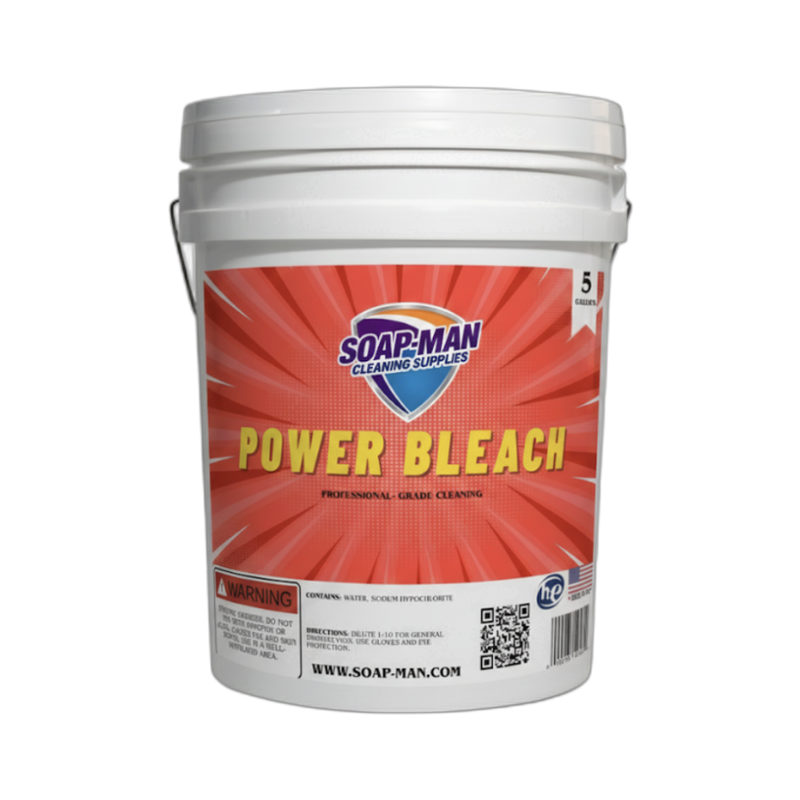
- Commercial-strength bleach is the simplest solution. Power Bleach (sodium hypochlorite) is on List N and kills virtually every pathogen you'd encounter in a home or business.
- Contact time is non-negotiable. EPA registration assumes you follow the label. Cutting contact time short means the product doesn't perform as tested.
- Beware of "kills 99.9% of germs" claims without an EPA number. These are often sanitizer claims, not disinfection claims.
Common Mistakes
- Assuming any cleaner labeled "disinfectant" is EPA-registered. Some products use the word without the registration to back it up.
- Using a List N product at an incorrect dilution. The registration covers specific concentrations.
- Ignoring contact time. Spraying and wiping defeats the entire test that got the product on List N.
- Using a List N product on a surface for which it's not approved. Some products are registered for non-porous surfaces only.
- Mixing List N products. Combining two registered disinfectants does not multiply effectiveness — it often neutralizes both.
- Trusting old List N data. Products are added and removed; always verify current status.
FAQ
Is List N still relevant after COVID-19?
Yes. List N is now a reference standard for disinfectants capable of handling tough viral pathogens in general. Healthcare facilities, schools, and businesses continue to use it as a baseline for product selection.
Where do I find List N?
Search the EPA's website for "List N disinfectants." The agency maintains an up-to-date, searchable tool that includes the registration number, active ingredients, contact time, and approved use sites for each product.
Are all bleach products on List N?
Bleach as an active ingredient is approved, but only products registered with the EPA and submitted for inclusion appear on the list. Commercial-grade bleach products like Power Bleach meet the standard for disinfection when used at the correct concentration and contact time, even when sold under different brand names.
What's the difference between List N and "EPA-registered"?
"EPA-registered" means a product is registered as a pesticide or disinfectant in general. "List N" is a subset — specifically disinfectants proven effective against emerging viral pathogens. All List N products are EPA-registered, but not all EPA-registered disinfectants are on List N.
Do hand sanitizers appear on List N?
No. List N is for surface disinfectants only. Hand sanitizers are regulated by the FDA, not the EPA, because they're applied to skin rather than to surfaces.