
What Actually Counts as a Disinfectant?
Walk down the cleaning aisle and you'll see a wall of products promising to "kill 99.9% of germs." Most of those claims are legally meaningless unless the product is registered with the EPA as a disinfectant. In the U.S., a true disinfectant must be EPA-registered, tested against specific pathogens, and carry an EPA registration number printed on the label. Everything else is a cleaner, a sanitizer, or marketing.
The distinction matters. Cleaners remove dirt and some germs. Sanitizers reduce bacteria to safe levels (typically a 99.9% reduction). Disinfectants go further — they eliminate 99.999% or more of specific bacteria, viruses, and fungi on non-porous surfaces. When you're cleaning after someone sick, handling raw meat in the kitchen, or preventing mold in the bathroom, you need a disinfectant, not a sanitizer.
This guide covers the five main classes of home disinfectants, when each one is the right choice, and which products we recommend for specific household tasks. We'll also flag the mistakes that turn effective disinfectants into ineffective water.
What You'll Need
- A true EPA-registered disinfectant — not a "cleaner with disinfecting properties." Look for an EPA registration number on the label.
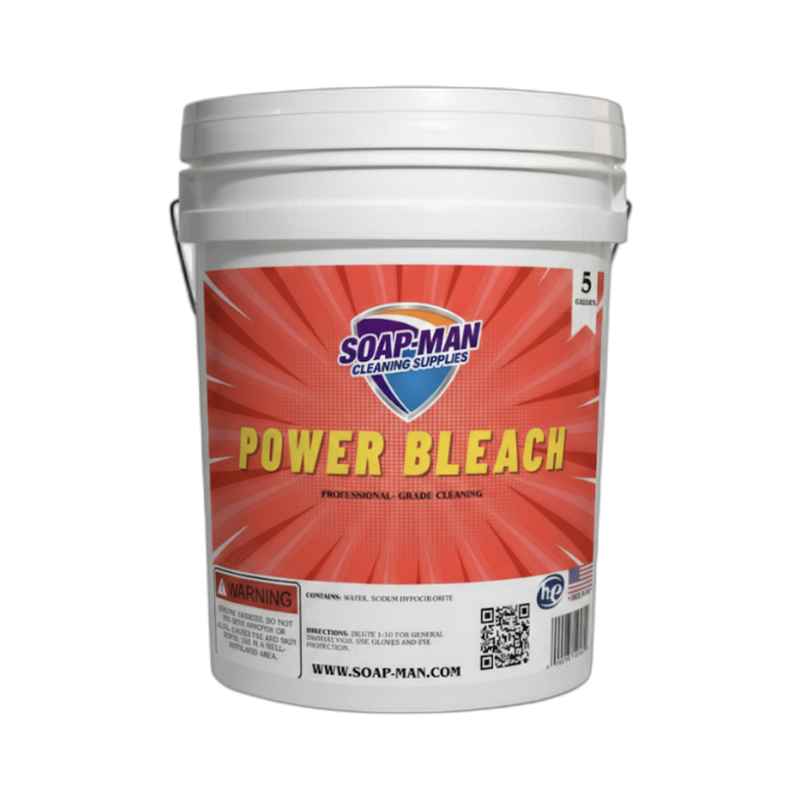
- Commercial-strength bleach — Soap-Man Power Bleach for the highest-level disinfection needs.
- Microfiber cloths — dedicated to disinfecting only, washed separately.
- Rubber gloves and eye protection — required for bleach and most quat-based products.
- Spray bottles for dilution — labeled with product name, dilution ratio, and prepared date.
- A timer — because contact time determines whether a disinfectant actually works.
- Good ventilation — open windows or run a fan during use.
The Five Main Classes of Home Disinfectants
1. Chlorine Bleach (Sodium Hypochlorite)
Bleach is the gold standard for broad-spectrum disinfection. It kills bacteria, viruses, fungi, and mold spores by oxidizing their cellular structure. At proper dilution, it handles everything from norovirus to C. difficile — pathogens that most other home disinfectants can't touch.
Best for: Bathroom sanitization, mold removal, post-illness cleanup, kitchen surfaces after raw meat, laundry whitening, and toy disinfection.
Dilution: For general disinfection, mix 1/3 cup of regular household bleach per gallon of water. With Power Bleach (commercial strength at 12.5%), use significantly less — follow the label's dilution chart.
Contact time: Surface must stay visibly wet for at least 5 minutes.
Limitations: Damages fabric color, corrodes some metals, etches natural stone, and generates toxic chlorine gas when mixed with acids (including vinegar) or ammonia.
2. Hydrogen Peroxide
Hydrogen peroxide at 3% (standard drugstore strength) is an EPA-approved disinfectant for general household use. It breaks down into water and oxygen, leaving no toxic residue, which makes it ideal for food-prep surfaces and children's items.
Best for: Cutting boards, countertops, toothbrushes, high chairs, and surfaces where residue matters.
Contact time: At least 6-8 minutes for bacterial disinfection; longer for tougher pathogens.
Limitations: Degrades quickly in light (which is why it's sold in brown bottles). Weaker than bleach against heavy contamination. Can lighten fabric dyes.
3. Quaternary Ammonium Compounds (Quats)
Quats are the active ingredient in most commercial disinfecting wipes and sprays. They're effective against most bacteria and enveloped viruses (including influenza and coronaviruses), and they're gentler on surfaces than bleach.
Best for: Daily cleaning of high-touch surfaces — doorknobs, light switches, remote controls, phones, keyboards.
Contact time: Varies by product, typically 30 seconds to 10 minutes. Always check the label.
Limitations: Less effective against non-enveloped viruses like norovirus. Can cause respiratory irritation with heavy use.
4. Alcohols (Ethanol and Isopropyl)
At concentrations between 60% and 90%, alcohols kill most bacteria and enveloped viruses quickly. They evaporate without residue, which makes them ideal for electronics and small surfaces.
Best for: Phones, keyboards, eyeglasses, small metal tools, and spot-disinfection.
Contact time: Surface must stay wet for at least 30 seconds.
Limitations: Highly flammable. Not effective against bacterial spores. Not a good choice for large surface areas due to rapid evaporation.
5. Phenolics
Phenolic disinfectants (think Lysol's classic formulations) kill a broad range of pathogens including TB and non-enveloped viruses. They're often used in healthcare settings.
Best for: Bathroom deep cleaning, sick-room disinfection.
Limitations: Strong odor. Can be absorbed through skin. Not recommended around infants or pregnant women in poorly ventilated spaces.
Pro Tips
- Clean before you disinfect. Disinfectants work on surfaces, not on layers of dirt. Wipe away visible grime first, then apply the disinfectant.
- Respect the dwell time. If a label says "wet contact for 5 minutes," spraying and immediately wiping does nothing. Set a timer.
- Dilute fresh. Bleach solutions lose potency within 24 hours. Mix what you need for today, dump what's left.
- Never mix products. Bleach plus vinegar, bleach plus ammonia, or hydrogen peroxide plus vinegar all produce dangerous reactions.
- Rotate between classes for infection events. If someone in the house is sick, use bleach for deep disinfection on day one, then rotate to a quat-based product for daily maintenance.
Common Mistakes
- Treating a "cleaner" as a disinfectant. If there's no EPA registration number on the label, it's not a disinfectant.
- Using too much product. Higher concentration doesn't equal better kill. Follow label dilution ratios.
- Wiping too soon. Spraying and wiping in one motion wastes product and leaves pathogens alive.
- Storing diluted bleach for weeks. It degrades into saltwater within a day or two.
- Mixing products to "boost" power. This is the single most common cause of chemical exposure in home cleaning.
- Disinfecting over a dirty surface. Disinfectants need direct contact with surfaces, not with layers of food, soap scum, or soil.
- Skipping PPE. Gloves and eye protection aren't optional for commercial-strength products.
FAQ
What's the difference between sanitizing and disinfecting?
Sanitizing reduces bacteria to levels considered safe (a 99.9% reduction). Disinfecting kills almost all pathogens (99.999% or greater) and includes viruses and fungi. Sanitizing is appropriate for food-contact surfaces with a quick wipe, while disinfecting is what you want after illness, raw meat, or mold exposure.
Do I really need to buy a dedicated disinfectant?
For daily cleaning, no — a good all-purpose cleaner handles most situations. But every household should have at least one true disinfectant available for high-risk situations: after stomach bugs, when preparing raw poultry, or when mold shows up. Commercial-grade bleach like Power Bleach covers almost every disinfection need a household will face.
How long does a bleach disinfecting solution stay effective?
Mixed bleach solution is at full strength for about 24 hours, then degrades rapidly. By 48 hours, it's lost most of its disinfecting power. Always mix fresh solutions for serious disinfection jobs.
Is homemade vinegar a disinfectant?
No. Vinegar can reduce some bacteria on surfaces, but it's not registered by the EPA as a disinfectant and doesn't kill major pathogens like norovirus or C. difficile. For actual disinfection, use an EPA-registered product.
Which disinfectant is best for high-touch surfaces like doorknobs and light switches?
A quat-based disinfectant wipe or spray is the most practical daily choice — it disinfects quickly, doesn't damage finishes, and dries without residue. For deeper disinfection after illness, follow up with a diluted bleach wipe and thorough rinsing.