
Why Office Cleaning Is Different From Home Cleaning
An office of 20-50 people generates dramatically more waste, dust, and bio-burden than a typical household. High-traffic surfaces are touched thousands of times a day. Restrooms see more use in one workday than a home's restroom sees in a week. And because offices are shared spaces, one poorly maintained area affects everyone's health and productivity.
Professional office cleaning programs work on a strict rotation — daily for high-touch areas, weekly for medium-priority zones, and monthly for deep cleans. This checklist is what a professional janitorial team follows. Whether you outsource to a cleaning service or handle it in-house, the list of tasks should match this one.
What You'll Need — The Office Cleaning Supply List
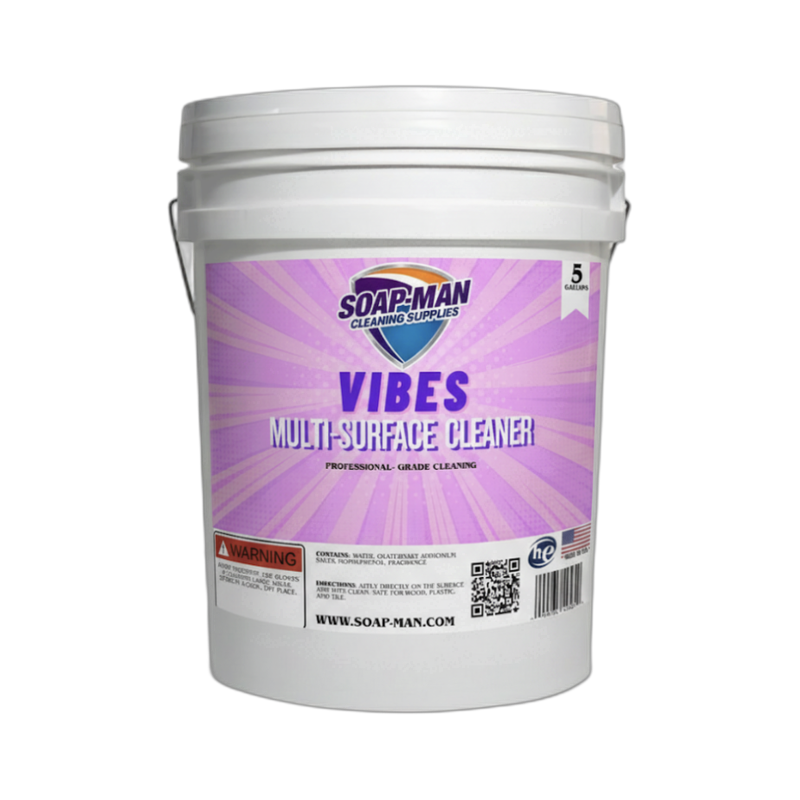
- Multi-surface cleaner — Soap-Man Vibes Multi-Surface Cleaner for desks, conference tables, break rooms, and general office surfaces.
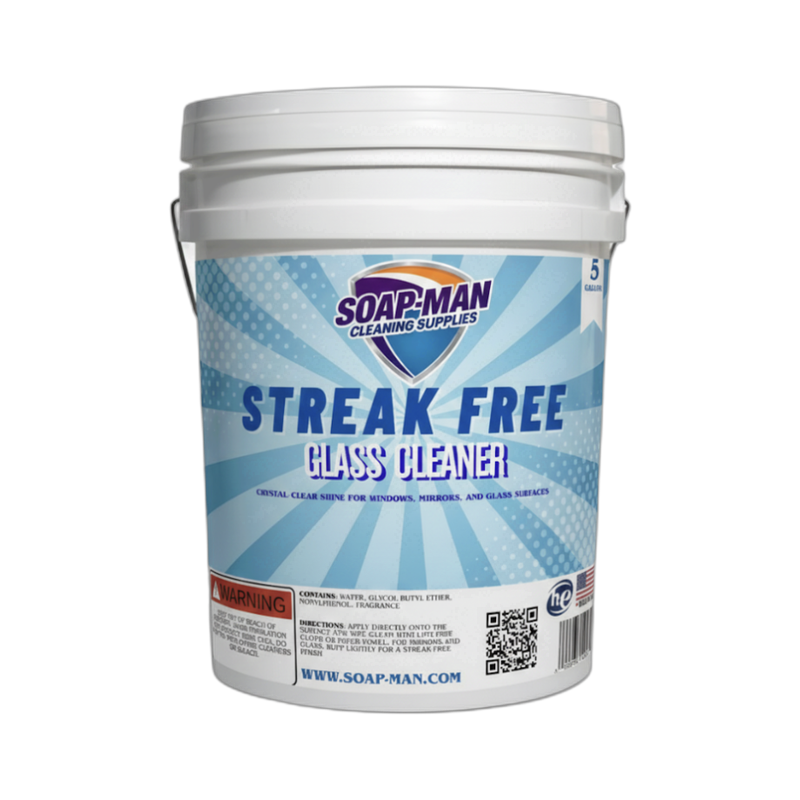
- Streak-free glass cleaner — Streak-Free Glass Cleaner for windows, glass doors, conference room walls, and computer monitors.
- EPA-registered disinfectant — for high-touch surfaces, restrooms, and shared equipment.
- Toilet bowl cleaner — acid-based for mineral buildup removal.
- Floor cleaner — type depends on flooring (hardwood, tile, LVT, carpet).
- Vacuum cleaner — commercial-grade with HEPA filter for carpet and upholstery.
- Microfiber cloths — color-coded by zone (restroom, desk area, kitchen, glass).
- Trash bags — right size for every can.
- Paper towels, toilet paper, soap refills — supply closet should never run out.
- Gloves and PPE — required for restroom cleaning and disinfection tasks.
Daily Office Cleaning Checklist
General Office Areas
- Empty all trash cans and replace liners.
- Wipe down and disinfect all desks (clear ones) and shared surfaces.
- Clean and disinfect high-touch points: door handles, light switches, elevator buttons, stair railings.
- Wipe down conference room tables and chairs.
- Clean glass doors and interior windows with Streak-Free Glass Cleaner.
- Vacuum high-traffic carpeted areas.
- Sweep and mop hard flooring in entryways and corridors.
- Spot-clean any spills or stains.
- Wipe down reception desk and lobby furniture.
Restrooms
- Clean and disinfect all toilets, urinals, sinks, and fixtures.
- Restock toilet paper, hand towels, and soap.
- Empty and sanitize trash and sanitary bins.
- Wipe down mirrors, counters, and stall partitions.
- Mop restroom floors with disinfecting solution.
- Check and replenish air fresheners.
- Wipe down door handles and push plates.
Break Room / Kitchen
- Wipe down countertops, tables, chairs, and backsplashes.
- Clean the outside of appliances (microwave, refrigerator, coffee machine).
- Wipe down the inside of the microwave.
- Empty and disinfect the kitchen trash can.
- Wash or load any dishes left in the sink (if part of the scope).
- Sweep and mop the kitchen floor.
- Restock paper products and hand soap.
- Wipe down vending machines (if present).
Weekly Office Cleaning Checklist
- Thoroughly vacuum all carpeted areas including under desks.
- Dust all furniture, shelves, picture frames, and fixtures.
- Clean the interior and exterior of refrigerators in break rooms.
- Wipe down the inside of kitchen cabinets and drawers (handles at minimum).
- Deep clean restroom floors (scrub grout and corners).
- Dust blinds and window sills.
- Polish wood furniture and reception desks.
- Clean air vents on the visible faces.
- Deep clean floor mats and runners.
- Wipe down baseboards and door frames.
- Sanitize phones, computer mice, and keyboards.
- Clean behind break room appliances.
Monthly Office Cleaning Checklist
- Deep clean carpets (steam or shampoo — outsource if needed).
- Strip and wax hard floors in lobbies and hallways (if applicable).
- Wash interior windows on the office side (exterior typically on a quarterly schedule).
- Dust high surfaces: tops of cabinets, ceiling fans, light fixtures, exit signs.
- Wipe down walls and spot-clean marks.
- Clean the interior of refrigerators, removing all expired items.
- Deep clean upholstered furniture (vacuum and spot-clean).
- Wash and sanitize all trash cans inside and out.
- Clean air vent grilles and replace or clean filters on the HVAC system.
- Inspect and clean ceiling tiles for water stains or mold.
- Wipe down fire extinguishers and emergency equipment (cleanliness only — don't test).
Pro Tips
- Clean after hours or early morning. Cleaning during the workday is disruptive, less effective, and harder on staff. Schedule cleaning around office hours.
- Color-code your cloths and mops. One color for restrooms, one for kitchens, one for desks, one for glass. Prevents cross-contamination.
- Focus on high-touch surfaces daily. Door handles, elevator buttons, keyboards, and phones are touched dozens of times per day and are the biggest risks for cross-infection.
- Use microfiber, not paper towels. Microfiber captures more dust and bacteria, is more economical over time, and produces less waste.
- Dust before you vacuum. Dust settles from high to low. Dust high, then vacuum up what fell.
- Restock daily. Empty soap dispensers and paper products generate more complaints than any other cleaning issue in an office environment.
- Document everything. Checked-off cleaning logs prove the work was done and catch missed tasks before they pile up.
Common Mistakes
- Using the same cloth for multiple zones. Restroom cloth on a conference table is a cross-contamination event.
- Skipping the dusting before vacuuming. Dust ends up back on surfaces after you leave.
- Not emptying trash daily. Odor complaints and insect issues are the direct result.
- Ignoring the break room fridge. Expired food and spills lead to the worst smells in the office.
- Using glass cleaner on computer monitors. Many cleaners damage screen coatings. Use a dedicated screen cleaner or a microfiber cloth with plain water.
- Cleaning reactively instead of on schedule. Waiting for something to look dirty means it's already affecting the office environment.
- Poor restroom hygiene. Restrooms are the most-complained-about area in any office. Clean them twice daily if traffic warrants it.
FAQ
How often should an office be professionally deep cleaned?
A monthly deep clean covers most needs. Carpets should be steam cleaned or shampooed quarterly at minimum, more often in high-traffic environments. Office windows typically get exterior washing quarterly.
Should I outsource cleaning or handle it in-house?
For offices under 20 people, in-house is often manageable. For 20+ people, a professional janitorial service is usually more cost-effective and more consistent. The cost of employee time spent cleaning (including payroll taxes and supervision) often exceeds a professional contract.
What's the best cleaner for office desks?
A multi-surface cleaner like Vibes Multi-Surface Cleaner handles laminates, wood finishes, and metal surfaces safely. Avoid bleach or harsh solvents on desks — they can strip finishes and damage personal items.
How often should we clean keyboards and phones?
Weekly at minimum, daily in shared environments. Keyboards harbor more bacteria than the average toilet seat. Use a disinfectant wipe or a soft cloth dampened with disinfectant — never spray directly on electronics.
Are scented air fresheners a good idea in offices?
Use with caution. Strong fragrances trigger allergies and headaches in a meaningful percentage of any office population. A lightly scented or unscented cleaning program combined with good ventilation is usually more welcomed than heavy fragrances.