
Why a Written Checklist Beats Experience
Every experienced restaurant manager thinks they remember every cleaning task. Then inspection day comes, the fry station hasn't been deep-cleaned in six weeks, the walk-in gasket has mold, and the exhaust hood is ticking up grease. Memory-based cleaning fails. Checklist-based cleaning passes inspections.
This article gives you the full professional cleaning checklist for a restaurant — broken down by frequency, keyed to the health-code items that actually matter, and grouped so your team can divide the work between shifts. Print it, laminate it, hang it where everyone can see it, and use it every single day.
What You'll Need
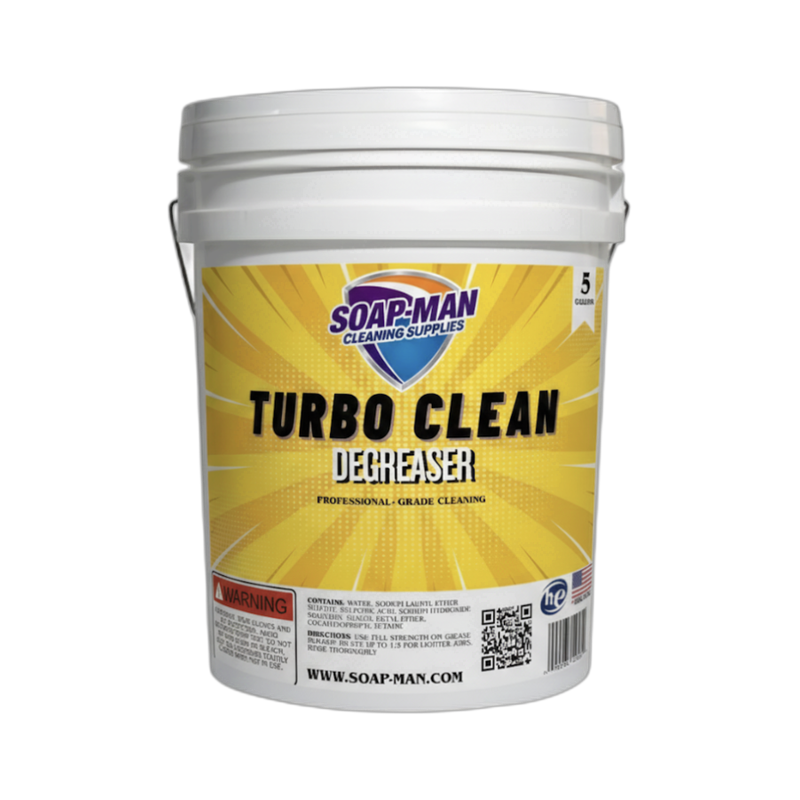
- Heavy-duty commercial degreaser — Soap-Man Turbo Clean Degreaser for fryers, hoods, and grills.
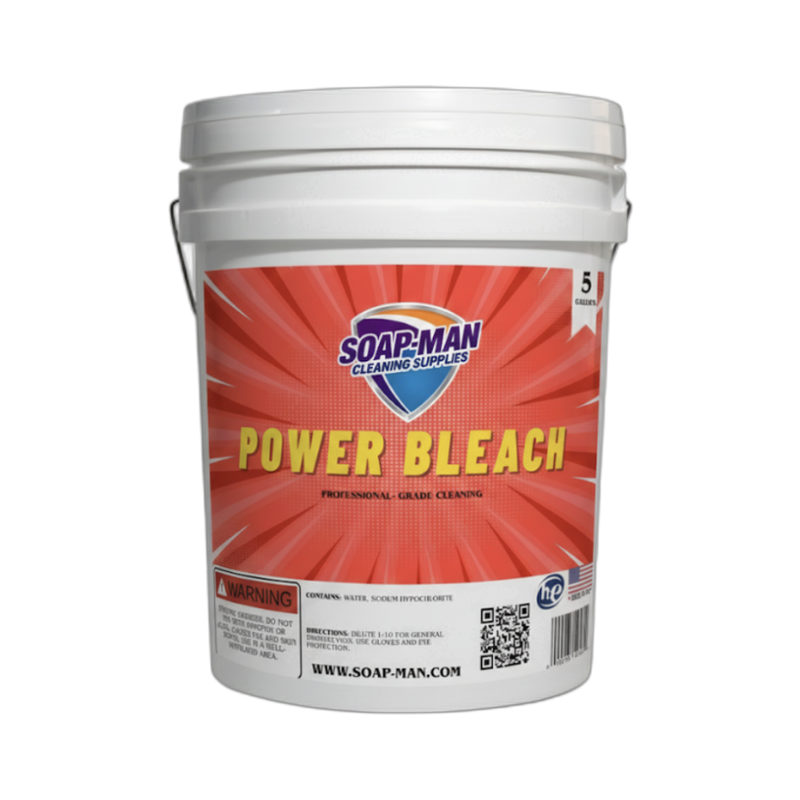
- EPA-registered disinfectant — commercial-grade Power Bleach for food-contact surfaces and high-risk zones.
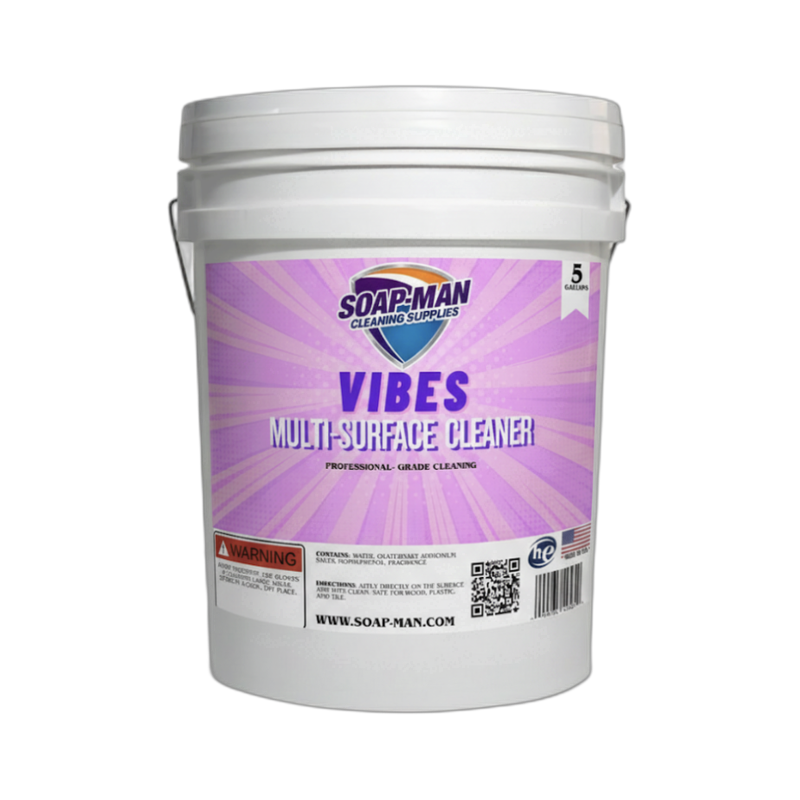
- General-purpose cleaner — Vibes Multi-Surface Cleaner for dining room tables, chairs, and non-food surfaces.
- Color-coded microfiber cloths — one color for the kitchen, one for the bar, one for restrooms, one for the dining room.
- Mops and buckets — separate sets for front-of-house and back-of-house.
- Heavy rubber gloves, eye protection, non-slip shoes — required for degreasing and disinfecting tasks.
- Printed checklists — posted in the kitchen, dining area, and restrooms.
- A labeling system — for dated sanitizer buckets and prepped solutions.
Daily Cleaning Checklist
Opening (Before Service)
- Wipe down all food-prep surfaces with sanitizer solution.
- Check and change sanitizer buckets (refill at start of shift).
- Sweep and mop all floors in the kitchen and dining room.
- Wipe down dining tables, chairs, and booths.
- Restock soap, paper towels, and toilet paper in restrooms.
- Clean and disinfect all restroom surfaces.
- Empty all trash cans and replace liners.
- Check and refill hand-washing stations.
During Service
- Sanitize food-contact surfaces between tasks (especially after raw meat, poultry, or seafood).
- Replace sanitizer buckets every 2 hours or sooner if visibly dirty.
- Wipe down bar top and menus after each guest.
- Check restroom supplies hourly.
- Spot-mop spills immediately.
- Wipe down door handles and high-touch surfaces every 2 hours.
Closing (End of Service)
- Degrease the grill, fryer, and cooking surfaces with Turbo Clean Degreaser.
- Wipe down all prep stations and disinfect food-contact surfaces.
- Empty and sanitize sanitizer buckets.
- Clean and sanitize sinks (hand-washing, prep, and 3-compartment).
- Wipe down all stainless steel equipment.
- Sweep and mop all floors (front and back of house).
- Clean and disinfect restrooms one final time.
- Take out all trash and recycling.
- Wipe down tables, chairs, and menus in the dining room.
- Sanitize door handles and high-touch surfaces.
- Record cleaning log entries.
Weekly Cleaning Checklist
- Deep clean the fryer — drain, degrease, and refill with fresh oil.
- Clean behind and under cooking equipment (grills, fryers, stoves).
- Wash walls and splash zones around cooking stations.
- Deep clean the reach-in coolers and their gaskets.
- Descale coffee machines and ice makers.
- Clean exhaust hood filters (or rotate with clean filters).
- Wash and sanitize trash cans inside and out.
- Clean ceiling vents and light fixtures in the kitchen.
- Deep clean restroom floors (scrub grout, disinfect baseboards).
- Polish stainless steel equipment.
- Clean windows (interior and exterior where accessible).
- Wash table-setting items (salt/pepper shakers, menu holders).
- Clean and disinfect phones, POS terminals, and tablets.
Monthly Cleaning Checklist
- Deep clean the walk-in refrigerator and freezer (empty, scrub, disinfect).
- Clean and sanitize ice machines (empty, scrub, refill).
- Degrease the exhaust hood interior and ductwork opening.
- Clean behind all large equipment (pull out, clean walls and floor).
- Clean and degrease the dish machine internals.
- Wash all walls from floor to ceiling in the kitchen.
- Clean all floor drains and add enzyme treatment.
- Wash and sanitize all shelving in dry storage.
- Inventory and clean all small wares (utensils, pans, mixing bowls).
- Clean light fixtures in the dining room.
- Deep clean upholstered seating (steam or shampoo).
- Clean and inspect all kitchen exhaust filters.
- Schedule professional hood and duct cleaning (if due — typically every 3-6 months depending on volume).
- Review and update all cleaning logs.
Pro Tips
- Assign ownership, not tasks. Each station should have one person responsible for its cleanliness per shift. "Everyone" means "no one."
- Keep sanitizer buckets visible. The health inspector will check them. Fresh buckets at proper concentration (200 ppm for quat sanitizers, 50-100 ppm for bleach) are non-negotiable.
- Date-label everything. Prepped solutions, cleaned and sanitized containers, dry goods, leftovers. Undated items are health-code violations waiting to happen.
- Clean as you go. Small messes during service become big problems at closing. Wipe spills immediately. Sanitize between tasks.
- Log every cleaning task. Written logs protect you during inspections and show patterns when something goes wrong.
- Degrease before it builds up. A fresh layer of grease lifts easily. A baked-on layer takes twice the time and twice the product. Use Turbo Clean Degreaser nightly on hot surfaces.
Common Mistakes
- Skipping sanitizer bucket changes. Dirty sanitizer doesn't sanitize. Change every 2 hours.
- Using the same cloth for raw meat and produce stations. Color-code your cloths.
- Forgetting the walk-in gasket. Mold in the gasket is the #1 health inspection finding on refrigerators.
- Ignoring floor drains. Unmaintained drains harbor bacteria, attract flies, and create odor.
- Mixing cleaners to "save time." Bleach plus ammonia-based cleaners releases toxic gas.
- Only cleaning what the customer sees. Inspectors look behind equipment, under counters, and inside hoods.
- Not training staff on proper concentrations. Eyeballing bleach dilutions leads to either unsafe or wasted product.
FAQ
How often do I need to deep-clean my exhaust hood?
Typical schedules are every 3-6 months for most restaurants, monthly for high-volume kitchens, and quarterly at minimum for low-volume operations. Local fire codes may require specific intervals. Professional hood cleaning is a separate service from your daily wipe-down.
What concentration should my sanitizer bucket be?
For bleach-based sanitizer, 50-100 ppm for food-contact surfaces. For quaternary ammonium, 200 ppm. Test strips are cheap and should be in every kitchen — eyeballing doesn't work.
How often should I change the sanitizer bucket?
Every 2 hours during service, or sooner if it becomes visibly dirty. Dirty sanitizer cross-contaminates surfaces instead of cleaning them.
Do I need to log cleaning tasks for the health department?
Most jurisdictions require written documentation of temperature logs, sanitizer concentration, and critical cleaning tasks. Even where it's not required, cleaning logs protect you during disputes and help identify patterns when issues arise.
What's the best all-in-one product for restaurant kitchens?
There isn't one — different tasks need different products. A concentrated degreaser like Turbo Clean Degreaser for hot equipment, a commercial-grade disinfectant like Power Bleach for food-contact surfaces, and a general-purpose cleaner like Vibes Multi-Surface Cleaner for everything else covers the vast majority of a restaurant's cleaning needs.