
Why Brick Needs Careful Cleaning
Brick is porous and absorbs cleaning chemicals into the surface. The wrong cleaner can damage the brick color, degrade the mortar joints, or leave permanent stains. Common brick problems include white efflorescence (salt deposits from moisture migration), black soot from fireplaces or pollution, green moss in shaded areas, and red mortar smears from construction. Each requires a different approach, but all share one rule: always test in an inconspicuous area first before treating the whole wall.
What You'll Need
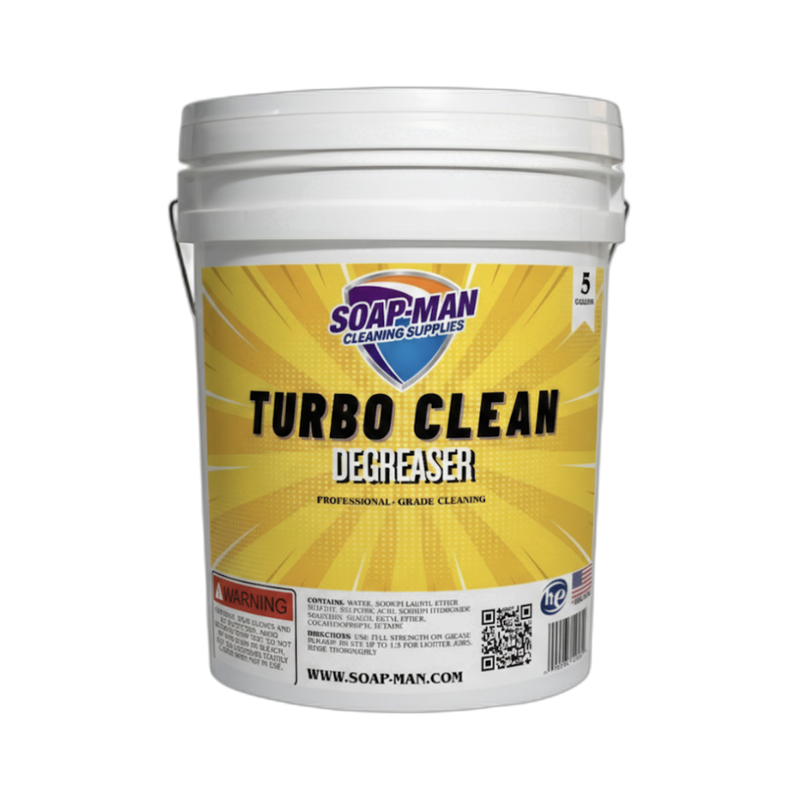
- Heavy-duty cleaner — Turbo Clean Degreaser for general grime.
- Stiff-bristled brush — never wire, which leaves metal deposits on brick.
- Garden hose
- White vinegar — for efflorescence.
- Bucket of warm water
- Plastic sheeting — to protect surrounding areas.
- Rubber gloves and safety glasses
Step-by-Step: How to Clean a Brick Wall
Step 1: Prep and Protect
Cover nearby plants, windows, and adjacent surfaces with plastic sheeting. Brush off loose debris and cobwebs with a dry brush. Pre-wet the brick thoroughly with a garden hose — wet brick absorbs less cleaning solution, preventing the chemicals from soaking deep into the pores where they are harder to rinse out.
Step 2: Remove Efflorescence (White Deposits)
For white powdery or crystalline deposits on the brick surface, mix one part white vinegar with one part water in a spray bottle. Spray on the affected area, let sit for five minutes, then scrub with the stiff brush. Vinegar dissolves the salt deposits without damaging brick. Rinse thoroughly.
Step 3: Scrub Dirt and Soot
For general dirt and soot, mix Turbo Clean Degreaser per label dilution with warm water. Apply to the brick with a stiff-bristled brush (never wire, which deposits metal that rusts). Scrub in a circular motion, working in small sections. For heavy soot, a paste of baking soda and water applied with a brush and left for 15 minutes helps lift stubborn marks.
Step 4: Rinse and Inspect
Rinse each cleaned section thoroughly with a hose before the cleaner dries. Never let the cleaner dry on the brick — it leaves streaks and residue. Inspect the mortar joints after cleaning; if any joints are loose or damaged, plan to repoint them before water damage worsens.
Pro Tips
- Avoid muriatic acid unless absolutely necessary. Many sources recommend muriatic acid for tough brick stains, but it is extremely harsh, damages mortar, and is dangerous to handle. Start with gentler methods and only escalate if needed.
- Never use a pressure washer above 1,500 psi on old brick. High pressure can blow out mortar joints and damage soft older brick. A garden hose at full pressure is enough for most cleaning.
- Address efflorescence at the source. Efflorescence is caused by water migrating through the brick and depositing salts. Repeatedly cleaning it without fixing the moisture source means it keeps coming back. Investigate the cause — usually a drainage or sealing issue.
FAQ
What is the white stuff on my brick wall?
Efflorescence — salt deposits left behind as water evaporates from within the brick. Harmless but ugly. Remove with vinegar and water as described above, and investigate what is causing water to move through the brick so it does not return.
How do I remove paint from brick?
Paint removal from brick is difficult because brick is porous. Use a specialized masonry paint stripper applied according to label instructions. Sandblasting is effective but removes the brick's weather-resistant outer layer and should be a last resort.
Is it safe to power wash brick?
Low-pressure washing (under 1,500 psi) is generally safe for sound, modern brick. Old or historic brick should be washed by hand to avoid damaging the soft mortar. Always test in a hidden area first.
How do I prevent moss on shaded brick?
Improve drainage and airflow to the shaded area. Trim back nearby vegetation that blocks sunlight. Apply a masonry sealer to prevent water absorption. For existing moss, a diluted bleach solution (1:10) kills it effectively — rinse thoroughly afterward.