
Why Gutter Cleaning Prevents Expensive Home Damage
Gutters do one job: move rainwater from your roof to the ground in a controlled path away from your foundation. When they're clogged with leaves, twigs, and debris, water overflows and cascades down your home's exterior, pooling against the foundation, seeping into basements, saturating fascia boards (causing rot), and in winter, creating ice dams that damage the roof. A $50 gutter cleaning twice a year prevents $5,000-$15,000 in water damage repairs. It's one of the highest-ROI maintenance tasks in home ownership. The job itself is straightforward — the main challenge is doing it safely on a ladder.
What You'll Need
- Extension ladder — tall enough to reach the gutters comfortably. Never stand on the top two rungs.
- Ladder stabilizer or standoff — prevents the ladder from resting on (and denting) the gutter.
- Work gloves — thick enough to protect against sharp sheet metal edges and debris.
- Bucket or garbage bag — for debris collection. A bucket with a hook that hangs from the ladder is ideal.
- Gutter scoop or garden trowel — for scooping out packed debris.
- Garden hose with spray nozzle — for flushing gutters and testing downspouts.
- Plumber's snake or drain auger — for clearing stubborn downspout clogs.
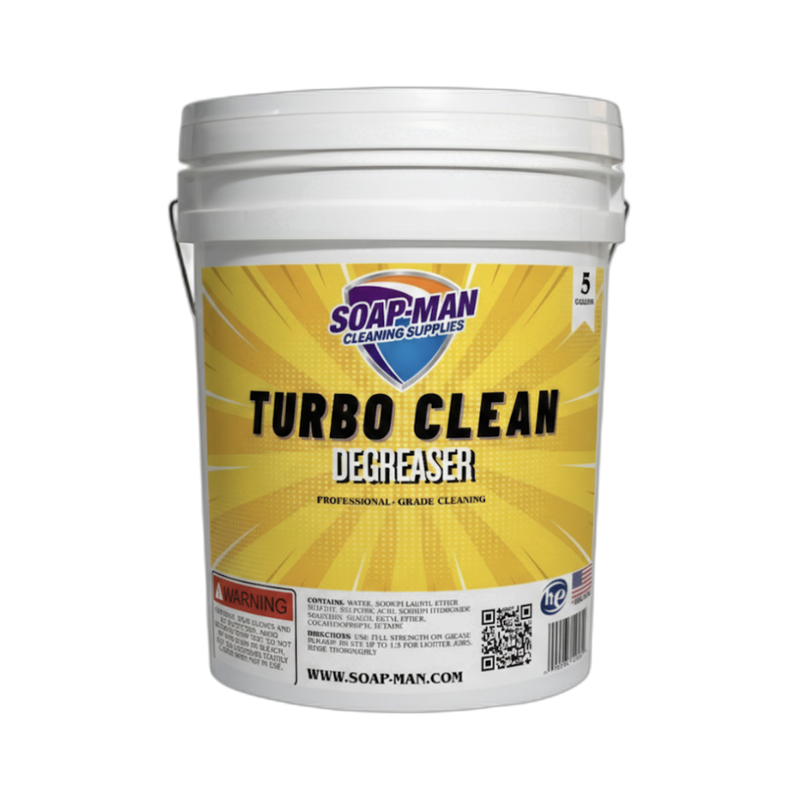
- Degreaser — Turbo Clean Degreaser for removing the dark staining on the exterior gutter face (tiger striping).
- Safety glasses — debris in the eyes is a common gutter cleaning injury.
Step-by-Step: How to Clean Gutters
Step 1: Set Up the Ladder Safely
Place the ladder on firm, level ground. If the ground is soft, place a wide board under the ladder feet to prevent sinking. Use a ladder stabilizer attachment that rests against the wall or roof, not against the gutter — aluminum gutters bend under ladder weight and steel gutters can detach from their hangers. Maintain three points of contact at all times (two hands and one foot, or two feet and one hand). Don't lean to one side to reach farther — climb down and move the ladder instead. Falls from ladders are the leading cause of gutter-cleaning injuries, and every one of them is preventable with proper setup and patience.
Step 2: Remove Debris by Hand
Starting near a downspout, use gloved hands or a gutter scoop to remove leaves, twigs, shingle grit, and packed decomposed matter from the gutter channel. Work away from the downspout so you're pushing debris toward the end of the run, not toward the drain. Drop debris into your hanging bucket or onto a tarp below (placing a tarp on the ground saves cleanup time). Most gutter debris is a compressed layer of decomposed leaves on the bottom with looser material on top — the scoop breaks through the compacted layer while your hands handle the loose stuff. Don't use a pressure washer for debris removal — it blasts gunk onto your siding and roof.
Step 3: Flush with a Garden Hose
After removing all visible debris, use a garden hose with a spray nozzle to flush the gutters toward each downspout. Start at the end farthest from the downspout and work toward it. This washes remaining fine sediment and tests the flow. Water should move steadily toward the downspout without pooling. If water pools in a section, the gutter has sagged and needs the hanger tightened or repositioned (gutters should slope about 1/4 inch per 10 feet toward the downspout). Watch the water flow out of the bottom of the downspout — it should exit forcefully. If it trickles or doesn't flow, the downspout is clogged.
Step 4: Clear Downspout Clogs
Clogged downspouts are the most common cause of gutter overflow even after the gutters themselves are clean. Try flushing from the top with the hose on full blast — sometimes water pressure alone pushes the clog through. If that doesn't work, try flushing from the bottom by disconnecting the downspout elbow at ground level and feeding the hose up from below. For stubborn clogs (usually a compressed mass of leaves at an elbow), use a plumber's snake or drain auger fed down from the top to break the clog apart, then flush again. Never ignore a slow downspout — water backs up into the gutter and overflows at the fascia board, causing rot.
Step 5: Clean the Exterior and Inspect
The outside face of gutters develops dark streaks (called tiger striping) from oxidized aluminum and dirt running down the surface. Spray Turbo Clean Degreaser on the stained gutter face, let it sit for five minutes, and wipe with a cloth or scrub with a soft brush. This doesn't affect gutter function but dramatically improves curb appeal. While you're up there, inspect the gutter system for: loose or missing hangers, sections pulling away from the fascia, rust spots on steel gutters, holes or cracks at seams, and proper pitch toward downspouts. Address small issues now before they become big problems during the next heavy rain.
Pro Tips
- Clean gutters twice a year minimum. Once in late spring (after tree pollen and seed pods) and once in late fall (after leaves drop). If you have overhanging pine trees, add a third cleaning in midsummer — pine needles accumulate steadily and form dense mats that decompose into an acidic sludge.
- Install gutter guards for reduced maintenance. Gutter guards (mesh, screen, or solid-top designs) keep most debris out while letting water in. They don't eliminate cleaning entirely (fine debris and shingle grit still get through), but they reduce the frequency from twice a year to once every 2-3 years.
- Check downspout extensions. Make sure downspout water exits at least 4-6 feet from your foundation. Extensions, splash blocks, or underground drain pipes direct water away from the house. Without them, perfectly clean gutters just concentrate all the roof water at four points next to your foundation — which is worse than no gutters at all.
Common Mistakes
- Leaning the ladder against the gutter. Aluminum gutters aren't designed to bear ladder weight. They'll bend, pull away from the fascia, or crack at the seam. Always use a ladder stabilizer that rests against the wall or roof surface, not the gutter.
- Overreaching from the ladder. The temptation to stretch two more feet instead of climbing down and moving the ladder is the direct cause of most gutter-cleaning falls. Your belt buckle should never go past the side rails of the ladder. Move the ladder every 4-6 feet.
- Cleaning gutters in wet or windy conditions. Wet ladder rungs and wet roof edges create slip hazards. Wind gusts can destabilize a ladder, especially at extension heights. Clean gutters on dry, calm days only.
FAQ
How much does it cost to have gutters professionally cleaned?
Professional gutter cleaning costs $100-$300 for a single-story home and $150-$500 for a two-story home, depending on home size, gutter length, and debris volume. For two-story homes or homes with steep roofs where ladder work is dangerous, the professional cost is well worth the safety benefit.
Can I clean gutters from the ground?
Gutter cleaning tools that attach to telescoping poles or leaf blower attachments can remove surface debris from the ground. However, they can't clear packed-down debris or diagnose issues like sagging sections, loose hangers, or damaged seams. Ground-level tools are useful for maintenance between thorough ladder cleanings but don't replace them entirely.
How do I know if my gutters are clogged without going up?
Watch during the next rain. Water overflowing the gutter edges, especially at corners and seams, means there's a blockage downstream. Water pouring over the front instead of flowing to the downspout means the gutter channel is full. Staining or erosion directly below a gutter section confirms chronic overflow. If you see any of these, cleaning is overdue.
Should I repair or replace damaged gutters?
Small holes and cracks at seams can be patched with gutter sealant for a few dollars. Sagging sections can be fixed by adding or tightening hangers. But if gutters have extensive rust (steel), widespread cracking (vinyl), or multiple failing seams, replacement is more cost-effective than patching. Seamless aluminum gutters ($6-$12 per linear foot installed) last 20-30 years and eliminate most seam-related issues.
Do gutter guards work?
The best gutter guards (micro-mesh types) keep out 95%+ of debris and significantly reduce cleaning frequency. Cheap screen-type guards help with leaves but let seeds, pine needles, and shingle grit through. No gutter guard eliminates maintenance entirely — fine debris still accumulates over time. Think of guards as a maintenance reducer, not a maintenance eliminator. For homes with heavy tree cover, they're worth the $8-$20 per linear foot investment.