
Concrete Is Porous — That's the Challenge
Concrete looks solid and impervious, but it's actually porous. Unsealed concrete absorbs liquids like a sponge, which is why oil stains in garages seem to become part of the floor and why basement concrete develops musty odors from moisture absorption. Even sealed concrete has joints, cracks, and textured surfaces that trap dirt and grime.
The cleaning approach depends on whether your concrete is sealed or unsealed, polished or rough, and what type of stain you're dealing with. Grease stains, rust stains, paint spills, and general dirt all require different chemistry. This guide covers the full range — from a basic clean to removing stains that have been there for years.
What You'll Need
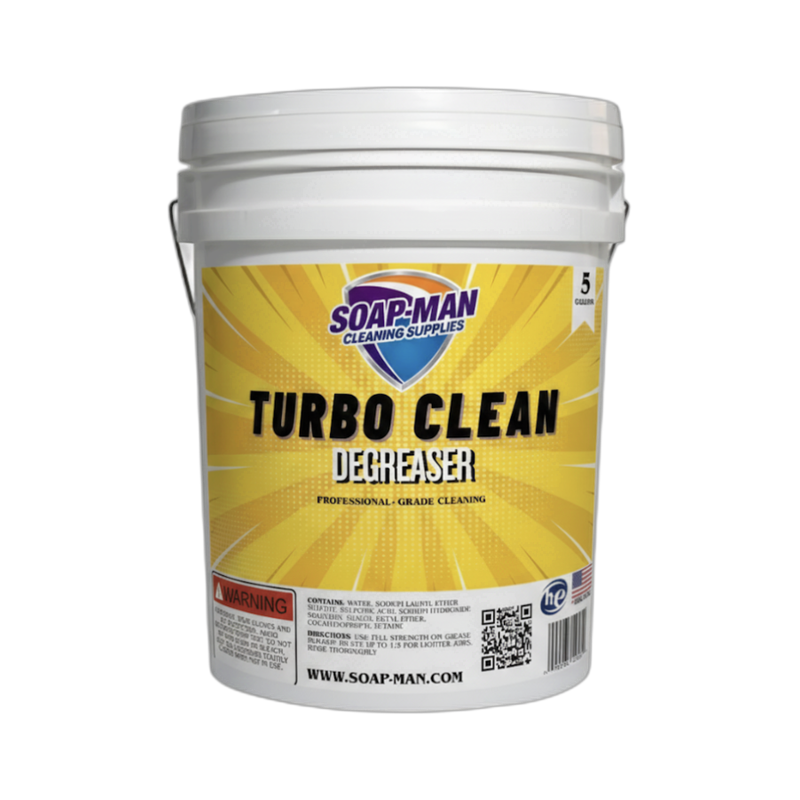
- Degreaser — Turbo Clean Degreaser for cutting through oil, grease, and embedded dirt on concrete.
- Stiff-bristled push broom or deck brush
- Bucket and mop — for sealed/polished concrete.
- Garden hose or pressure washer — for outdoor and garage concrete.
- Baking soda or cat litter — for absorbing fresh oil spills.
- White vinegar — for mineral deposits and general cleaning.
- TSP (trisodium phosphate) — for heavy-duty cleaning of severely stained concrete (optional).
- Safety glasses and rubber gloves
Step-by-Step: How to Clean Concrete Floors
Step 1: Sweep and Remove Loose Debris
Before any wet cleaning, sweep or vacuum the entire concrete floor thoroughly. Concrete's rough texture traps dust, sand, and small debris that creates a muddy mess when wet and can scratch polished concrete during mopping. For large areas (garages, warehouses), use a wide push broom. For polished or sealed indoor concrete, vacuum with a hard-floor attachment to avoid scattering fine dust. Remove any items sitting on the floor — furniture, equipment, storage items — to access the entire surface.
Step 2: Pre-Treat Stains
For oil and grease stains: apply Turbo Clean Degreaser directly to the stain, full strength. Let it sit for 15-20 minutes. The degreaser penetrates the concrete pores and breaks down the oil molecules. For fresh oil spills, first absorb as much as possible with cat litter or baking soda — pour it on, let it sit for an hour, sweep up, then apply degreaser to what remains. For rust stains: use white vinegar or lemon juice (acid dissolves iron oxide). For paint: a paint scraper for thick spots, followed by degreaser for the residue.
Step 3: Scrub the Entire Floor
Dilute degreaser according to label directions in a bucket of warm water. Pour the solution across a section of floor and scrub with a stiff-bristled push broom or deck brush. Work in sections, scrubbing in overlapping strokes. For heavily soiled concrete, let the solution sit for 10 minutes before scrubbing — the dwell time lets the chemistry do most of the work. For polished or sealed concrete indoors, a mop with warm soapy water is usually sufficient — heavy scrubbing can dull polished surfaces.
Step 4: Rinse Thoroughly
For garage and outdoor concrete: rinse with a garden hose, flushing all dirty water away from the floor and toward a drain or away from the building. A pressure washer on a medium setting speeds this up dramatically. For indoor concrete (basements, commercial interiors): mop with clean water at least twice to remove all cleaning solution residue. Residue left on the floor attracts new dirt and can make polished concrete hazy. Squeegee standing water toward a floor drain if available.
Step 5: Seal for Future Protection
If your concrete is unsealed and you're tired of staining and absorption problems, apply a concrete sealer after the floor is completely dry (24-48 hours after cleaning). Concrete sealers create a barrier that prevents oil, water, and chemicals from penetrating the porous surface. Sealed concrete is dramatically easier to clean — spills wipe up instead of absorbing. For garages, an epoxy floor coating provides the strongest protection. For basements and indoor areas, a penetrating sealer maintains the natural concrete look while blocking moisture.
Pro Tips
- Hot water makes a huge difference. Hot water dissolves grease on concrete far more effectively than cold water. If you're cleaning a garage or commercial floor, the extra effort of using hot water in your bucket cuts cleaning time significantly.
- Cat litter is the first response for oil spills. The moment oil hits concrete, pour cat litter on it. The clay absorbs the oil before it penetrates deeply into the concrete pores. Leave it overnight for large spills, sweep up, then treat the remaining stain with degreaser.
- Seal expansion joints after cleaning. The joints between concrete slabs trap dirt, weeds, and moisture. After cleaning, fill joints with flexible concrete caulk or backer rod to prevent future accumulation.
Common Mistakes
- Using acid on sealed concrete. Muriatic acid and other strong acids are sometimes recommended for concrete cleaning, but they strip sealers, etch polished surfaces, and can damage colored or stamped concrete. Use acid only on unsealed, plain concrete and as a last resort.
- Pressure washing indoor concrete. Pressure washers push water into cracks and joints, can damage sealers, and create a massive mess indoors. Pressure washing is for outdoor concrete only. Indoor concrete should be cleaned with mops and brushes.
- Leaving degreaser residue. Degreaser that isn't rinsed thoroughly leaves a slippery film on the concrete surface — dangerous on floors that people walk on. Always rinse at least twice after using degreaser on concrete.
FAQ
How do I remove old oil stains from a garage floor?
Old oil stains that have penetrated deep into concrete require multiple treatments. Apply full-strength degreaser, cover with a plastic sheet to prevent evaporation, and let it sit overnight. Scrub with a stiff brush, rinse, and repeat. For stains that have been there for years, you may need 3-5 treatments to pull all the oil out of the concrete pores. A poultice (degreaser mixed with cat litter into a paste) left overnight can also draw deep oil to the surface.
Can I paint concrete instead of sealing it?
Concrete floor paint (epoxy-based) is durable and attractive, but it requires thorough cleaning and preparation to adhere properly. Any oil, grease, or dirt on the concrete will cause the paint to peel. Clean the floor thoroughly with degreaser, let it dry completely, etch the surface with a concrete etcher, rinse again, dry for 48 hours, then apply the paint. Skipping any preparation step leads to peeling.
How do I clean polished concrete floors?
Polished concrete is the easiest concrete type to maintain. Dust mop daily to remove abrasive particles (sand and grit scratch the polish). Damp mop weekly with a pH-neutral cleaner — never use acid or highly alkaline products. For spots, use a neutral cleaner and a soft cloth. Reapply polished concrete sealer annually to maintain the shine and protection.
Why does my concrete floor have white powder on it?
The white powder is efflorescence — mineral salts that migrate to the surface as moisture passes through the concrete. It's common in basements and garages. Sweep or vacuum the powder, then clean with a vinegar solution (1 part vinegar to 3 parts water). Efflorescence keeps returning until the moisture source is addressed — often a drainage issue on the exterior of the building.
How often should commercial concrete floors be cleaned?
Daily sweeping and spot-cleaning of spills. Weekly machine scrubbing for high-traffic areas (warehouses, retail, restaurants). Monthly deep clean with degreaser for the entire floor. Quarterly strip and reseal for high-traffic commercial spaces. The exact frequency depends on traffic volume, type of business, and whether the concrete is sealed.