
Why a Clean Refrigerator Matters More Than You Think
The refrigerator is where your food lives. Every surface inside it comes into contact with something that's going to end up in someone's mouth. And yet most people clean their fridge once or twice a year at most — usually only when a spill gets bad enough to smell or something liquid leaks onto a lower shelf.
As cleaning professionals working in commercial kitchens and homes, we can tell you: a dirty refrigerator is a food safety hazard. Bacteria thrive in spilled juices. Mold colonizes forgotten produce drawers. Cross-contamination happens silently when raw meat juices drip onto vegetables on the shelf below. None of this is visible until it's a serious problem.
The good news is that cleaning a refrigerator isn't hard — it just requires a method. Follow the steps in this guide and you'll have a spotless, safe, fresh-smelling fridge in about an hour, including the condenser coils most people forget about entirely.
What You'll Need
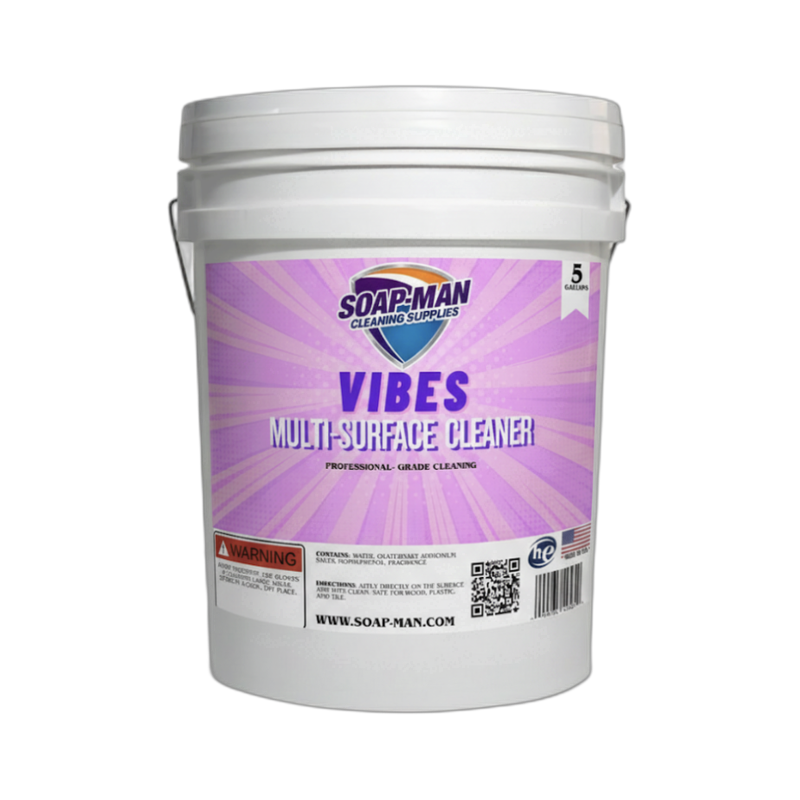
- Multi-surface cleaner — Vibes Multi-Surface Cleaner is safe for food-contact surfaces and won't leave residue. Critical for any cleaner going inside a fridge.
- Warm water and dish soap — For washing removable shelves and drawers.
- Baking soda — For odor control.
- White vinegar — For stubborn mineral deposits and hard water spots.
- Microfiber cloths — At least four. Use separate cloths for raw meat areas and produce areas.
- Soft sponge or non-abrasive scrubber
- Toothbrush — For getting into gasket folds and door seal grooves.
- Vacuum with brush attachment — For condenser coils.
- Cooler — To keep perishables cold while you work.
Step-by-Step Method
Step 1: Empty the Refrigerator
Move everything out of the fridge and into a cooler. Group items by type so you can inspect them as you go — check expiration dates, look for signs of spoilage, and discard anything questionable. This is the natural time for a ruthless purge. Half-empty condiment jars from last year, mystery containers, and wilted produce: out.
Unplug the refrigerator if you're doing a deep clean with the interior light off and removable parts soaking. For a standard cleaning, leaving it plugged in is fine.
Step 2: Remove and Wash Shelves, Drawers, and Bins
Take out every removable shelf, drawer, bin, and door compartment. Let them come to room temperature for 10-15 minutes before washing — glass shelves can crack from thermal shock if you put a cold shelf under hot water immediately.
Wash each piece with warm water and dish soap. Use a soft sponge to avoid scratching. For sticky spots or dried spills, let the piece soak for a few minutes first. Rinse thoroughly and dry completely before reinstalling. Water trapped under shelves can cause odors and eventually warp or rust components.
Step 3: Clean the Interior
Spray Vibes Multi-Surface Cleaner onto a damp microfiber cloth. Wipe down the interior top, sides, back wall, floor, and door interior in that order. Pay special attention to areas where spills have dried — the bottom shelf area under the produce drawers often has old leaks that have been slowly fermenting.
For stuck-on food, hold a damp warm cloth over the area for 30 seconds to soften it, then wipe. Never scrape with a knife or use abrasive scrubbers — you can damage the liner. After cleaning, go over everything once more with a cloth dampened with plain water to remove any cleaner residue.
Step 4: Clean the Door Gasket
The rubber gasket around the door traps crumbs, grease, and mold. A dirty gasket doesn't seal properly, which makes your fridge work harder and increases energy costs. Fold a cloth into a point and run it through each fold of the gasket. For stubborn grime, use a toothbrush with a little cleaning solution.
Inspect the gasket for tears or cracks while you're cleaning it. A damaged gasket should be replaced — it's an inexpensive fix that has a huge impact on refrigerator performance.
Step 5: Clean the Condenser Coils
The condenser coils (usually located at the back or underneath the fridge) collect dust that reduces efficiency and can shorten the appliance's lifespan. Pull the refrigerator away from the wall, unplug it, and find the coils. Use a vacuum with a brush attachment to remove dust, then wipe any stubborn buildup with a dry cloth. Don't get the coils wet.
Most refrigerators need this done every 6 months. If you have pets, do it every 3 months — pet hair clogs coils faster than dust alone.
Step 6: Clean the Exterior
Spray Vibes onto a cloth and wipe down the exterior — door, handles, top, and sides. Handles and areas around the handle get the most fingerprints and need the most attention. For stainless steel exteriors, wipe in the direction of the grain.
Step 7: Restock Smartly
Before putting food back, wipe down the outside of bottles and jars with a damp cloth. Sticky residue on containers is what causes spills to happen in the first place. Organize items so raw meat is on the bottom shelf (so drips can't contaminate anything below), produce is in its dedicated drawers, and dairy is in the cold zone (usually the main body, not the door).
Pro Tips
- Keep an open box of baking soda in the fridge. It absorbs odors continuously. Replace it every 3 months for best results.
- Wipe spills immediately. A 10-second wipe prevents a 10-minute scrub later. Keep a cloth handy in the kitchen specifically for quick fridge wipes.
- Do a weekly scan. Every week, spend 60 seconds checking for expired items, spills, and anything that needs to be tossed. Consistent small efforts prevent the deep-clean buildup.
- Don't overfill. Refrigerators need air circulation to maintain temperature. Overpacking creates warm zones where food spoils faster.
Common Mistakes
Using Bleach Inside the Fridge
Bleach is too harsh for food-contact surfaces and leaves residue that can be difficult to rinse completely in a small enclosed space. Use a multi-surface cleaner designed to be safe for food prep areas, or use a diluted vinegar solution for light cleaning.
Forgetting the Condenser Coils
Dirty condenser coils can increase refrigerator energy use by 35% or more. They're easy to forget because they're hidden, but neglecting them costs you money every month and eventually kills the appliance.
Putting Hot Food in the Fridge
Hot food raises the interior temperature, making the compressor work overtime and creating condensation that encourages bacterial growth. Let food cool to room temperature (no more than 2 hours) before refrigerating.
Storing Food in Open Containers
Uncovered food dries out, absorbs odors from other foods, and contaminates surfaces as drips land on shelves below. Everything in the fridge should be in a sealed container or covered with plastic wrap.
Frequently Asked Questions
How often should I deep-clean my refrigerator?
Wipe down visible spills weekly, do a full interior clean every 1-3 months, and clean the condenser coils every 6 months. Commercial kitchens should clean refrigerators more frequently based on health code requirements.
Why does my fridge smell even after cleaning?
Hidden spills are the usual culprit — check under the produce drawers, behind the crisper bin, and along the door seal. If everything is clean and it still smells, place a bowl of activated charcoal or fresh baking soda inside overnight.
Can I use vinegar to clean the inside of my refrigerator?
Yes, diluted white vinegar (1 part vinegar to 3 parts water) is a safe, effective cleaner for refrigerator interiors. It removes mild residue and helps neutralize odors without leaving chemical residue on food-contact surfaces.
Should I unplug my refrigerator to clean it?
For routine cleaning, no. For deep cleaning including the back coils or if you're cleaning for more than 30 minutes, unplug it to save energy and to work safely around the condenser area.
How do I clean the refrigerator's water dispenser line?
Run 3-4 gallons of water through the dispenser to flush out any buildup, then wipe the exterior dispenser nozzle with a vinegar-dampened cloth. If you have a water filter, check the replacement schedule — an old filter can cause off-flavors and odors.