
Why Shower Mold Keeps Coming Back
Mold in showers isn't a cleaning failure — it's a moisture management failure. Mold spores are everywhere in the air, and they only need three things to grow: moisture, warmth, and an organic food source. Showers provide all three in abundance. Soap scum, body oils, and dead skin cells on surfaces provide food. Steam creates moisture. And bathrooms stay warm. Bleaching visible mold kills what's on the surface but doesn't address the root system that's grown into porous materials like grout and caulk. That's why mold returns within weeks of a surface cleaning — the roots survived and regrew as soon as conditions returned to normal. Truly getting rid of shower mold requires killing the roots, removing the dead mold, and then managing moisture to prevent recurrence.
What You'll Need
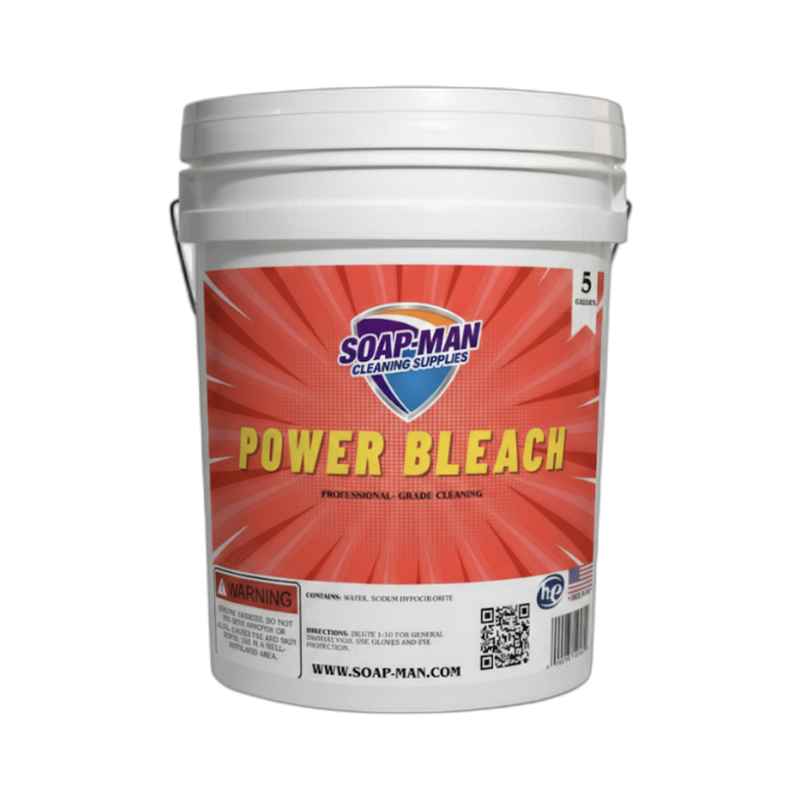
- Bleach cleaner — Power Bleach kills mold on contact and penetrates porous surfaces to reach root systems.
- Hydrogen peroxide (3%) — an effective mold killer for surfaces where bleach shouldn't be used.
- Baking soda — for making a paste that clings to vertical surfaces and grout lines.
- Spray bottle
- Stiff-bristle grout brush or old toothbrush
- Rubber gloves
- Eye protection — mold spores and cleaning solution splatter are both eye irritants.
- N95 mask or respirator — recommended for extensive mold, especially in enclosed shower stalls.
- Cotton balls or paper towel strips — for the bleach poultice method on stubborn spots.
Step-by-Step: How to Clean Mold from Shower
Step 1: Ventilate and Protect Yourself
Turn on the bathroom exhaust fan and open any windows. Mold cleaning releases spores into the air, and bleach produces fumes — both need ventilation. Put on rubber gloves, eye protection, and an N95 mask if you're dealing with significant mold coverage. This isn't overcautious — inhaling concentrated mold spores during cleaning causes respiratory irritation, and repeated exposure can trigger allergic reactions in sensitized individuals. Dry surfaces first by wiping with a towel. Counter-intuitively, mold is more effectively treated on dry surfaces because the cleaning solution isn't diluted by existing moisture.
Step 2: Apply Bleach Cleaner to Affected Areas
Spray Power Bleach directly onto all visible mold — grout lines, caulk, tile surfaces, shower floor, and ceiling areas. For vertical surfaces where the spray runs off before it can work, use the poultice method: soak cotton balls or strips of paper towel in bleach cleaner and press them against the mold. The cotton holds the bleach in contact with the surface long enough to penetrate. This is especially effective for blackened grout lines and caulk seams. Let the bleach sit for at least 15 minutes — longer for heavy mold. The mold stains will begin to lighten as the bleach oxidizes the pigment.
Step 3: Scrub Grout and Porous Surfaces
After the bleach has had dwell time, scrub grout lines with a stiff-bristle grout brush, working the solution into the porous surface. Grout is essentially cement mixed with sand — it's porous at a microscopic level, which is why mold roots penetrate it. Vigorous scrubbing with bleach loosens and kills roots that surface application alone can't reach. For tile surfaces, a sponge or cloth with moderate pressure is sufficient. For ceiling mold, use a brush on an extension pole to avoid climbing into wet shower stalls on slippery surfaces.
Step 4: Address Caulk Separately
Silicone and latex caulk are the biggest mold problems in showers because mold grows inside the caulk material, not just on the surface. If the caulk has black mold throughout its thickness (not just surface staining), the most effective solution is complete removal and replacement. Score the caulk with a utility knife, pull it out in strips, clean the exposed seam with bleach, let it dry completely, and apply fresh mildew-resistant silicone caulk. This takes 30 minutes and eliminates years of embedded mold that no amount of surface cleaning can remove. For light surface mold on otherwise intact caulk, the bleach poultice method usually clears it.
Step 5: Rinse and Prevent Recurrence
Rinse all surfaces thoroughly with clean water to remove bleach residue. Dry the shower with a towel or squeegee. Then implement the prevention measures that actually matter: use the exhaust fan during every shower and for 30 minutes after. Squeegee or wipe walls and the door after each shower (this removes 70% of the moisture mold needs). Spray a daily shower cleaner — a mix of equal parts white vinegar and water in a spray bottle works well as a daily mist after showering. Fix any dripping fixtures. These habits address the root cause (excess moisture) rather than repeatedly treating the symptom (mold growth).
Pro Tips
- Use mildew-resistant caulk when replacing. Not all silicone caulk is the same. Look for products specifically labeled "mildew-resistant" or "with Microban." They contain antimicrobial additives that inhibit mold growth for years. The extra $2-$3 per tube is easily the best investment in shower maintenance.
- Spray daily with vinegar after showering. A daily mist of undiluted white vinegar on shower surfaces creates an acidic environment that inhibits mold growth. Keep a spray bottle of vinegar in the shower and spray walls and the floor after the last shower of the day. No rinsing needed.
- Seal grout annually. Grout sealer fills the microscopic pores in grout, preventing moisture and mold spores from penetrating. Apply after cleaning and drying the grout, following the product's instructions. Sealed grout resists mold, staining, and is dramatically easier to clean.
Common Mistakes
- Only cleaning mold you can see. Mold often grows behind caulk, under tile edges, and in areas hidden by shower fixtures. If you see mold in one area, check adjacent areas — mold spreads through connected moisture paths. Inspect behind shower shelves, under soap dishes, and along the base where the wall meets the floor.
- Mixing bleach with other cleaners. Bleach + ammonia creates toxic chloramine gas. Bleach + vinegar creates chlorine gas. Bleach + hydrogen peroxide creates oxygen gas (less dangerous but wastes both products). Use bleach alone, rinse thoroughly, and wait before applying any other product.
- Painting over mold. Paint doesn't kill mold — mold grows through paint and reappears within weeks. Always kill and remove mold before applying any coating. If you're painting a bathroom, use mildew-resistant paint, but only after the surface is mold-free.
FAQ
Is black mold in my shower dangerous?
Most shower mold is Cladosporium or Aspergillus, which are common household molds that can irritate allergies and asthma but aren't the infamous "toxic black mold" (Stachybotrys chartarum). Stachybotrys requires sustained water damage and cellulose material (like drywall) to grow — it doesn't typically grow on tile and grout. Regardless of species, all mold should be removed for hygiene and air quality. If mold covers more than 10 square feet or is growing on the wall behind the tile, consult a professional.
Can I use vinegar instead of bleach for shower mold?
Vinegar kills about 82% of mold species, making it effective for light mold and prevention. For heavy or deeply rooted mold, bleach is more effective because it penetrates porous surfaces better and kills a wider range of species. The ideal approach is bleach for active mold treatment and vinegar as a daily preventive spray after the mold is gone.
How do I clean mold from the shower ceiling?
Spray bleach cleaner on the ceiling mold, let it sit for 15 minutes, and scrub with a brush on an extension pole. Wear eye protection — drips from ceiling cleaning land on your face. After cleaning, address the moisture source: the bathroom likely needs better ventilation. Consider upgrading the exhaust fan to a higher CFM rating, running it longer after showers, or adding a humidity-sensing fan that runs automatically.
Why does mold grow on my shower curtain?
Shower curtains trap moisture between the curtain and the liner (or between the curtain and the wall). After each shower, spread the curtain fully across the rod so it can dry rather than bunching it to one side where moisture stays trapped. Wash fabric shower curtains monthly in the washing machine with vinegar. Replace vinyl liners every 3-6 months — they're cheap and not worth the effort of heavy mold removal.
Should I call a professional for shower mold?
For surface mold on tile, grout, and caulk, DIY cleaning is effective and saves money. Call a professional if: mold covers more than 10 square feet, mold is behind tile (you see it growing from wall seams or through grout that shouldn't have mold), you smell mold but can't find it (hidden mold behind walls), or there are signs of water damage (soft or discolored drywall, warped baseboards). These situations may indicate structural moisture issues beyond surface cleaning.