
Why Shower Heads Clog Up
Every shower head processes hundreds of gallons of water per month. That water contains calcium, lime, magnesium, and other minerals that leave deposits as water evaporates from the nozzle openings. Over months and years, these deposits build up and clog the small holes that deliver water. The result: weak, uneven water pressure and that characteristic patchy spray pattern where some jets work and others don't.
As cleaning professionals, we see this in nearly every home and commercial bathroom we service. People blame the water pressure, call plumbers, or buy new shower heads — when the fix is a simple 30-minute cleaning. A properly descaled shower head sprays like new, regardless of how old it is.
This guide covers two methods: the quick no-removal method (ideal when the shower head is tough to unscrew or you want minimum effort) and the full removal deep clean (for heavily clogged heads that need aggressive treatment).
What You'll Need
- White distilled vinegar — The primary descaling agent. Its acidity dissolves calcium and mineral deposits effectively.
- Plastic bag — A gallon-size zip bag works best. Avoid metal because acid and some metals react.
- Rubber bands or twist ties — To secure the bag around the shower head.
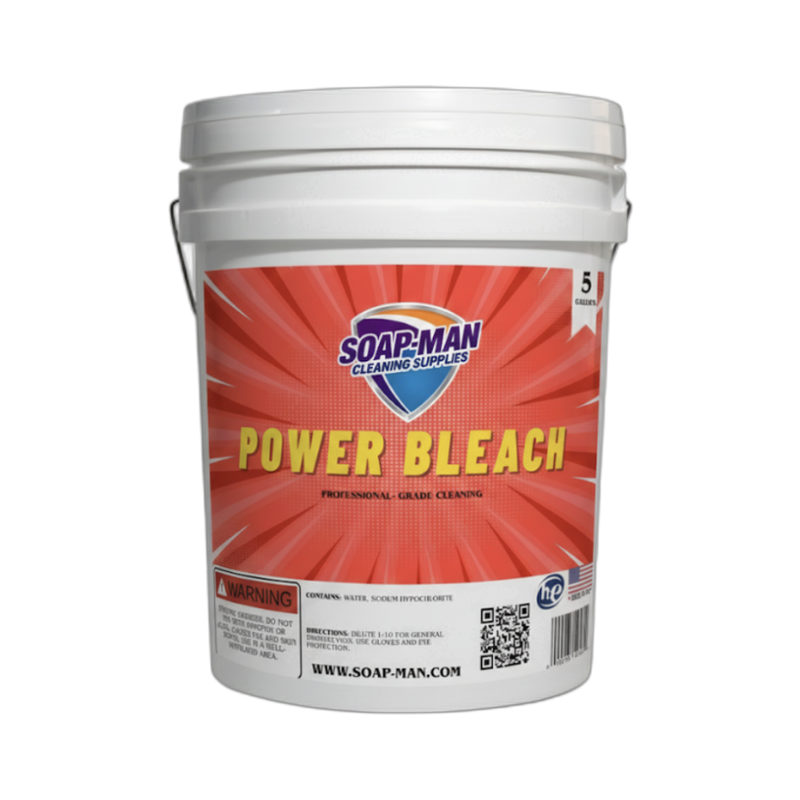
- Professional bleach — Soap-Man Power Bleach for disinfecting the shower head after descaling. Kills bacteria and mold hidden in the nozzle openings.
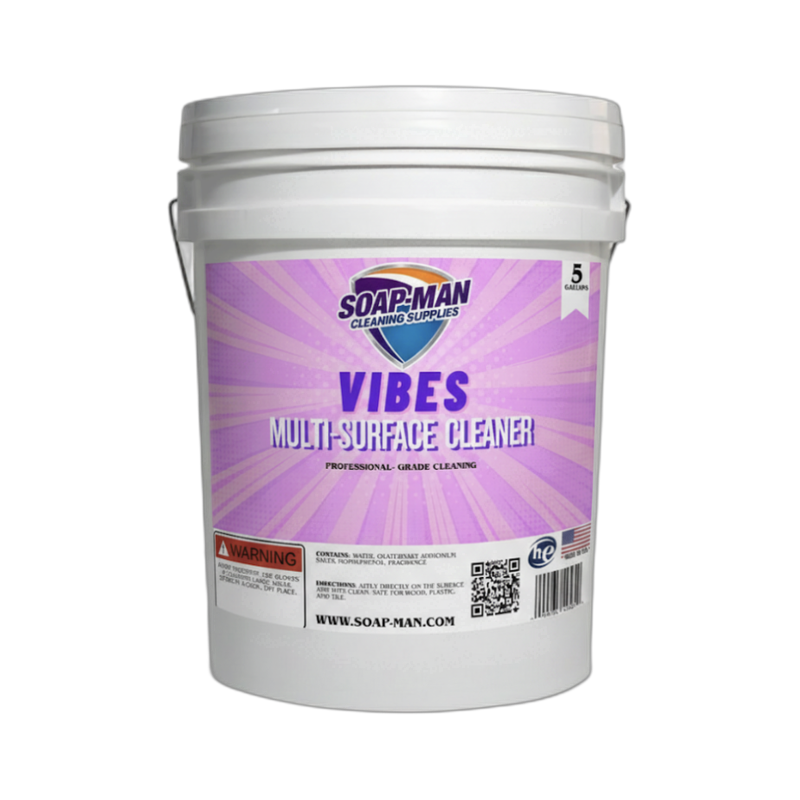
- Multi-surface cleaner — Vibes Multi-Surface Cleaner for cleaning the exterior.
- Toothpick or sewing needle — For poking out stubborn buildup from individual nozzle holes.
- Old toothbrush — For scrubbing the exterior nozzle area.
- Microfiber cloth
- Wrench or pliers (optional) — For removing the shower head if you choose the full deep clean.
- Plumber's tape — Only if you remove the head for deep cleaning.
Method 1: No-Removal Cleaning (Quick Method)
Step 1: Fill the Bag with Vinegar
Fill a gallon-size plastic bag about halfway with white distilled vinegar. Use undiluted vinegar for heavy buildup; dilute 1:1 with water for light maintenance. Don't use apple cider vinegar or other varieties — they leave residue.
Step 2: Submerge the Shower Head
Lift the bag over the shower head so the head is completely submerged in vinegar. Secure the bag to the shower arm with rubber bands or a twist tie. Make sure the entire shower head face is under the vinegar line. Check for leaks and re-tighten if needed.
Step 3: Let It Soak
For light buildup, soak for 1 hour. For heavy buildup, soak overnight (8-12 hours). For metal finishes like brass or oil-rubbed bronze, limit soaking to 30 minutes maximum — prolonged vinegar contact can discolor certain finishes. Check the manufacturer's guidance if you're unsure.
Step 4: Remove the Bag and Scrub
Remove the bag and discard the vinegar. The shower head will likely have loosened deposits visible on the surface. Use an old toothbrush to scrub the face of the shower head, paying special attention to the nozzle openings. For holes that are still clogged, use a toothpick or sewing needle to poke out remaining buildup.
Step 5: Run Hot Water Through It
Turn the shower on hot and let water run through for 1-2 minutes to flush out any loosened debris from inside the head. You should immediately see improved water pressure and more even distribution across the nozzles.
Method 2: Full Removal Deep Clean
Step 1: Remove the Shower Head
Unscrew the shower head counterclockwise. If it's stuck, wrap the base with a cloth to protect the finish and use pliers or a wrench. Most shower heads come off by hand with firm pressure.
Step 2: Disassemble (If Possible)
Many shower heads have a removable filter screen inside where mineral buildup collects. Check if yours does. If so, remove the screen and clean it separately. Also remove any rubber washers.
Step 3: Soak in Vinegar Solution
Submerge the entire shower head (and filter screen) in a bowl of white vinegar for 2-4 hours. For heavy buildup, soak overnight. You'll see bubbles forming as vinegar reacts with the mineral deposits — this is normal and indicates active descaling.
Step 4: Scrub and Rinse
Use a toothbrush to scrub the face of the shower head, working cleaner into nozzle openings. Use a toothpick to clear individual holes that are still clogged. Rinse thoroughly under running water.
Step 5: Disinfect with Bleach Solution (Optional)
If the shower head has been heavily used or is in a humid environment, bacteria and mold can colonize the interior. Mix a solution of 1 part Power Bleach to 20 parts water. Soak the shower head for 10-15 minutes, then rinse thoroughly with fresh water multiple times until no bleach smell remains. Never mix bleach with vinegar.
Step 6: Reinstall with Fresh Plumber's Tape
Remove any old plumber's tape from the shower arm threads. Apply fresh plumber's tape (wrap 3-4 times clockwise) to create a watertight seal. Screw the shower head back on clockwise until snug. Don't overtighten — hand-tight plus a quarter turn is enough.
Step 7: Test
Turn on the water and check for leaks at the connection. If there's dripping, tighten slightly or re-wrap with more plumber's tape. Let water run for 2 minutes to flush any remaining debris.
Pro Tips
- Clean monthly if you have hard water. If your home has hard water (most of the US does), a monthly vinegar bag soak prevents buildup from reaching problematic levels. Takes 1 hour of hands-off soak time.
- Warm vinegar works faster. Heating the vinegar (not boiling — just warm to the touch) increases its descaling power significantly. Microwave in a glass container for 30-60 seconds before using.
- Use a water softener if possible. If you have very hard water, a whole-home water softener eliminates the root cause of shower head clogging and extends the life of every water-using appliance in your house.
- Check your shower head monthly for efficiency. Run water and observe the spray pattern. Any nozzles that aren't spraying or spraying weakly indicate clogging that needs addressing before it spreads.
Common Mistakes
Using Abrasive Cleaners
Steel wool, scouring pads, and abrasive powders scratch shower head finishes and can permanently damage chrome, brass, or bronze. Stick with vinegar, bleach, and soft brushes.
Ignoring the Filter Screen
Many shower heads have internal filter screens that catch sediment from your water supply. These need periodic cleaning — if you've never checked yours, it's probably clogged. Remove and rinse under running water every 3-6 months.
Overtightening During Reinstallation
Overtightening a shower head can crack the head or strip the threads on the shower arm. Hand-tight plus a quarter turn is sufficient. Plumber's tape creates the watertight seal, not force.
Using Vinegar on Certain Finishes
Extended vinegar contact can damage oil-rubbed bronze, unsealed brass, and some nickel finishes. Limit soaking to 30 minutes for these finishes, or use a gentler cleaner designed for delicate finishes.
Frequently Asked Questions
How often should I clean my shower head?
Every 1-3 months if you have hard water. Every 6 months with soft water. If you notice reduced pressure or uneven spray, clean immediately regardless of schedule.
Can I use CLR or Lime-A-Way instead of vinegar?
Yes, commercial descalers like CLR work faster than vinegar on heavy deposits. Follow the product's instructions and rinse thoroughly. Never combine descalers with bleach or ammonia.
Why does my shower head still have low pressure after cleaning?
Either internal clogging in the handheld hose (if applicable), a clogged filter inside the head that you haven't removed, or low pressure from your home's water supply. If cleaning the head doesn't fix the issue, check the hose and the filter screen.
Can mold grow inside shower heads?
Yes. The warm, moist environment inside a shower head is ideal for mold and bacterial growth, including Mycobacterium avium. Monthly cleaning and occasional bleach disinfection prevent this. It's especially important for immunocompromised individuals.
Is my shower head worth cleaning, or should I just buy a new one?
Almost always worth cleaning. Even $100+ shower heads recover full function after proper descaling. Only replace if the head is physically cracked, the internal mechanisms have failed, or the finish has corroded beyond repair.