
Why Most Toilet Cleaning Is Inadequate
A toilet has more surfaces than people realize. There's the bowl (the obvious part), but also the rim jets (where water flows in during flush), the underside of the rim, the tank interior, the flush handle, the seat (top and bottom), the hinges, the exterior, the base, and the floor around it. Most people clean the bowl and call it done. Meanwhile, bacteria, urine residue, and mineral buildup accumulate on every other surface.
As cleaning professionals, we treat a toilet like a machine with multiple parts that each need specific attention. The bowl is actually the easiest to keep clean. The tricky parts are the hidden surfaces, the hinges and seat underside, and the base where it meets the floor. Those are where germs, odors, and yellowing build up over time.
This guide walks through the complete professional toilet cleaning method — every surface, every step, with the right products for each.
What You'll Need
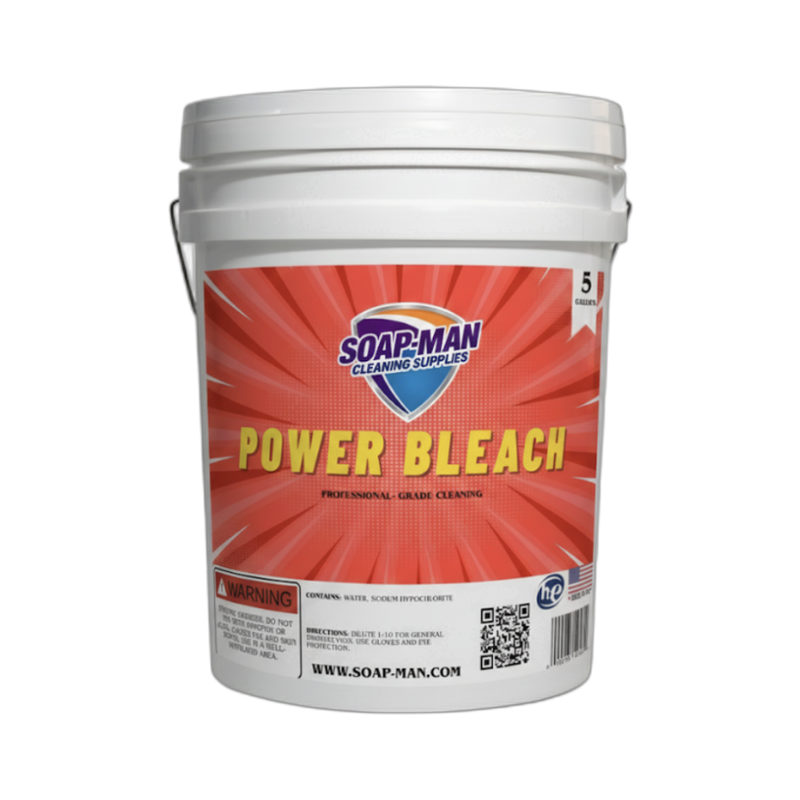
- Professional bleach — Soap-Man Power Bleach is the most effective toilet disinfectant. At commercial strength, it kills pathogens, removes stains, and addresses odors in a single step. Always dilute according to directions.
- Toilet brush with stiff bristles — A quality brush with a dedicated holder. Replace every 6 months.
- Disposable gloves — Non-negotiable for safety and hygiene.
- Cleaning cloths or paper towels — Use disposable for exterior surfaces or keep dedicated cloths labeled "toilet only."
- Old toothbrush — For hinges, bolt caps, and crevices.
- Pumice stone (for toilets only) — For hard water rings in the bowl.
- Microfiber cloths — For drying and polishing exteriors.
- Spray bottle — For diluted cleaning solution.
Step-by-Step Method
Step 1: Prep the Area
Clear the area around the toilet — move any rugs, trash cans, or toiletries. Put on your gloves. Open a window or turn on the bathroom fan to ventilate while you work with bleach.
Step 2: Apply Bleach to the Bowl
Pour about 1/2 cup of diluted Power Bleach (follow the label's dilution for bathroom disinfection) directly into the bowl. Use the toilet brush to swish the bleach around, making sure it coats the entire bowl, including under the rim where water flows during flushing. Don't forget the hole at the bottom (the trap).
Leave the bleach in the bowl for 10-15 minutes while you clean the exterior surfaces. The dwell time is critical for disinfection — don't scrub and flush immediately.
Step 3: Clean the Tank Top and Handle
Spray diluted bleach solution onto a cloth (not directly on surfaces to avoid splatter). Wipe down the flush handle, lever, and top of the tank. The flush handle is one of the dirtiest surfaces in most bathrooms — give it extra attention. Let the cleaner dwell on surfaces before wiping.
Step 4: Clean the Seat (Top and Bottom)
Lift the seat and lid. Spray both sides of the seat with your cleaning solution. Wipe the top of the seat first, then the underside. Don't forget the front edge where most urine splatter lands.
Wipe the lid (both sides) and the tank-facing rim of the seat where it meets the bowl — this area collects dust and grime invisibly but contributes to odors over time.
Step 5: Clean the Hinges
The hinges where the seat attaches to the bowl are the grossest part of most toilets and the part most people never touch. Use an old toothbrush with cleaning solution to scrub the hinges, bolt caps, and the surrounding area. Rotate the toothbrush to get into all the crevices. For severe buildup, some toilet seats lift off entirely for thorough cleaning — check your seat's release mechanism.
Step 6: Scrub the Bowl
Go back to the bowl. Use the toilet brush to scrub the bleach solution into every surface — the waterline, the sides, the underside of the rim (this is where mineral buildup and bacteria accumulate), and the bottom/trap area. Work the brush vigorously into the rim jets to clear any mineral buildup.
For hard water rings that don't come out with the brush, use a pumice stone. Wet the stone before use (never use dry) and gently rub the rings to remove them. Porcelain is harder than pumice so you won't damage the bowl, but keep the stone wet.
Step 7: Clean the Exterior
Spray solution onto a cloth. Wipe the outside of the tank, the pedestal of the toilet (the curved front where the tank meets the bowl), and the base. Pay attention to the area under the seat hinge and where the tank meets the bowl — these collect dust and drip residue.
Step 8: Clean the Base and Floor Area
The base of the toilet where it meets the floor collects hair, dust, and dried urine splatter. Spray cleaning solution and wipe thoroughly. Use a toothbrush for the area around the bolt caps at the base and any caulk line. For the surrounding floor, wipe in an arc at least 18 inches from the toilet in every direction — splatter travels farther than you think.
Step 9: Flush and Final Wipe
Flush the toilet to rinse the bowl. Use a fresh cloth with clean water to do a final wipe of all surfaces to remove any cleaner residue. Dry with a microfiber cloth for a streak-free finish on the exterior.
Pro Tips
- Let bleach sit before scrubbing. The contact time is what kills pathogens, not the scrubbing. Pouring bleach and immediately brushing reduces its disinfection effectiveness dramatically. 10 minutes minimum.
- Clean the brush after every use. Dip it in a fresh bleach solution after cleaning, rinse, and let it dry over the bowl (wedge the handle between the bowl and seat) before returning to its holder. A dirty brush re-contaminates the toilet every time.
- Maintain weekly, not when it looks dirty. Weekly 10-minute cleanings are far easier than monthly 30-minute deep cleanings. The small consistent effort compounds.
- Use dedicated tools. The toilet brush, gloves, and cloths should never touch any other surface in your home. Cross-contamination is a real concern.
Common Mistakes
Skipping the Underside of the Rim
The underside of the rim, where water flows during flushing, is where mineral buildup and bacteria colonies form. Most toilet brushes don't naturally reach this area — you have to deliberately angle the brush up into the rim. Skip this and the toilet keeps staining no matter how often you clean.
Never Cleaning the Hinges
The hinges and the area around them are the dirtiest part of most toilets. They collect urine splatter, dust, and bacterial growth. Include them in every cleaning session.
Using One Cloth for Everything
Cross-contamination defeats the purpose of cleaning. Use separate cloths for the bowl interior, the seat, and the exterior/floor. Better yet, use disposable wipes or paper towels for the bowl area and reserve reusable cloths for exterior cleaning only.
Mixing Bleach with Other Cleaners
Never combine bleach with toilet bowl cleaners, ammonia-based products, or vinegar. The chemical reactions produce toxic gases. Use one product at a time, rinse thoroughly between products, or stick with bleach for complete cleaning.
Frequently Asked Questions
How often should I clean my toilet?
A full cleaning once a week is ideal for most households. Wipe down the seat and flush handle daily with a disinfecting wipe. Commercial restrooms should be cleaned multiple times per day during business hours.
Why does my toilet still smell even after cleaning?
Hidden urine on the seat underside, behind the hinges, on the floor around the base, or on the wall behind the toilet (from splatter). Do a thorough cleaning of all these areas. If the smell persists, check the wax ring at the base — a failing wax ring allows sewage odors to escape and needs replacement.
Can I use bleach tablets in the tank?
We don't recommend it. Bleach tablets slowly damage the rubber components inside the tank (flapper, seals, washers), which eventually causes leaks. If you want continuous cleaning action, use in-bowl products that release during flushing rather than tank-based tablets.
How do I remove hard water rings in the toilet bowl?
Turn off the water supply and flush to lower the water level. Pour 2 cups of white vinegar into the bowl and let it sit several hours or overnight. Scrub with a toilet brush. For stubborn rings, use a wet pumice stone to physically remove the deposits. Turn the water back on and flush.
Is it safe to use bleach in a septic system?
In small, properly diluted amounts (like during normal toilet cleaning), bleach is fine for septic systems. Don't pour large quantities down the toilet or use heavy bleach-based continuous-release products — these can kill the beneficial bacteria your septic system needs to function.