
The Swirl-Mark Problem Most Car Owners Don't Know About
Walk around any parking lot in bright sunlight and look at the hoods. You'll see spider-web patterns of fine scratches on almost every vehicle. Those are called swirl marks, and they're the result of years of improper washing. Every time you drag a dirty sponge or dirty wash mitt across the paint, you're grinding microscopic grit into the clear coat. Over time, those tiny scratches add up to a dull, hazy finish that used to be glossy.
The good news: swirl marks are almost entirely preventable. Professional detailers use a specific system that keeps dirt off the paint while you're washing. It takes maybe 10 extra minutes compared to a sloppy wash, and it adds years to the life of your paint. This is the method.
What You'll Need
- Two clean buckets — ideally with grit guards in the bottom to trap sediment. One for soapy water, one for rinse water.
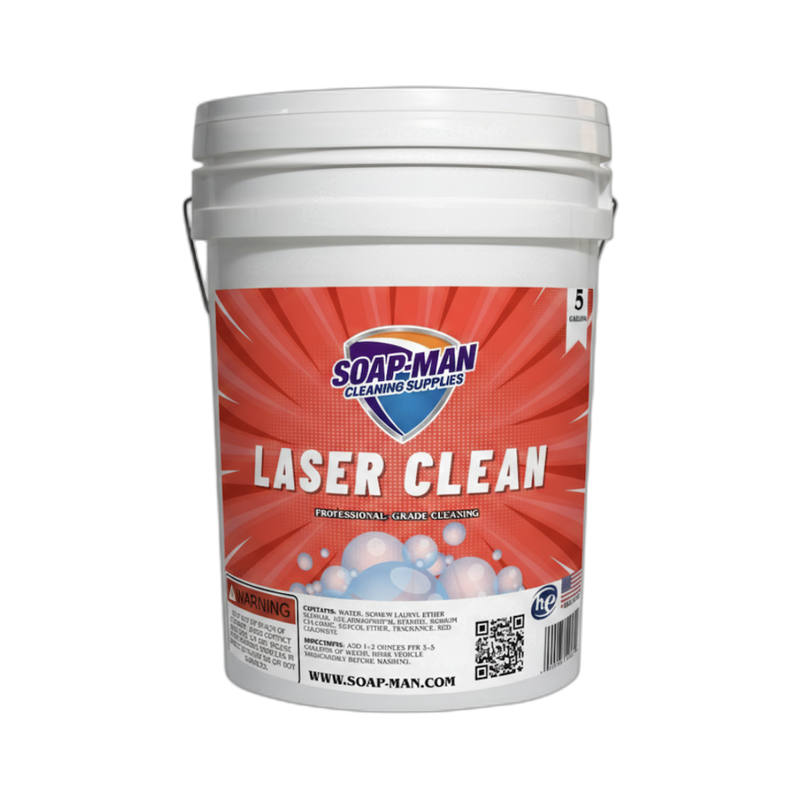
- Professional car wash soap — Soap-Man Laser Clean Car Wash Shampoo delivers heavy lubrication and rinses clean without stripping wax.
- Microfiber wash mitt — not a sponge. Sponges trap grit; microfiber releases it.
- Pressure washer or garden hose with nozzle — for the pre-rinse step.
- Wheel brush and dedicated wheel cleaner — wheels get their own tools because brake dust and road grime are the worst contaminants on the vehicle.
- Microfiber drying towels — plush, thick, and absorbent. Never use old bath towels on paint.
- A shaded area — direct sunlight dries soap too fast and causes water spots.
Step-by-Step: The Professional Car Wash Method
Step 1: Park in the Shade
Direct sunlight is the enemy of a good wash. Soap dries on the paint before you can rinse it, leaving streaks and water spots. Find a shaded spot or wash early in the morning or late in the evening.
Step 2: Pre-Rinse Thoroughly
Before any soap touches the car, rinse the entire vehicle with a pressure washer or strong hose spray. The goal is to remove as much loose dirt, dust, and debris as possible before you start physically touching the paint. This single step prevents most swirl marks.
Step 3: Clean the Wheels First
Wheels are the dirtiest part of any vehicle. Brake dust, road grime, and embedded contaminants need a dedicated cleaner and a dedicated brush. Clean wheels first, then rinse thoroughly, so the dirt from the wheels doesn't splatter onto a freshly washed body.
Step 4: Fill the Two Buckets
Bucket one: warm water plus the correct dose of Laser Clean Car Wash Shampoo, mixed until foamy. Bucket two: plain clean water for rinsing the mitt between panels. The two-bucket method is what makes this whole system work.
Step 5: Wash Top to Bottom
Load the wash mitt from the soap bucket and wash one panel at a time, starting from the roof and working downward. The bottom of the car is the dirtiest (closest to the ground), so finishing with it prevents you from dragging road grime back up to cleaner panels. Wash in straight lines, not circles — circular motions cause the swirl marks you're trying to avoid.
Step 6: Rinse the Mitt Between Panels
After each panel, dunk the mitt into the rinse bucket (bucket two) and swish vigorously to release any trapped dirt. Then go back to the soap bucket for more fresh, clean soap. This keeps the soap bucket clean and prevents dirt from being re-applied to the paint.
Step 7: Rinse the Car Frequently
Don't let soap dry on the paint. Rinse each panel after washing, or rinse the entire car if you're working fast. The pre-rinse/wash/rinse cycle on each panel is the safest approach.
Step 8: Final Rinse
After every panel is washed, do one complete final rinse from top to bottom. Pay attention to crevices, emblems, gaps around windows, and anywhere soap can hide. Sheet the water off by removing the nozzle and letting water flow over the panels.
Step 9: Dry with Microfiber
Use a plush microfiber drying towel — ideally a waffle-weave or twist-pile towel specifically designed for automotive drying. Pat and gently drag rather than rubbing vigorously. Work top to bottom again.
Pro Tips
- Use two different mitts for body and wheels. Never use the same mitt on wheels and paint. Wheel grit will destroy the paint.
- Grit guards in the buckets. Inexpensive plastic grids that sit in the bottom of the bucket, trapping dirt so it stays away from the mitt when you dunk.
- Don't wash in direct sunlight. If you can't find shade, wash panel by panel with immediate rinsing.
- Temperature matters. Warm water loosens dirt and dissolves soap better than cold. Not hot — just warm.
- Use a proper car shampoo, not dish soap. Dish soap strips wax and can damage clear coats over time. A proper car wash shampoo like Laser Clean is pH-balanced and protects existing wax.
- Wash frequently — but not too frequently. Every 1-2 weeks is the standard for most vehicles. More often if you drive in dirty conditions.
- Apply wax after washing. A freshly washed car is the perfect base for wax or sealant application.
Common Mistakes
- Washing in direct sunlight. Guarantees water spots and dried soap residue.
- Using dish soap. Strips wax and can dull clear coat over time.
- One-bucket washing. Dirt from previous panels gets dragged back across the paint, causing swirl marks.
- Using a sponge. Sponges trap grit and act like fine sandpaper.
- Washing with circular motions. Creates swirl marks visible in sunlight.
- Drying with an old bath towel. Cotton towels leave lint and scratch paint.
- Skipping the pre-rinse. Physically contacting dirty paint before removing loose debris is the #1 cause of swirl marks.
- Using the same mitt for wheels and paint. Cross-contamination destroys the paint with embedded brake dust and road grit.
- Not drying the car. Water left to air-dry causes water spots, especially on vehicles with hard water mineral content.
FAQ
How often should I wash my car?
Every 1-2 weeks for most vehicles. More frequently in winter (road salt), after long road trips, or after exposure to bird droppings or tree sap. Letting dirt sit damages the clear coat over time.
Can I just go through an automatic car wash?
Touchless automatic washes are acceptable but less effective. Brush-based automatic washes use brushes that collect debris from every previous vehicle and drag it across your paint — the leading cause of swirl marks on modern cars. If you care about the finish, hand-washing with the two-bucket method is worth the time.
Is the two-bucket method really necessary?
Yes, if you care about your paint. Single-bucket washing redeposits dirt on the vehicle with every dip. Over time, this is the difference between a car that looks new at 5 years old and one that looks tired at 3 years old.
What's the best car wash soap?
A professional car wash shampoo designed for modern clear coats. Laser Clean Car Wash Shampoo provides heavy lubrication (reducing friction against the paint), rinses clean without streaks, and won't strip wax or sealants. Avoid dish soap and general-purpose cleaners.
Should I wax my car after every wash?
No. Modern synthetic waxes and sealants last 2-4 months between applications. A good sealant can last 6 months or longer. Check if water still beads on the paint — if it doesn't, it's time to re-wax.