
The Natural Cleaning Landscape in 2026
The natural cleaning product market has exploded. Store shelves are crowded with products claiming to be "natural," "green," "eco-friendly," "non-toxic," "plant-based," and "chemical-free." The problem? These terms have no standardized definition. A product can contain one plant-derived ingredient among a dozen synthetic ones and still call itself "natural."
As a cleaning supply company, we get asked constantly: "Are natural products good enough?" The honest answer is nuanced. Some natural ingredients are genuinely effective cleaners backed by real science. Others are marginally effective at best. And for certain cleaning tasks — disinfection, heavy degreasing, mold remediation — natural alternatives cannot match conventional products, period.
This guide gives you the straight story: what natural cleaning ingredients actually work, what they're good at, what they can't do, and how to build a cleaning kit that balances effectiveness, safety, and environmental responsibility without falling for marketing hype.
What You'll Need
Here's the natural-plus-conventional cleaning kit that covers every household need without sacrificing effectiveness.
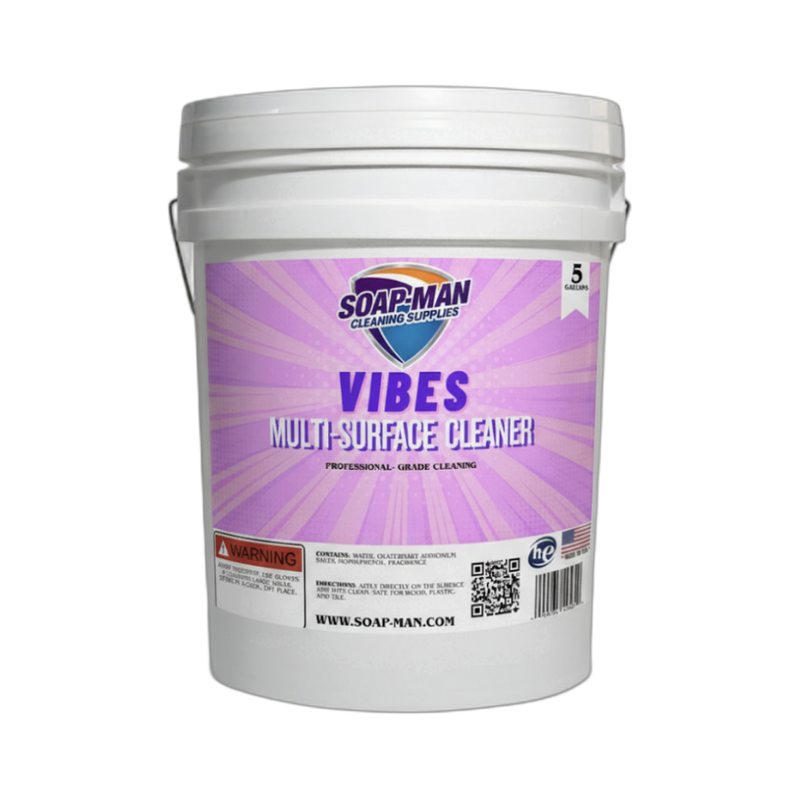
- Multi-surface cleaner with plant-based surfactants — Vibes Multi-Surface Cleaner uses effective surfactant chemistry that handles daily cleaning on every surface. It's effective at very low dilution ratios, meaning less product per use and less chemical in your home.
- White distilled vinegar — Genuinely effective for mineral deposits, hard water, glass, and deodorizing. Buy in gallon jugs for economy.
- Baking soda — Effective mild abrasive, odor absorber, and paste base for targeted cleaning. Keep a large box in the cleaning supply area.
- Hydrogen peroxide (3%) — Mild bleaching agent and disinfectant alternative for appropriate uses. Store in its original dark bottle (light degrades it).
- Castile soap (liquid) — A true plant-oil-based soap that handles light cleaning, hand-washing, and floor mopping. Choose unscented for maximum versatility.
- Rubbing alcohol (isopropyl, 70%) — Effective surface sanitizer and cleaner for glass, electronics, and quick-drying needs.
- Essential oils (optional) — Tea tree oil has mild antimicrobial properties. Lemon and lavender add pleasant scent. These enhance the experience but don't replace actual cleaning agents.
- Microfiber cloths — Microfiber itself is a natural cleaning upgrade. The fine fibers mechanically capture dirt and bacteria more effectively than cotton, reducing the need for chemical cleaning agents.
Natural Ingredients That Actually Work
White Vinegar (Acetic Acid)
Vinegar is the workhorse of natural cleaning, and it earns that reputation. At 5% acidity, it dissolves mineral deposits, cuts through soap scum, removes hard water stains, and effectively cleans glass surfaces. It's also a genuine odor neutralizer — not a masker, but a neutralizer that chemically reacts with odor-causing molecules.
Where it excels: Glass and mirrors, hard water deposits, showerheads and faucets, soap scum, coffee maker descaling, odor neutralization, and drain freshening.
Where it doesn't work: Vinegar is not a disinfectant. It has mild antibacterial properties but doesn't meet EPA standards for disinfection. Don't rely on it for sanitizing surfaces after illness, handling raw meat, or anything involving pathogen elimination. It also doesn't work on grease — the chemistry is wrong. And it damages natural stone, so keep it away from marble and granite.
Baking Soda (Sodium Bicarbonate)
Baking soda is a mild alkali with gentle abrasive properties. It works through physical scrubbing action and mild chemical interaction with acidic soils. It's also one of the best odor absorbers available — it adsorbs odor molecules rather than masking them with fragrance.
Where it excels: Oven cleaning (as a paste), sink scrubbing, deodorizing (carpets, fridges, trash cans, upholstery), stain pre-treatment for laundry, gentle surface abrasion for stuck-on food, and drain freshening combined with vinegar.
Where it doesn't work: On its own, baking soda is a weak cleaner. It needs physical scrubbing to be effective and doesn't dissolve grease, sanitize surfaces, or cut through heavy grime. It's a supplement to your cleaning process, not a primary cleaning agent.
Hydrogen Peroxide (H2O2)
At 3% concentration (the standard drugstore version), hydrogen peroxide is an oxidizer that kills many bacteria and viruses on contact. It's a legitimate alternative to bleach for light disinfection tasks, and it breaks down into water and oxygen — no chemical residue.
Where it excels: Light surface disinfection, grout whitening, stain removal on light fabrics and surfaces, mold treatment on non-porous surfaces, and toothbrush and cutting board sanitization.
Where it doesn't work: The 3% concentration is significantly weaker than bleach for serious disinfection. It degrades rapidly when exposed to light (which is why it comes in dark bottles). It can bleach colored surfaces and fabrics. And it doesn't have the staying power for heavy-duty mold remediation — mold in shower caulk and deep grout may require bleach.
Castile Soap
True castile soap is made from plant oils (traditionally olive oil) and is genuinely effective at lifting dirt and light grease through surfactant action. It's biodegradable, concentrated, and versatile — usable for floors, surfaces, dishes, and even personal care.
Where it excels: General surface cleaning, floor mopping, hand-washing dishes, light all-purpose cleaning when diluted.
Where it doesn't work: Castile soap reacts with hard water to leave a filmy residue. In hard water areas, you'll need to add vinegar to rinse water (never mix them in the same bucket — soap plus acid equals scum). It's not effective against heavy grease and lacks the cleaning power of engineered multi-surface cleaners for serious grime.
Microfiber (Mechanical Cleaning)
Microfiber cloths deserve special mention as a natural cleaning technology. The fibers are split 100 times thinner than human hair, creating millions of tiny hooks that physically capture dirt, dust, and bacteria. Studies show microfiber with plain water removes up to 99% of bacteria from surfaces — comparable to many chemical cleaning products.
This doesn't mean you never need cleaning products. Microfiber excels at surface soil removal but doesn't disinfect, degrease, or dissolve mineral deposits. Think of it as a way to dramatically reduce product use for daily maintenance, not a replacement for all cleaning chemistry.
Natural Ingredients That Don't Work (Despite Marketing Claims)
Essential Oils as Cleaners
Tea tree oil has documented antimicrobial properties at certain concentrations. But the amount of essential oil in most DIY cleaning recipes or commercial "essential oil-based cleaners" is nowhere near enough to provide meaningful cleaning power. Tea tree oil at adequate antimicrobial concentrations is expensive and strongly scented — far beyond what most people would find pleasant.
Essential oils add pleasant scent to cleaning products. They do not clean surfaces. Describing them as "the cleaning agent" in a product is marketing, not chemistry.
"Chemical-Free" Products
Everything is a chemical. Water is a chemical. Vinegar is a chemical. Baking soda is a chemical. The term "chemical-free" is scientifically meaningless and is used purely as marketing language to suggest safety through vagueness. What matters isn't whether a product contains "chemicals" but whether it's effective, safe when used as directed, and appropriate for the task.
Lemon Juice as a Cleaner
Lemon juice is citric acid — similar in function to vinegar but weaker, more expensive, and it contains sugars that leave a sticky residue if not rinsed thoroughly. The sticky residue actually attracts ants and other insects. White vinegar does everything lemon juice does, without the sugar problem, at a fraction of the cost. Lemon juice smells nice. As a cleaning agent, vinegar is objectively better.
Salt as an Abrasive Cleaner
Salt is sometimes recommended as a natural scrubbing agent. It works — in the same way any abrasive works — but it can scratch surfaces more aggressively than baking soda and leaves salt residue that corrodes metal and attracts moisture. Baking soda is a better, safer mild abrasive for every application where salt is suggested.
When You Genuinely Need Conventional Products
Disinfection
If someone in your household is sick with a contagious illness, you need an EPA-registered disinfectant. This means bleach, a quaternary ammonium product, or another proven disinfectant. Vinegar, essential oils, and hydrogen peroxide at drugstore concentrations do not reliably kill norovirus, influenza, MRSA, or other serious pathogens. This isn't a matter of preference — it's public health science.
Heavy Grease
Polymerized cooking grease — the hardened film on range hoods, oven interiors, and around stoves — requires engineered surfactants and alkalinity to break down. Natural ingredients can't match a purpose-built degreaser for this task. You'll scrub three times as long with baking soda paste and still have residual grease.
Mold Remediation
Surface mold on non-porous surfaces can sometimes be addressed with hydrogen peroxide. But serious mold problems — in grout, caulk, on drywall, or in bathrooms with persistent humidity issues — need bleach or professional remediation. Vinegar kills some mold species but leaves others completely unaffected.
Commercial and Industrial Cleaning
Commercial kitchens, healthcare facilities, food processing plants, and industrial environments have cleaning requirements that natural products cannot meet. Health codes, OSHA standards, and food safety regulations require specific, proven products at specific concentrations. Natural cleaning in these environments isn't just insufficient — it's often illegal.
Building a Realistic Natural Cleaning Routine
Daily Maintenance (Natural Is Fine)
For daily surface wiping, dusting, and light cleaning, natural products work well. Vibes Multi-Surface Cleaner at high dilution (1:64) with a microfiber cloth handles daily kitchen and bathroom surface maintenance effectively. Vinegar-water solution handles glass and mirrors. These are low-stakes tasks where natural products perform admirably.
Weekly Cleaning (Mostly Natural)
Weekly bathroom cleaning, floor mopping, and kitchen cleaning can be done with multi-surface cleaner, baking soda for scrubbing, and vinegar for fixtures. Use conventional bleach for toilet disinfection — this is one weekly task where the stronger product is genuinely warranted.
Deep Cleaning (Conventional Products Needed)
Oven degreasing, heavy mold treatment, grout restoration, and appliance deep cleaning benefit from conventional products. Save the industrial-strength degreaser and bleach for these periodic deep cleans — typically quarterly or semi-annually. This is where engineered chemistry significantly outperforms natural alternatives.
Pro Tips
- Read ingredient lists, not marketing claims. "Natural," "green," and "eco-friendly" are unregulated marketing terms. Look for specific ingredient lists and third-party certifications (EPA Safer Choice, Green Seal, UL ECOLOGO) if environmental impact matters to you.
- Dilution is the natural way to reduce chemical exposure. A high-quality concentrated cleaner like Vibes Multi-Surface Cleaner diluted to 1:64 contains very little active chemical per application. The dilution approach may be more practical than switching to less-effective products — you get real cleaning power with minimal chemical exposure.
- Ventilation matters more than product choice. Opening windows while cleaning — regardless of what products you use — reduces chemical exposure more effectively than switching from conventional to natural products. Fresh air dilutes fumes from any cleaning product.
- Microfiber reduces product need across the board. Investing in high-quality microfiber cloths and using proper technique (fold the cloth into quarters, use each side before switching to a new cloth) lets you clean most surfaces with very little product of any kind.
- Don't mix natural products together carelessly. Vinegar and baking soda mixed together create a dramatic fizzing reaction — but the result is basically salt water. They neutralize each other. Use them separately for their individual strengths, not combined.
- Buy vinegar and baking soda in bulk. These are the two natural ingredients with genuine, proven cleaning utility. Buy them in the largest sizes available — they're extremely inexpensive in bulk and you'll use them constantly.
Common Mistakes
Replacing All Conventional Products at Once
Switching your entire cleaning kit to natural products often means discovering mid-task that the natural version doesn't work for a specific job. Transition gradually — replace products as you identify tasks where natural alternatives perform adequately, and keep conventional options for tasks where they're necessary.
Assuming "Natural" Means "Safe"
Vinegar is an acid that etches marble and irritates skin and eyes. Borax (often marketed as a natural cleaner) is toxic if ingested. Tea tree oil can be harmful to pets, particularly cats. "Natural" doesn't automatically mean safe for all people, pets, and surfaces. Read usage instructions and safety data regardless of marketing claims.
Using Vinegar on Everything
Vinegar damages natural stone, certain metals, waxed surfaces, and rubber gaskets. It also doesn't work on grease. Using it as a universal cleaner leads to damaged surfaces and frustration when it fails on grease and heavy soil. It's an excellent specialist — not a generalist.
Relying on Essential Oils for Cleaning Power
Adding essential oils to a spray bottle of water and calling it a cleaner is recipe for disappointment. Essential oils don't have surfactant properties — they don't lift dirt or grease from surfaces. They add scent and minimal antimicrobial contribution, nothing more. A cleaning product needs actual cleaning agents.
Ignoring Water Quality
Many natural cleaning ingredients interact with hard water. Castile soap creates scum in hard water. Vinegar is consumed faster neutralizing mineral content in hard water before it can clean the target surface. If you have hard water, you may need to use more product or install a water softener for natural cleaning approaches to be practical.
Frequently Asked Questions
Are natural cleaning products as effective as conventional ones?
For daily maintenance and light cleaning, many natural products perform well. For disinfection, heavy grease, mold remediation, and industrial cleaning, conventional products are measurably more effective. The honest approach is matching the right product to the job rather than committing to one philosophy for all tasks.
Is vinegar a disinfectant?
Vinegar has mild antibacterial properties but is not an EPA-registered disinfectant. It reduces some bacterial populations on surfaces but doesn't reliably kill viruses (including flu and norovirus) or resistant bacteria (MRSA, C. diff). For actual disinfection — after illness, after handling raw meat, in bathrooms — use an EPA-registered disinfectant.
Can I clean my whole house with just vinegar and baking soda?
You can handle a surprising amount of household cleaning with vinegar, baking soda, and water — especially combined with microfiber cloths. Glass, mirrors, faucets, sinks, light cleaning, deodorizing, and general surface wiping are all manageable. However, you'll struggle with heavy grease, serious disinfection, oven cleaning, and mold problems. These tasks need stronger products.
What's the most environmentally responsible approach to cleaning?
Use concentrated products at proper dilution (less product per use), clean with microfiber to reduce chemical reliance, choose products with third-party environmental certifications, and use the right product for the job (a single effective application is better than five ineffective ones that waste product and water). Environmental responsibility comes from efficiency, not from ingredient buzzwords.
Are cleaning product fumes dangerous?
Most household cleaning products are safe when used as directed with adequate ventilation. Concentrated products (especially bleach and ammonia-based cleaners) produce fumes that can irritate airways in enclosed spaces. The solution is simple: open a window. Good ventilation makes the difference between safe and uncomfortable regardless of whether the product is "natural" or conventional.