
Pressure washing without chemistry is just expensive water. Hot water and high PSI can remove loose dirt, but they cannot dissolve oil, kill mildew, or break down the soil that bonds to concrete and metal over time. Chemistry does that work. The catch: pressure washer chemicals are not interchangeable. The chemistry that strips a concrete loading dock will eat through aluminum siding in a single pass. The chemistry that brightens cedar will turn a brick wall white and leach mortar. This guide covers the four main pressure-washer chemistry classes, which surfaces each one is safe on, and the OSHA HazCom requirements that operators frequently miss.
The Four Pressure Washer Chemistry Classes
Almost every pressure washer detergent on the market belongs to one of four families. Knowing the family tells you the pH, the surfaces it is safe on, and the surfaces it will damage.
1. Alkaline Degreasers (pH 11 to 14)
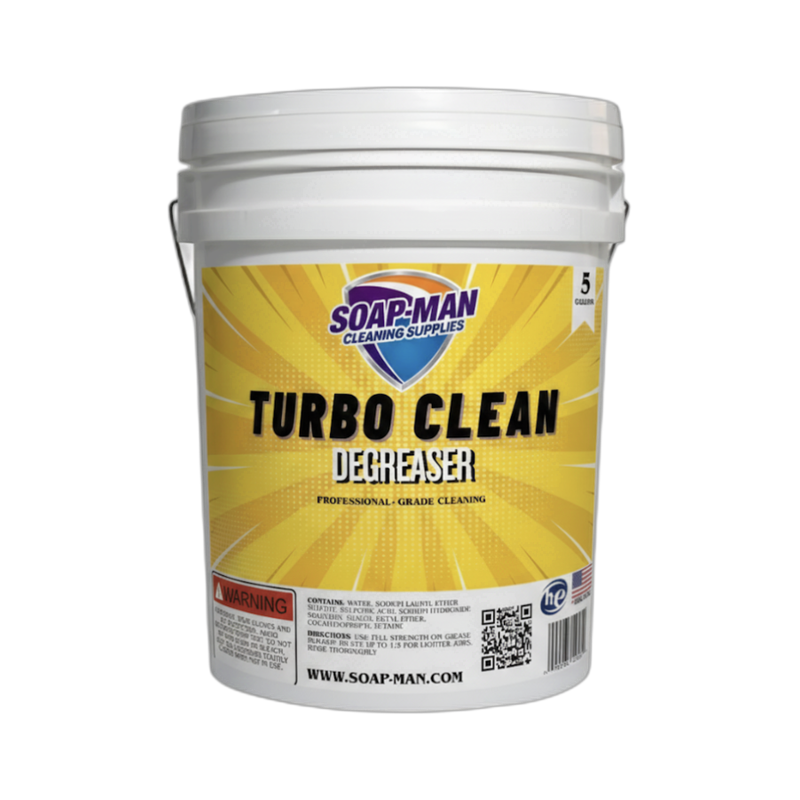
The workhorse for grease, oil, and heavy industrial soil. Alkaline degreasers contain caustics (sodium hydroxide or potassium hydroxide), surfactants, and chelating agents that dissolve organic soils. Common uses: concrete, masonry, oily floors, cement loading docks, equipment. Turbo Clean Degreaser at proper dilution falls into this class and is the right tool for concrete and masonry pressure washing.
Safe on: Concrete, brick, ceramic tile, painted steel (with rinse), stainless steel.
Damages: Aluminum (etches and oxidizes within minutes), galvanized steel, polished concrete, painted aluminum siding, anodized finishes, raw wood, plants and grass (kills landscaping if rinse runs off).
2. Acidic Cleaners (pH 0 to 4)
Used for rust removal, mineral deposits, hard water stains, and concrete brightening. Active ingredients typically include muriatic acid (hydrochloric), phosphoric acid, oxalic acid, or proprietary acid blends. Common uses: brick efflorescence removal, concrete brightening before sealing, rust spot removal on steel, mineral scale on cooling tower fill.
Safe on: Brick, concrete (test first), some unpainted steel (with neutralization rinse), porcelain, fiberglass.
Damages: Polished concrete, marble, limestone, terrazzo (etches all calcium-carbonate-containing surfaces), aluminum, galvanized steel, painted surfaces, mortar joints (can leach mortar from brick if dwelled too long), wood.
3. Sodium Hypochlorite ("SH" or "Pressure Wash Bleach", pH 11 to 13)
The chemistry behind so-called "soft washing" — applying dilute bleach solution at low pressure to kill mildew, algae, mold, and biological soil. SH does not technically "clean" — it kills the biological growth, which then washes off with a rinse. Common uses: vinyl siding, asphalt shingles, painted wood (with caution), composite decking, pavers with biological growth.
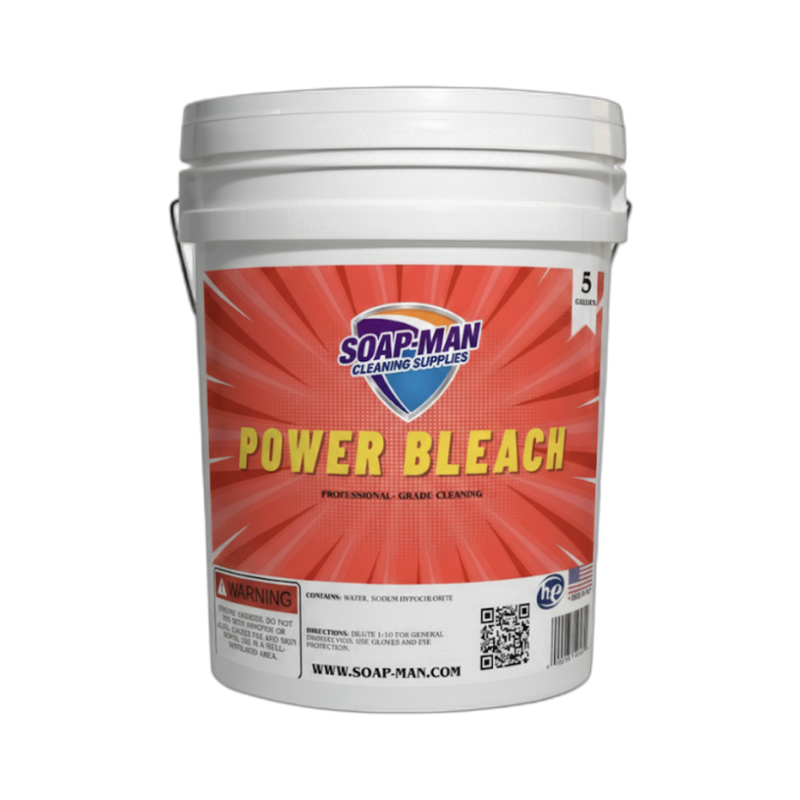
Dilution for pressure washing: typically 1 part 12.5% sodium hypochlorite to 4 to 8 parts water depending on growth severity. Power Bleach can be used at this dilution for biological soil — but verify percentage on your specific batch and adjust dilution accordingly.
Safe on: Vinyl siding, asphalt shingles (with care), painted wood (with rinse), composite decking, concrete, brick (with rinse), pavers.
Damages: Aluminum (oxidizes), bare wood (will lighten and raise grain), plants and grass (kills landscaping aggressively — rinse off plants immediately), some metal fasteners (corrodes), fabrics and patio furniture.
4. Neutral or Mildly Alkaline Detergents (pH 7 to 10)
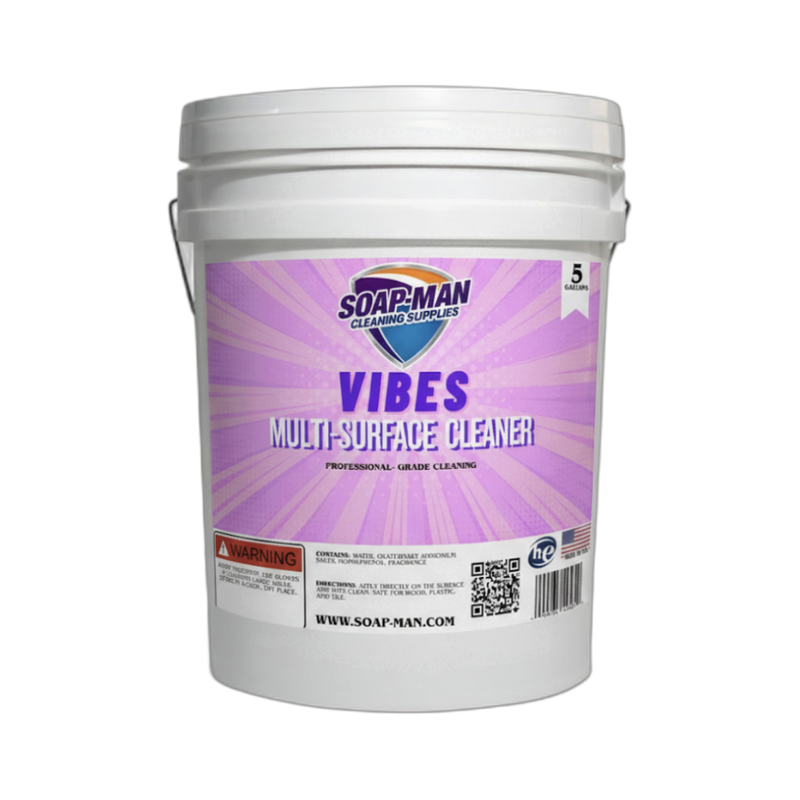
General-purpose pressure washing detergents for routine cleaning of vehicles, equipment, decks, and finished surfaces. These are the safest chemistry class for most surfaces and the right starting point when you are unsure. Vibes Multi-Surface Cleaner at proper dilution belongs here.
Safe on: Almost everything when properly diluted — vehicles, painted metal, vinyl siding, finished wood, plastic, glass, finished concrete.
Damages: Few surfaces at proper dilution. Can dull some specialty finishes (boat gel coat, chrome) at concentrated strength.
Surface-by-Surface Chemistry Guide
Concrete (Driveways, Loading Docks, Industrial Floors)
For oil and grease: alkaline degreaser at 1:10 dilution, 5 to 10 minute dwell, 2,500 to 3,500 PSI rinse with hot water. For general cleaning: neutral detergent at 1:32, ambient water, 2,000 PSI. For concrete brightening before sealing: acidic cleaner at manufacturer dilution, 1 to 3 minute dwell, immediate neutralizing rinse with clean water. Never use acidic cleaners on polished concrete — they etch the polish and require professional restoration.
Brick and Masonry
Alkaline degreasers (with caution — extended dwell can etch mortar). For mildew or algae: sodium hypochlorite at 1:6 to 1:8 dilution. For efflorescence (white salt deposits): acidic cleaner at low concentration with very short dwell (1 to 2 minutes max) and immediate full rinse. Never let acidic cleaner dwell on mortar joints — it leaches lime from the mortar and weakens the structure over time.
Wood Decks and Fences
Sodium hypochlorite at very dilute concentration (1:10 or weaker) for mildew, with immediate water rinse. Better option: oxalic acid or sodium percarbonate ("oxygen bleach") wood-specific brightener. Pressure should stay below 1,200 PSI on wood — higher pressures raise the grain and shred soft wood. For deeply soiled wood, two-step process: alkaline cleaner first to remove dirt, then wood brightener (acidic) to neutralize the alkali and lighten weathered gray. Always test on inconspicuous area first.
Vinyl Siding
Sodium hypochlorite at 1:6 to 1:8 dilution for mildew and algae, applied at low pressure (under 1,000 PSI is standard "soft washing" practice). Higher pressure can drive water behind the siding and cause mold growth in the wall cavity. Rinse landscaping below the work area with plain water both before and after — bleach drift kills plants in 24 to 48 hours.
Aluminum Siding and Painted Aluminum
Use neutral or mildly alkaline detergent only. Never use alkaline degreaser, acidic cleaner, or sodium hypochlorite on aluminum. Caustic and acid both etch aluminum within minutes of contact. Sodium hypochlorite oxidizes aluminum, leaving a chalky white film that is essentially permanent. If aluminum has been etched, professional refinishing is the only fix and runs $4 to $8 per square foot.
Asphalt Shingles
Sodium hypochlorite "soft wash" at 1:8 to 1:10 dilution, applied at very low pressure (under 500 PSI). High-pressure pressure washing strips the protective granules off shingles and shortens roof life by years. Most reputable roofers prohibit pressure washing entirely — soft washing with chemistry is the correct method.
Vehicles and Equipment
Neutral or mildly alkaline detergent at vehicle-wash dilution (typically 1:80 to 1:200 for foam cannon use). Pressure 1,200 to 2,000 PSI maximum. Avoid alkaline degreaser on aluminum wheels (will etch the polished surface) and acidic wheel cleaners on chrome (will haze the chrome).
Pool Decks and Patios
For pavers and stamped concrete: neutral detergent at 1:32 dilution. For algae or mildew on the deck: sodium hypochlorite at 1:8 dilution. Never use acidic cleaner on pool deck surfaces — it etches and disturbs the pool water chemistry if rinse runoff reaches the pool.
OSHA HazCom Requirements Operators Miss
Pressure washing operators are subject to OSHA HazCom 1910.1200 for any commercial chemical they use. The requirements that get missed most often:
- Safety Data Sheet on file. Every chemical product on a job site must have a current SDS accessible to the operator. SDS must include emergency contact information, first-aid procedures, and recommended PPE.
- Container labeling. Secondary containers (mixing tanks, downstream injectors, sprayer reservoirs) must be labeled with product identity and hazard pictograms. Unlabeled secondary containers are one of the most common OSHA citations on pressure washing job sites.
- Operator training. Operators must be trained on the chemicals they use, including hazards, PPE requirements, and emergency procedures. Training must be documented.
- PPE compliance. Eye protection (chemical splash goggles for caustics and acids), chemical-resistant gloves (nitrile or neoprene depending on chemistry), and slip-resistant footwear are baseline. Acids and concentrated caustics may also require chemical-resistant aprons.
- Spill response. Have absorbent material (oil-dry, kitty litter) on site for spills. Acids and caustics in particular cannot be diluted with water on contact with the wrong substrate — neutralize first, then absorb.
EPA also has rules: NPDES (Clean Water Act) regulates wash water discharge in many jurisdictions. Many municipalities require that pressure wash water be captured and disposed of properly (especially water containing degreasers or sodium hypochlorite) rather than running off into storm drains. Check local discharge regulations before any commercial pressure washing job.
Common Pressure Washer Chemistry Mistakes
- Using degreaser on aluminum. The fastest way to ruin aluminum siding — etching is visible within hours.
- Mixing chemistries. Bleach and ammonia produce chlorine gas. Bleach and acid (including some "wheel cleaners" that contain acid) also produce chlorine gas. Never mix.
- Letting chemistry dry on the surface. Dried alkaline or acidic cleaner is much harder to remove and frequently etches the substrate. Keep the surface wet during the work and rinse before the chemistry dries.
- Skipping the test patch. Always test new chemistry on a 2x2 foot inconspicuous area first. Wait 24 hours, check for damage, then proceed.
- Underdiluting "to be sure it works." Stronger does not mean better. Manufacturer dilution ratios are tested for both efficacy AND substrate compatibility — going stronger usually does not improve cleaning and frequently damages the surface.
- Pressure washing landscaping with bleach drift. Sodium hypochlorite kills plants on contact and persists in soil for weeks. Pre-rinse plants and grass below the work area with plain water (which dilutes any drift), and post-rinse immediately after.
Sample Pressure Washing Chemistry Stock
For a commercial pressure washing program covering typical East Coast facility surfaces:
- Heavy degreaser: 1-2 buckets Turbo Clean Degreaser for concrete, masonry, equipment
- Soft-wash bleach: 1-2 cases Power Bleach for siding, shingles, mildew
- Neutral all-purpose: 1 case Vibes Multi-Surface Cleaner for vehicles, vinyl, finished surfaces
- Specialty acidic cleaner: Source case-by-case from a specialty supplier — not a routine stock item
For typical site work, this combination handles 90 percent of pressure washing jobs without specialty product runs. The bucket-of-degreaser-and-bleach pair is the workhorse — most other chemistry is occasional specialty work.
Soap-Man and Pressure Washing
Soap-Man's pressure-washer-compatible products — Turbo Clean Degreaser, Power Bleach, Vibes Multi-Surface Cleaner — are concentrate formulas designed for downstream injection or pre-dilution into your sprayer. We do not stock specialty acidic chemistries (oxalic acid wood brighteners, muriatic acid concrete brighteners) — those are best sourced from a pressure-washing-specific specialty supplier. For the workhorse 90 percent (degreasing, biological soil, general cleaning), the three Soap-Man products above cover most commercial pressure washing programs.
Volume pricing applies — the 5-gallon bucket is the right unit for active pressure washing crews. Free delivery on orders over $500 across NJ, NY, PA, MD, DE, CT, VA, MA, RI, and DC. Talk through your specific surface and chemistry needs with our team at (908) 590-8562, browse the full catalog, or request a quote for crew-sized pricing. The commercial cleaning hub covers full-facility cleaning programs.
Frequently Asked Questions
What's the best pressure washer chemical for concrete?
For oil and grease on concrete: an alkaline degreaser at pH 12-13, diluted 1:10, with 5 to 10 minute dwell time and a hot water rinse. Turbo Clean Degreaser is the standard. For general dirt without grease: a neutral detergent at 1:32 dilution. For brightening before sealing: a specialty acidic cleaner — but only on unsealed concrete, never polished concrete.
Can I use bleach in my pressure washer?
Yes, with caveats. Sodium hypochlorite (typically 12.5% concentration) is the standard chemistry for soft washing siding, shingles, and biological soil. The pressure washer must be rated for chemical injection (most modern washers are). Use low pressure (under 1,000 PSI for soft washing) and dilute 1:6 to 1:10 for typical work. Do not run undiluted bleach through the pressure washer pump — it will damage the seals.
Will pressure washing chemicals damage my landscaping?
Sodium hypochlorite (bleach) kills plants and grass on contact and persists in soil. Alkaline degreasers also damage plants. Pre-rinse all landscaping below the work area with plain water (dilutes any drift), tarp sensitive plants, and post-rinse immediately after the job is complete. Rinse runoff also matters — direct it away from landscaped beds and toward storm drains where local NPDES regulations allow.
Why do my pressure washer chemicals streak?
Streaking has three common causes: under-dilution (chemistry too strong, leaves residue), under-rinse (rinse cycle did not fully remove the chemistry), or hard water (mineral deposits left after rinse). Fix by checking dilution ratio, increasing rinse time, and using softened water for the rinse if hard water is the problem.
What PPE is required for commercial pressure washing?
Per OSHA 1910.1200 and 1910.132 PPE requirements: chemical splash goggles (or full face shield for caustic and acidic chemistry), chemical-resistant gloves (nitrile minimum, neoprene or butyl for acids), slip-resistant footwear, hearing protection (pressure washers exceed 85 dB), and a chemical-resistant apron for acids and concentrated caustics. Eye protection is the single most violated requirement on pressure washing job sites.
Can I mix degreaser and bleach?
No. Sodium hypochlorite (bleach) plus high-pH alkaline degreaser is generally not advisable — the combination can produce chlorine gas under some conditions, and the cleaning chemistry of one inactivates the other. Use them as separate steps with a water rinse between, not in the same tank.
What pressure should I use on different surfaces?
Concrete and masonry: 2,500-3,500 PSI. Vehicles and equipment: 1,200-2,000 PSI. Vinyl siding: under 1,000 PSI (soft wash). Wood decking: under 1,200 PSI (higher PSI raises the grain). Asphalt shingles: under 500 PSI (soft wash with chemistry doing the work). Aluminum siding: under 1,000 PSI with neutral detergent only.
Is hot water pressure washing better than cold?
For grease and oily soil: yes, by a large margin. Hot water (180°F+) dissolves greases and oils that cold water leaves behind. For biological soil (mildew, algae): cold water is fine — chemistry does the killing, not heat. For general dirt: hot water cleans 20 to 40 percent faster. Hot water units cost roughly 2x cold water units, so the ROI depends on how much greasy work the unit will do.