
Why Smoke Smell Is So Hard to Remove
Smoke isn't just an airborne gas — it's a complex mixture of microscopic particles, oils, and tar compounds that settle on and absorb into every surface they contact. Cigarette smoke coats walls with a yellow-brown tar film. Cooking smoke leaves grease particles in curtains and upholstery. Fire smoke forces soot and carbon deep into porous materials. Unlike most odors that dissipate when the source is removed, smoke particles bind chemically to surfaces and re-release odor molecules slowly over weeks and months. That's why airing out a smoky room helps temporarily but the smell returns — the source is in the surfaces, not the air. Truly removing smoke smell requires cleaning every surface that absorbed it, treating porous materials that can't be wiped, and replacing the air. There are no shortcuts.
What You'll Need
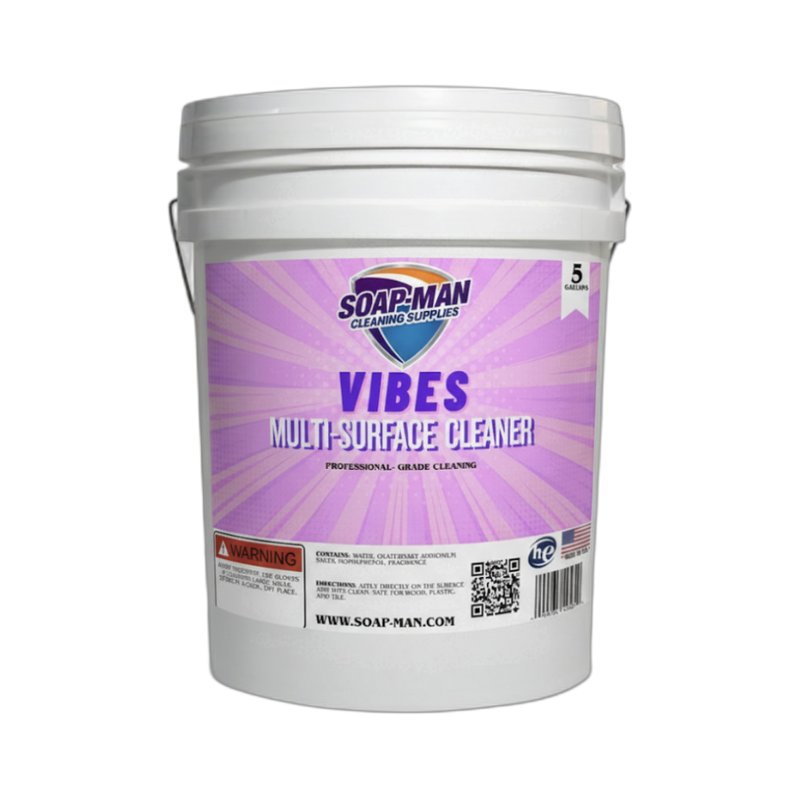
- Multi-surface cleaner — Vibes Multi-Surface Cleaner for wiping down hard surfaces, walls, and non-porous materials.
- White vinegar — for absorption-based deodorizing and surface cleaning.
- Baking soda — the best dry odor absorber for carpets, upholstery, and enclosed spaces.
- Activated charcoal — for ongoing air purification in enclosed areas.
- Spray bottles
- Microfiber cloths and sponges
- Steam cleaner (rental or owned) — for carpets and upholstery.
- HEPA air purifier — for filtering airborne particles.
- Clean HVAC filters — replacement filters for your heating and cooling system.
Step-by-Step: How to Remove Smoke Smell from Your House
Step 1: Ventilate Aggressively
Open every window and exterior door. Set up fans to create cross-ventilation — pointing out on one side of the house and letting air flow in naturally on the other. Run bathroom and kitchen exhaust fans. This initial air exchange dilutes the highest concentration of airborne smoke particles and brings in fresh air. Keep the house open for as long as weather permits — ideally several hours. In cold or rainy weather, run the HVAC fan (just the fan, not heating or cooling) on continuous to circulate air through the filter. Ventilation alone won't solve the problem, but it removes the easy layer of airborne smoke so you can focus on the embedded sources.
Step 2: Clean All Hard Surfaces
Smoke particles settle on every exposed surface. Wipe down walls, ceilings, light fixtures, ceiling fan blades, window sills, baseboards, door frames, countertops, cabinets (inside and out), shelves, and appliance surfaces with Vibes Multi-Surface Cleaner. For walls and ceilings, work from top to bottom using the cleaning method appropriate for your paint finish (see our wall cleaning guide). For heavy cigarette smoke residue on walls, you may need a TSP solution or a dedicated smoke residue cleaner. Don't forget the insides of closets, light switch plates, outlet covers, and vent grilles — smoke penetrates everywhere.
Step 3: Treat Soft Furnishings and Fabrics
Wash everything that's machine-washable: curtains, throw pillow covers, blankets, bedding, towels, and clothing exposed to smoke. Add half a cup of white vinegar to the wash cycle along with your regular detergent — vinegar neutralizes smoke compounds that detergent alone doesn't eliminate. For items that can't be machine-washed (large comforters, heavy curtains), take them to a professional dry cleaner and mention the smoke exposure so they use the appropriate treatment. For upholstered furniture, sprinkle baking soda generously over all fabric surfaces, let it sit for at least four hours (overnight is better), and vacuum it up. Baking soda absorbs smoke odor molecules from fabric fibers. Repeat if the smell persists.
Step 4: Deep Clean Carpets and Rugs
Carpets are the biggest smoke odor reservoirs because the fibers and pad underneath absorb particles deep into their structure. Start with a thorough baking soda treatment: sprinkle liberally, work it into the carpet with a broom, and leave it for 12-24 hours before vacuuming. For moderate to heavy smoke odor, follow with a steam cleaning using a rental or professional carpet cleaner. Add white vinegar to the cleaning solution for extra deodorizing. For severe smoke damage (house fire), professional steam cleaning may need to happen two or three times, and the carpet pad underneath may need replacement — pads absorb smoke at a molecular level that surface cleaning can't fully address.
Step 5: Address the HVAC System
Your heating and cooling system circulated smoke throughout the house, and the ductwork, filter, and internal components absorbed it. Replace the HVAC filter immediately with a fresh high-MERV filter (MERV 11 or higher). Run the system fan on continuous for 24-48 hours to circulate air through the new filter. For significant smoke exposure, consider professional duct cleaning — the ductwork can harbor smoke residue that recirculates odor every time the system runs. Place bowls of white vinegar or activated charcoal near return air vents to help filter odor from the circulated air. An air purifier with a HEPA filter and activated carbon filter running in the most-used rooms provides ongoing air cleaning.
Pro Tips
- Use bowls of vinegar as passive deodorizers. Place bowls of white vinegar in each room for 24-48 hours. The vinegar absorbs airborne smoke compounds from the surrounding air. Replace the vinegar daily until the odor diminishes. This works alongside surface cleaning, not as a replacement for it.
- Activated charcoal for enclosed spaces. Place activated charcoal bags or containers in closets, cabinets, and drawers. Charcoal adsorbs smoke molecules from the air over days and weeks. Unlike air fresheners that mask odor, charcoal physically removes odor compounds. Replace monthly.
- Seal and prime walls for severe smoke. For heavy cigarette smoke or fire damage where the tar has deeply stained walls, cleaning may not be enough. After cleaning, apply a stain-blocking primer (shellac-based like Zinsser BIN) that seals the residual smoke compounds inside the wall surface. Then paint over with fresh paint. This is the nuclear option for walls and ceilings where smoke has years of buildup.
Common Mistakes
- Using air fresheners to cover smoke smell. Air fresheners, scented candles, and plug-ins mask the odor with a different fragrance — they don't remove the smoke compounds. When the freshener dissipates, the smoke smell returns unchanged. These products delay actual cleaning and create a confusing mixed odor.
- Cleaning only the obvious surfaces. Smoke settles everywhere — inside closets, on top of ceiling fan blades, inside light fixtures, on the underside of shelves, inside cabinets, and on ceilings. Every surface that was exposed to smoke needs to be cleaned. Missing even one area leaves a reservoir of odor that replenishes the room.
- Trying to paint over smoke without cleaning first. Paint doesn't seal smoke odor — regular paint is permeable enough for smoke compounds to bleed through. Clean the surface, apply stain-blocking primer (shellac-based, not latex), and then paint. Skipping the primer step results in yellow bleed-through and persistent odor within weeks.
FAQ
How long does it take to remove smoke smell from a house?
For light cooking smoke: 1-2 days of ventilation and surface cleaning. For cigarette smoke in a rental or home purchase: 1-2 weeks of systematic cleaning (walls, floors, HVAC, fabrics). For fire smoke damage: 2-4 weeks with professional assistance, and some materials (carpet pad, severely damaged drywall) may need replacement rather than cleaning.
Does an ozone generator work for smoke?
Ozone generators are effective at breaking down smoke odor compounds at a molecular level. However, ozone is a lung irritant — the space must be vacated during treatment (including pets and plants), and the area needs thorough ventilation before reoccupation. Ozone generators are often used by restoration professionals for fire damage. For DIY use, follow the manufacturer's safety instructions exactly and never run an ozone generator in an occupied space.
Can I remove cigarette smoke from car interior?
Same principles, smaller space. Clean all hard surfaces (dashboard, console, door panels) with multi-surface cleaner. Shampoo or steam clean the fabric seats and carpets. Replace the cabin air filter. Leave bowls of baking soda or activated charcoal in the car overnight for several nights. For severe cases, professional auto detailing with ozone treatment is the most effective single-step solution.
Will painting the walls remove smoke smell?
Only with the right primer. Clean the walls first to remove surface residue. Apply shellac-based stain-blocking primer (like Zinsser BIN) which creates a molecular seal over remaining smoke compounds. Then apply your chosen paint color. Latex primer alone is not sufficient — smoke compounds bleed through latex. Shellac primer is the key product that makes this work.
How do I prevent cooking smoke from spreading?
Use the range hood on high whenever cooking with oil or at high temperatures. Keep kitchen doors closed (if possible) while cooking to contain smoke. Open a kitchen window for fresh air intake so the range hood has air to draw through. Clean the range hood filters monthly so the fan works at full efficiency. These habits prevent 90% of cooking smoke from reaching the rest of the house.