Restoration Vertical Buyer Guide

Cleaning Supplies for Restoration Companies

Per-phase chemical loadout for water, fire, and mold restoration crews. IICRC S500 and S520 alignment, dilution math, dwell-time tables, PPE matrix, and bulk 5gal bucket pricing shipped from East Orange, NJ to the East Coast.

What cleaning supplies should a restoration company buy?

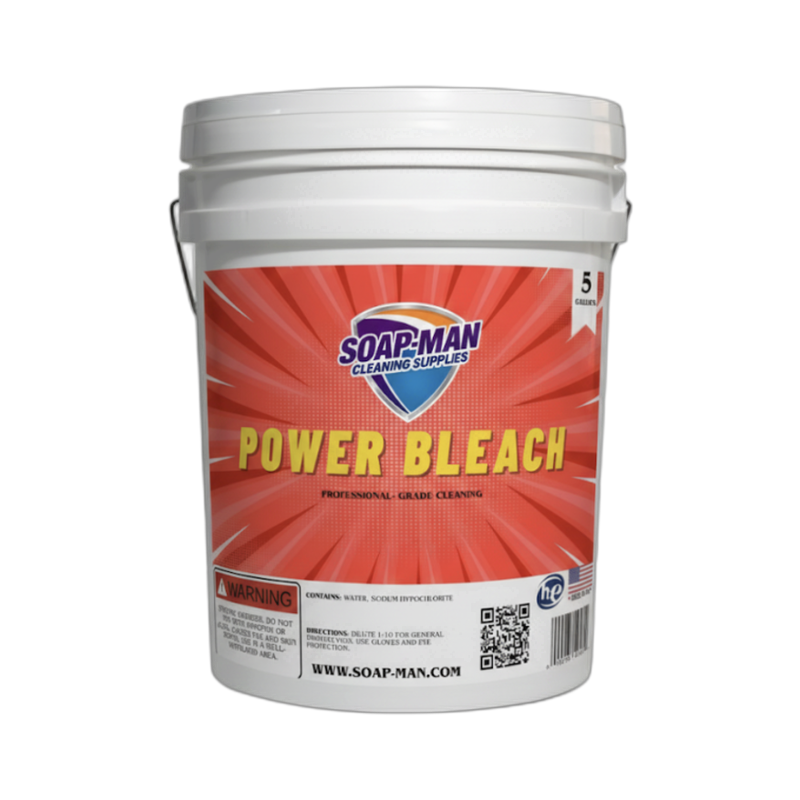
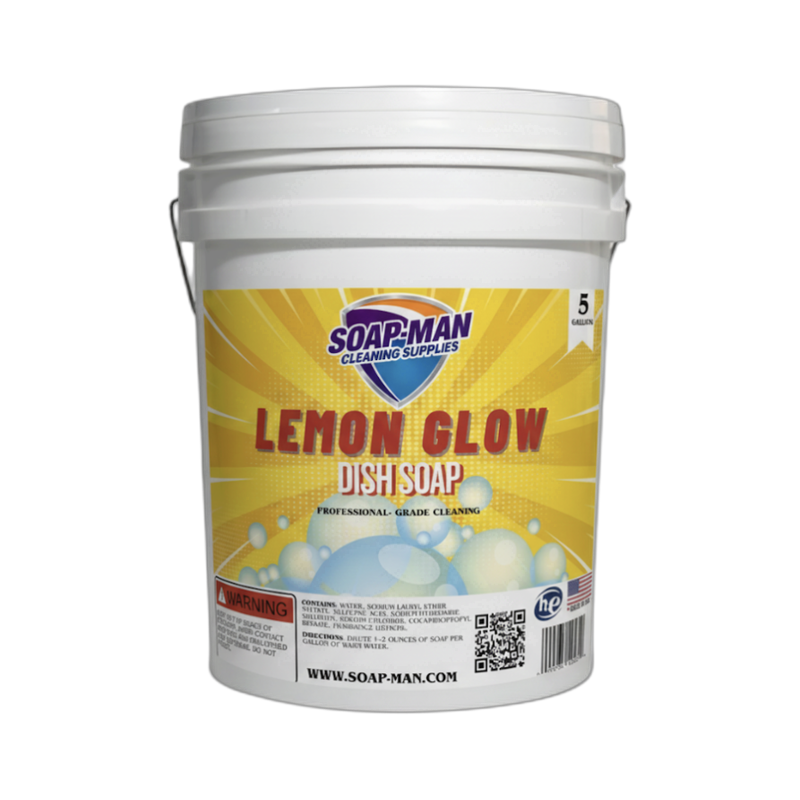
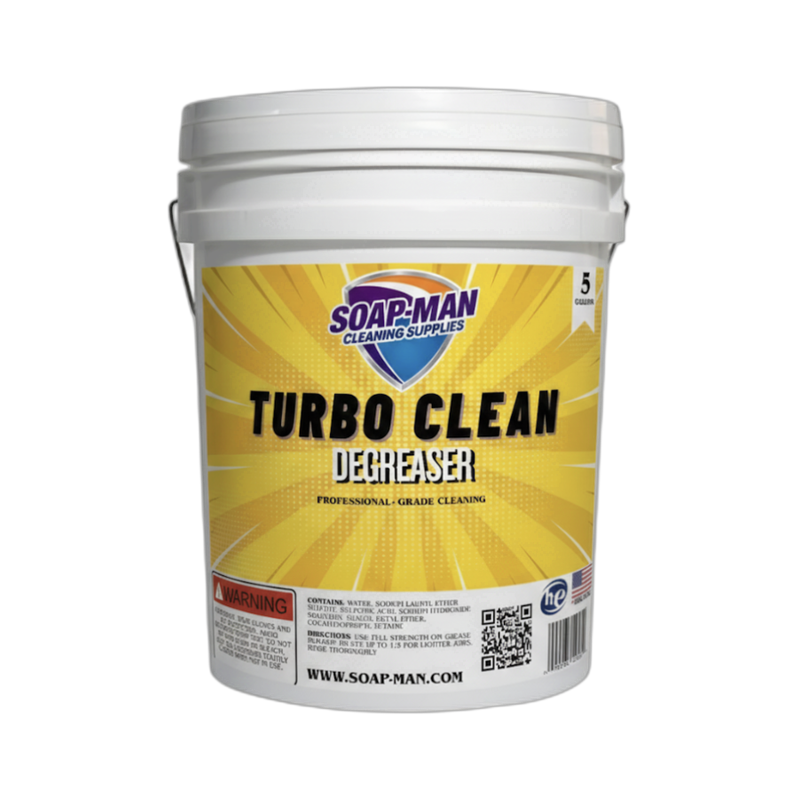
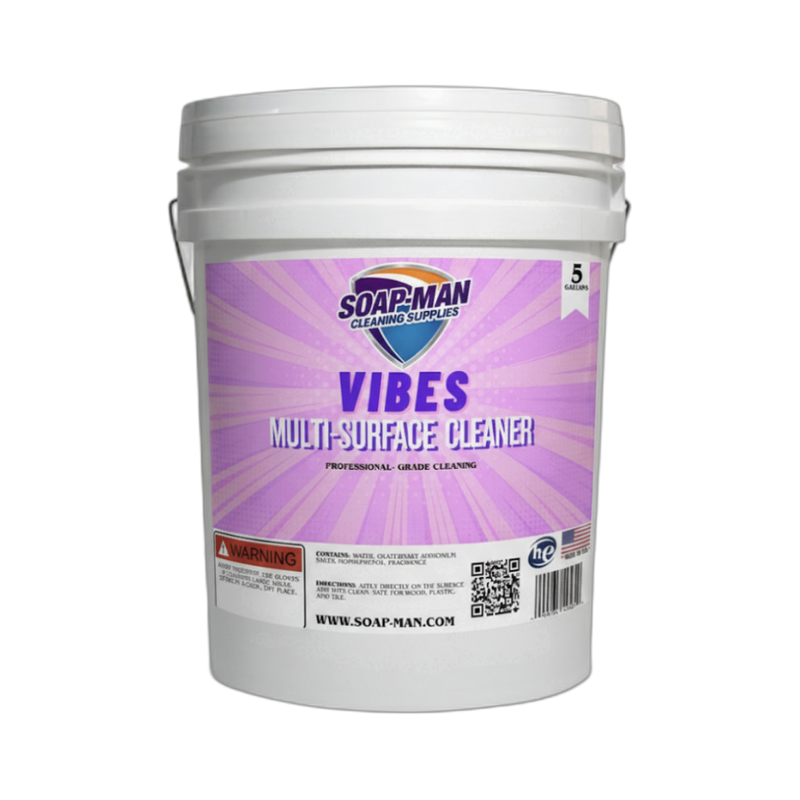
A restoration crew needs five chemical classes on the truck: an EPA-registered antimicrobial (mold remediation and S500 Category 2/3 water work), a heavy-duty alkaline degreaser (soot, smoke film, oily fire residue), a sodium hypochlorite for non-porous bleaching and sanitization, a neutral-pH cleaner for finished surfaces and contents, and a manual dish or bottle wash for content cleaning lines. Soap-Man stocks four of those classes in 5gal buckets and 4×1gal cases — Turbo Clean Degreaser (alkaline), Power Bleach (sodium hypochlorite), Vibes Multi-Surface (neutral), and Lemon Glow (manual content wash). Antimicrobial procurement runs through your IICRC-registered chemical distributor for label compliance.

Restoration Industry by the Numbers

Why this category matters and where chemistry spend actually lands.

  • $200 billion

    Annual U.S. property damage and loss restoration market size

    Source: Restoration Industry Association industry profile

  • 14.6 million

    U.S. homes affected by water damage each year

    Source: Insurance Information Institute, 2024 homeowner claims data

  • 1 in 50

    Insured homes filing a property damage claim caused by water damage or freezing each year

    Source: Insurance Information Institute, 2024

  • 358,500

    Residential structure fires reported annually in the U.S. (5-year average)

    Source: National Fire Protection Association, 2023 Home Structure Fires report

  • 70 percent

    Share of restoration chemical volume on a typical loss that is degreaser, neutral cleaner, bleach, or laundry detergent — not specialty antimicrobial

    Source: IICRC S500/S520 standard practice review and field loadout audits

  • 48 hours

    Window before mold colonization typically begins on wet cellulose materials at 70°F

    Source: Institute for Business and Home Safety (IBHS) — Mold Prevention guidance

  • $16,131 to $161,323

    OSHA fine range per HazCom violation — secondary container labels on diluted restoration chemicals are inspected

    Source: OSHA Civil Penalty Amounts, 2024 update (29 CFR 1910.1200)

The Six IICRC Phases — and the Chemistry Each Phase Burns

Restoration is sequential. Wrong chemistry in the wrong phase causes clearance failure, customer complaint, or insurance kickback. This is the loadout that aligns with ANSI/IICRC S500 (water) and S520 (mold).

Phase 1 · Day 0

Initial Inspection & Loss Categorization

Standard reference: S500 Sec. 10.5.4 (water) / S520 Chapter 4 (mold)

Objective. Classify the loss before any chemistry hits the structure. Water gets a Category (1, 2, or 3) and a Class (1–4). Mold gets a Condition (1, 2, or 3). Wrong classification means wrong chemistry — and a failed clearance test.

Chemistry decisions

  • No application chemistry yet. Moisture meter, hygrometer, infrared camera, and PPE only.
  • Pre-treat hazard documentation: confirm asbestos (pre-1980 buildings), lead paint, and bloodborne-pathogen status before disturbing materials.

Soap-Man on the truck: Stage your truck inventory based on the call: 4×1gal cases of antimicrobial and degreaser for Cat 2/Cat 3 water and Condition 2/3 mold; 5gal buckets of bleach and neutral cleaner for the cleanout phase that follows.
Phase 2 · Hours 0–24

Water Extraction & Containment

Standard reference: S500 Sec. 12.2 (water removal) / S520 Sec. 14 (containment)

Objective. Remove standing water and contain affected zones before drying begins. Extraction is mechanical, not chemical — but the staging area still needs decon between rooms.

Chemistry decisions

  • Hand and tool decon: bottle of neutral-pH cleaner at 1:32 dilution for cross-contamination control between rooms.
  • Cat 3 (sewage / black water): full PPE Level C, EPA-registered antimicrobial pre-spray on extraction surfaces before vacuum work, per IICRC S500 Sec. 12.2.6.
  • Equipment hose decon at end of shift: hot water plus 1:50 alkaline degreaser flush.

Soap-Man on the truck: Vibes Multi-Surface Cleaner at the 1:32 dilution covers tool decon and station wipe-down. Turbo Clean Degreaser at 1:50 handles end-of-shift hose flush. Both ship in 5gal bucket — about 320 spray bottles per bucket at 1:32.

Phase 3 · Days 1–4

Structural Drying

Standard reference: S500 Sec. 13 (drying)

Objective. Drop moisture content of structural materials below the dry standard for the assembly. Drying is mechanical (air movers, dehumidifiers, heat). Chemical use during drying is limited and surgical.

Chemistry decisions

  • Surface antimicrobial application on Cat 2/3 affected materials before drying begins (S500 Sec. 12.2.3).
  • Daily wand and dehumidifier coil decon: 1:128 quaternary ammonium spray to control microbial bloom inside warm, wet equipment.
  • Do not apply broad-spectrum biocides to dry porous materials — Council of Restoration recommends antimicrobials only on materials still above 16 percent moisture content where colonization risk is documented.

Soap-Man on the truck: Drying-phase chemical demand is light. Hold one 5gal bucket of neutral cleaner per truck for daily equipment wipe-down. Antimicrobial supply runs through your IICRC chemical vendor — Soap-Man does not ship EPA-registered antimicrobials.

Phase 4 · Days 2–7

Cleaning, Soot Removal & Surface Restoration

Standard reference: S500 Sec. 14 (cleaning) / S700 (fire and smoke)

Objective. Remove soils — water-borne silt, fire-borne soot, smoke film, body oils on contents — using detergent action, mechanical action, suspension, and rinse. This is where 70 percent of the chemical volume on a typical loss gets used.

Chemistry decisions

  • Soot and fire residue: alkaline degreaser at 1:10 to 1:20 for heavy oily soot; 1:32 for protein-burn film; cold-water rinse, then HEPA-vacuum dry residue.
  • Smoke odor counteract on hard surfaces: alkaline degreaser pre-clean, then water-based odor counteractant (procured separately).
  • Carpet and upholstery pre-spray: alkaline pre-spray at 1:32, dwell 10–15 minutes, hot-water-extraction rinse.
  • Hard non-porous (tile, sealed concrete, stainless): sodium hypochlorite at 1:10 (about 6,000 ppm available chlorine) for non-porous sanitization where blood, sewage, or visible mold is present. Rinse after dwell. Do not use on aluminum, marble, terrazzo, or colored grout.
  • Finished surfaces (cabinets, painted drywall, sealed wood, vinyl flooring): neutral-pH cleaner at 1:64, microfiber, no rinse. Strong alkaline will strip wax and dull finish.

Soap-Man on the truck: This is the phase Soap-Man fills end-to-end. Turbo Clean Degreaser does soot and pre-spray work. Power Bleach handles non-porous sanitization. Vibes Multi-Surface protects finished surfaces. A typical 1,200 sq ft Cat 2 water loss burns roughly 4–6 gallons of degreaser, 2 gallons of bleach, and 2 gallons of neutral cleaner — one 5gal bucket of each plus a 4×1gal case backstop.

Phase 5 · Days 3–14

Content Cleaning (On-Site or Pack-Out)

Standard reference: S500 Sec. 14.4 / S700 Sec. 13

Objective. Restore textiles, clothing, kitchenware, electronics, soft contents, and hard contents. Pack-out volume varies by loss size — a kitchen fire might hold 80–200 boxes; a whole-house total loss can exceed 1,500 boxes.

Chemistry decisions

  • Hand-wash line for kitchenware, glass, and finished metal: neutral dish detergent at three-compartment-sink dilution (1 oz per gallon wash, sanitizer at 200 ppm in third sink).
  • Hard-content surface restoration: neutral cleaner at 1:64, microfiber, dry buff.
  • Soft-content (linens, drapes, washable fabrics): commercial laundry program — alkaline detergent at HE-machine spec, hot water for whites, 1:200 sodium hypochlorite for sanitize cycle on whites only.
  • Heat-sensitive electronics: do not water-clean. Use ultrasonic with manufacturer-spec solvent or send to specialty.

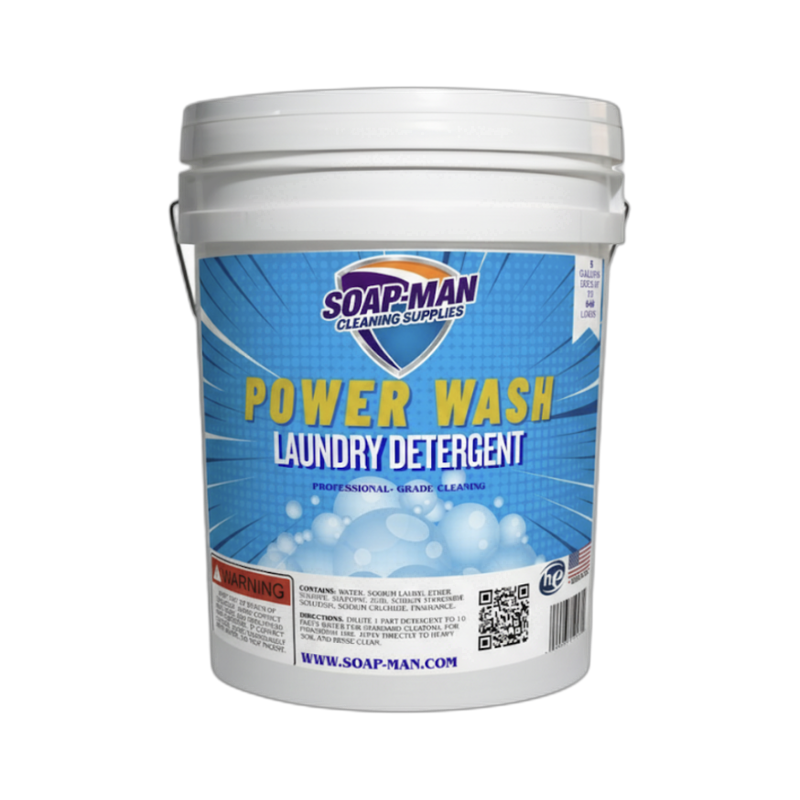
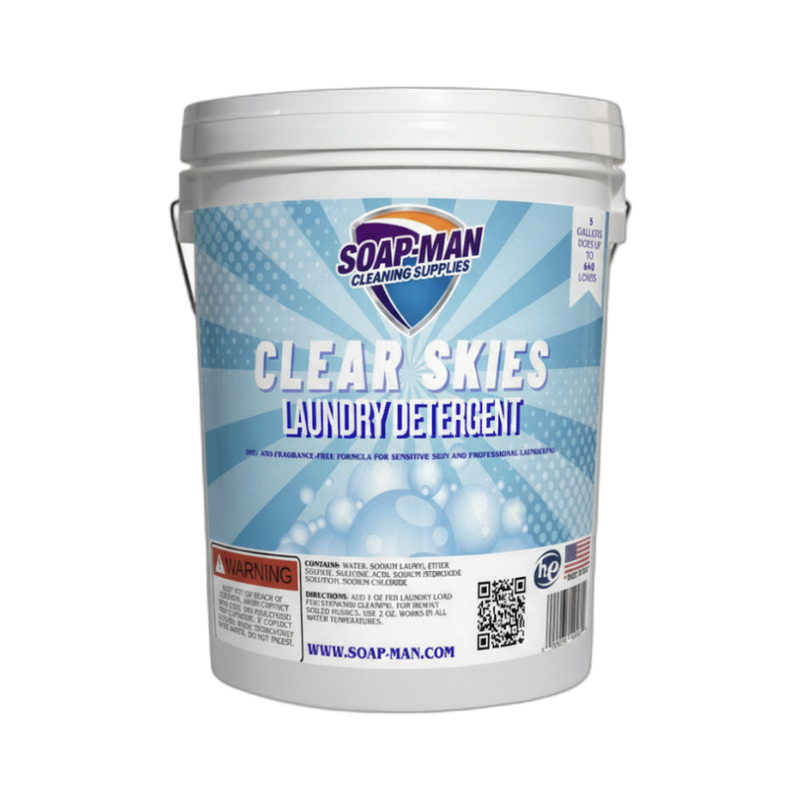
Soap-Man on the truck: Lemon Glow Dish Soap (pH 7–8 neutral, rinse-aid compatible) runs the kitchenware line. Vibes Multi-Surface handles hard-content wipe-downs. Power Wash, Clear Skies, or Fresh Breeze laundry detergent runs the soft-content line on commercial 40lb HE washers — Clear Skies is the right pick if the customer reports allergies or fragrance sensitivity.

Phase 6 · Day 7–10

Final Disinfection & Clearance

Standard reference: S520 Sec. 14.7 (post-remediation verification)

Objective. Verify the structure is dry, clean, and meets the contract clearance standard. For mold remediation, this often means a third-party indoor air quality test. The cleanup chemicals at this point are minimal — but they have to be the right ones.

Chemistry decisions

  • Final wipe-down with neutral cleaner — never alkaline strong enough to leave residue that affects post-remediation air sampling.
  • Dehumidifier and air-mover surface decon before pack-up: 1:128 quat or alcohol-based wipe.
  • Crew PPE doff and disposal staged in clean room — clean room itself decon with neutral cleaner only.

Soap-Man on the truck: Vibes Multi-Surface neutral cleaner is the final-pass workhorse. One 5gal bucket runs roughly 320 spray bottles at 1:32 — enough for an average crew month at this phase.

Chemical Class × Loss Type Loadout Matrix

Same chemistry, different role per loss. Read across to see when each class is required, optional, or off-spec.

Chemical classWater Cat 1Water Cat 2 / 3Fire / smokeMold (S520)Soap-Man SKU
EPA-registered antimicrobialOptional (clean-water losses below 24h)Required pre-spray (S500 Sec. 12.2.3 / 12.2.6)OptionalRequired (S520 Sec. 14)Not stocked — procure from IICRC chemical distributor
Heavy-duty alkaline degreaser (pH 12–13)Tool decon onlyTool decon, hose flushPrimary cleanup chemistry — soot, smoke film, oily residuePre-clean before antimicrobial on heavy contaminationTurbo Clean Degreaser (SM-TC-001) — $65 bucket / $74 case
Sodium hypochlorite (12.5 percent NaOCl)Not usedNon-porous sanitize at 1:10 dilutionMold-on-fire-residue spot work onlyLimited — porous materials are removed, not bleached (S520 Sec. 12.2)Power Bleach (SM-PB-001) — $58 bucket / $68 case
Neutral pH (6–8) all-purpose / multi-surfacePrimary cleaning chemistryFinished-surface cleanup, final wipeFinished surfaces, contents, final wipeFinal wipe before clearance testVibes Multi-Surface (SM-VB-001) — $58 bucket / $67 case
Manual dish detergentContent kitchenware lineContent kitchenware lineContent kitchenware line (heavy demand)Content kitchenware line (limited)Lemon Glow Dish Soap (SM-LG-001) — $65 bucket / $74 case
Commercial laundry detergentSoft-content laundry lineSoft-content laundry line (high demand)Soft-content laundry line (very high demand)Soft-content laundry line (limited)Power Wash (SM-PW-001), Clear Skies (SM-CS-001), Fresh Breeze (SM-FB-001) — $59 bucket each

Dwell Times and Use-Dilutions

Dwell time is the difference between a clean surface and a callback. Always confirm against the product label and the SDS — these are field-standard ranges, not a substitute for label compliance.

Sodium hypochlorite at 1:10 (about 6,000 ppm)

Target
Non-enveloped virus, vegetative bacteria, mold spore on non-porous
Dwell
10 minutes wet contact, then rinse
Caveat
Dries fast on warm surfaces — re-wet to maintain dwell. Do not use on aluminum, marble, terrazzo, colored grout.

Quaternary ammonium at 1:128

Target
Vegetative bacteria, enveloped virus, daily sanitize
Dwell
10 minutes, no rinse on most surfaces
Caveat
Leaves residue — avoid on food-contact without final rinse.

Alkaline degreaser at 1:10

Target
Heavy soot, baked grease, oily fire residue
Dwell
3–5 minutes, agitate, rinse
Caveat
Strips wax and finishes. Test inconspicuous area on aluminum, anodized metal, painted wood.

Alkaline degreaser at 1:32

Target
Light soot, protein-burn film, carpet pre-spray
Dwell
10–15 minutes, mechanical action, hot-water rinse
Caveat
Standard pre-spray dwell for HWE carpet cleaning.

Neutral cleaner at 1:64

Target
Daily maintenance on finished surfaces
Dwell
Wet-wipe and dry-wipe sequence; no extended dwell
Caveat
Safe on sealed wood, painted drywall, vinyl, laminate, sealed stone.

Manual dish detergent at 1 oz per gallon

Target
Three-compartment sink wash on contents
Dwell
Standard wash-rinse-sanitize cycle (sanitizer step uses separate chemistry)
Caveat
Sanitize sink uses 200 ppm chlorine or 200 ppm quat per FDA Food Code Sec. 4-501.114.

Surface Compatibility — Avoid the Callbacks

The wrong pH on the wrong substrate is the most common preventable callback in restoration. This is the field shortcut.

  • Stainless steel, sealed concrete

    Safe: Alkaline degreaser, sodium hypochlorite, neutral cleaner

    Avoid: Long-dwell acidic cleaners

  • Aluminum, anodized metal

    Safe: Neutral cleaner only

    Avoid: Alkaline degreaser (pits and dulls), sodium hypochlorite (corrodes)

  • Marble, terrazzo, travertine, limestone

    Safe: Neutral pH (6–8) cleaner only

    Avoid: Alkaline (etches), acidic (etches), bleach (whitens grout but pits stone)

  • Painted drywall, sealed wood, vinyl flooring

    Safe: Neutral cleaner

    Avoid: Strong alkaline (strips wax), bleach (discolors paint and wood stain)

  • Carpet (synthetic) and upholstery

    Safe: Alkaline pre-spray at 1:32, dwell 10–15 min, HWE rinse

    Avoid: Sodium hypochlorite (color loss), undiluted alkaline (residue)

  • Carpet with wool blend or natural fiber

    Safe: Neutral pH (6–8) pre-spray only

    Avoid: Alkaline above pH 9 (felts and yellows wool)

PPE by Chemistry Class

OSHA HazCom 2012 requires written PPE assessment for every chemical the crew handles at concentrate. This is the baseline before crew-lead sign-off on the SDS.

Sodium hypochlorite (concentrate)

Eye
Chemical splash goggle (ANSI Z87.1)
Skin
Nitrile glove minimum 8-mil, chemical apron
Respiratory
Half-face respirator with acid-gas cartridge if mixing in unventilated space
Note
Never mix with ammonia or acidic cleaners — releases chloramine and chlorine gas

Heavy alkaline degreaser (concentrate)

Eye
Chemical splash goggle
Skin
Nitrile glove 6-mil, long sleeves
Respiratory
Not required at use-dilution; required if pressure-sprayed or aerosolized
Note
pH 12–13 will burn skin on extended contact

Quaternary ammonium (concentrate)

Eye
Splash goggle when pouring
Skin
Nitrile glove
Respiratory
Not required at use-dilution
Note
Skin sensitizer — repeat exposure can cause contact dermatitis

Antimicrobial fogging

Eye
Full-face respirator integrated
Skin
Tyvek suit, nitrile glove, boot cover
Respiratory
P100 or supplied-air per chemical SDS
Note
Building unoccupied during fog and required dwell-and-clear time

Typical Loss-Size Chemical Loadout and Cost

Single-source pricing for the Soap-Man portion of the loadout. EPA antimicrobial pricing varies by distributor and is not included.

Single-room Category 1 water loss (clean-water pipe burst, ~250 sq ft)

1 case Vibes Multi-Surface (4×1gal) for tool decon and final wipe

$67 (1 case) or $58 (1 bucket — covers 3 jobs of this size)

Two-room Category 2 grey water loss (~600 sq ft)

1 bucket Turbo Clean (degreaser tool flush + pre-spray) + 1 bucket Vibes (finished surface) + antimicrobial pre-spray sourced separately

$123 from Soap-Man (2 buckets) plus antimicrobial

Whole-house Category 3 black water loss (~1,800 sq ft)

2 buckets Turbo Clean + 2 buckets Vibes + 1 bucket Power Bleach for non-porous sanitize + antimicrobial sourced separately + 1 case Lemon Glow for content kitchenware line

$307 from Soap-Man (5 buckets + 1 case) plus antimicrobial

Kitchen fire (~400 sq ft heavy soot, ~1,200 sq ft smoke film)

3 buckets Turbo Clean (heavy degrease) + 1 bucket Vibes (finished surfaces and contents) + 1 case Lemon Glow (kitchenware line) + 1 bucket Power Wash (soft-content laundry)

$314 from Soap-Man (5 buckets + 1 case)

IICRC S520 Condition 3 mold remediation (~800 sq ft)

1 bucket Turbo Clean (pre-clean affected non-porous) + 1 bucket Vibes (clearance-prep wipe) + antimicrobial sourced separately

$123 from Soap-Man plus antimicrobial

These are the Soap-Man chemistry portions only. Restoration crews should plan separately for EPA-registered antimicrobials, foggers, ozone equipment, specialty content-cleaning solvents, deodorizers, HEPA vacuum filters, PPE consumables, and freight.

Pallet Pricing for Working Crews

At 24-bucket pallet pricing, restoration crews running a steady book of jobs can shave 35–45 percent off chemistry spend.

SKUSingle bucket24-pallet rateWhen it pencils
Turbo Clean Degreaser — 5gal bucket$65$36 (about 45 percent off)Crew using 24+ buckets per month locks the rate for 12 months
Vibes Multi-Surface — 5gal bucket$58$33 (about 43 percent off)24-bucket pallet covers about 7,680 spray bottles at 1:32 dilution
Power Bleach — 5gal bucket$58Contact for hazmat-palletized rate (UN3082 limited quantity)Bleach freight ships separately from non-hazmat — combine with non-bleach pallet to save LTL surcharge
Power Wash Laundry Detergent — 5gal bucket$59$36 (about 39 percent off)Crew with in-house laundry burning 6+ buckets/month should run pallet program

Pallet orders (24+ buckets) are quote-only because freight class and hazmat status drive landed cost. Use the commercial cleaning supply cost calculator to model your monthly loadout.

Where Soap-Man Fits — and Where to Buy Elsewhere

No vendor has the entire restoration chemistry shelf. This is honest positioning so your purchasing manager can build the right multi-source loadout.

Jon-Don / Aramsco / Interlink Supply

Strength: Full restoration catalog including IICRC-registered antimicrobials, foggers, ozone equipment, and hard-to-source content-cleaning chemistries

Gap: Education layer is thin. Catalog assumes the buyer already knows S500 Sec. 12.2.6 and the difference between an antimicrobial pre-spray and a sanitizer. New crews and lead techs hunting buyer-grade explanations land somewhere else.

Excel Cleaning and Restoration / Atex / Schaper's

Strength: Regional catalogs with same-day pickup if you are in the supplier's service radius

Gap: Same education gap. Pricing on bulk degreaser, bleach, neutral cleaner, and laundry detergent is competitive but rarely transparent without quoting.

Soap-Man

Strength: Bulk-fill-only chemistry — degreaser, bleach, neutral, dish detergent, three commercial laundry detergent SKUs — at transparent 5gal bucket and 4×1gal case prices, with pallet rates published. Education-grade per-phase loadout (this page). Ships from East Orange, NJ to NJ, NY, PA, MD, DE, CT.

Gap: Soap-Man does not stock EPA-registered antimicrobials, foggers, or specialty content-cleaning solvents. For those line items, buy from Jon-Don or Aramsco — combine with Soap-Man for the 70 percent of your chemistry that is degreaser, bleach, neutral, and laundry.

Recommended Soap-Man SKUs for Restoration Crews

The four bulk chemistry classes a restoration crew uses the most, plus the laundry detergent line for soft-content work.

Related Restoration Chemistry Reading

Frequently Asked Questions

S500 is the Standard for Professional Water Damage Restoration. It governs water Category (1, 2, 3) and Class (1–4), drying procedures, antimicrobial application thresholds, and clearance criteria. S520 is the Standard for Professional Mold Remediation. It governs Condition assessment, containment, source removal (porous materials are removed, not bleached), and post-remediation verification. Different standards drive different chemistry decisions — S500 leans on antimicrobial pre-spray plus structural drying; S520 leans on physical removal plus HEPA vacuum plus targeted antimicrobial on remaining surfaces. A restoration crew working both verticals stocks the same degreaser, neutral cleaner, and bleach, but sources antimicrobials matched to the specific standard.

Quote Your Restoration Chemical Loadout

Tell us your monthly job mix and Soap-Man will build a quote for degreaser, neutral cleaner, bleach, dish detergent, and laundry at 5gal bucket, 4×1gal case, and 24-unit pallet pricing. Ships from East Orange, NJ to NJ, NY, PA, MD, DE, and CT.

Soap-Man Cleaning Supplies · 293 N. Maple Ave, East Orange, NJ 07017 · Mon–Fri 7am–5pm · Sat 8am–12pm